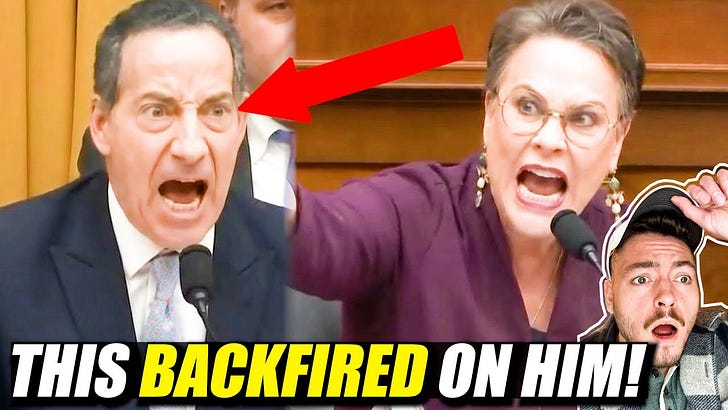
In a blistering takedown that has ignited social media and conservative circles, Rep. Harriet Hageman (R-WY) eviscerated Rep. Jamie Raskin (D-MD) over his inflammatory claim linking former President Donald Trump to Jeffrey Epstein's notorious client list. During a recent House Judiciary Committee hearing, Raskin accused Trump of suppressing Epstein-related files to shield himself, a assertion that unraveled spectacularly when the documents were unsealed, revealing no incriminating evidence against the former president.
Raskin's remarks echoed a familiar Democratic talking point, amplified on platforms like X, where he questioned why Trump hadn't released the files during his administration, implying a cover-up. "If Trump is so innocent, why hide the Epstein files?" Raskin posted, fueling speculation amid the 2024 election cycle. Yet, the release of thousands of pages from Epstein's cases by a federal judge laid bare the falsehood: Trump's name appeared in benign contexts—flight logs from a single 1997 flight and passing social mentions—but with zero allegations of misconduct, unlike several high-profile Democrats named in more compromising associations.
Hageman, a no-nonsense Wyoming congresswoman and former Trump impeachment litigator, seized the moment with surgical precision. "Congressman Raskin, your fake news narrative has been butchered by the facts," she declared in a viral floor speech, brandishing printouts of the unsealed documents. She highlighted how Epstein was banned from Trump's Mar-a-Lago resort years before his crimes surfaced, contrasting it with Epstein's deep ties to figures like Bill Clinton, who flew on the Lolita Express multiple times. Hageman's retort drew applause from Republicans and swift backlash from Democrats, who accused her of deflection.
The exchange underscores a broader pattern in the politicization of the Epstein saga, where selective outrage has become a weapon in the culture wars. While Trump and Epstein socialized in the 1990s Palm Beach elite, Trump distanced himself publicly by 2004, calling Epstein a "terrific guy" who liked "beautiful women... on the younger side" before cutting ties. The files' release, prompted by ongoing litigation rather than political pressure, exposed Raskin's hyperbole and bolstered Republican arguments that Democrats exploit unproven smears to tarnish Trump ahead of potential 2024 rematches.
Legal experts note the documents, stemming from Virginia Giuffre's defamation suit against Ghislaine Maxwell, contain depositions and logs but no "client list" bombshell. Hageman's intervention not only fact-checked Raskin but reignited scrutiny on Epstein's enablers across the aisle, including former Labor Secretary Alexander Acosta's controversial plea deal under Trump—though Hageman framed it as inherited DOJ baggage. As partisan tensions simmer, this clash serves as a reminder that in the arena of truth versus narrative, verifiable records often deliver the decisive blow.
With midterm echoes still fresh and eyes on future battles, Hageman's rhetorical victory positions her as a rising conservative firebrand, while Raskin's misstep risks eroding Democratic credibility on accountability issues. The Epstein files may close one chapter, but their weaponization in political discourse shows no signs of abating.
