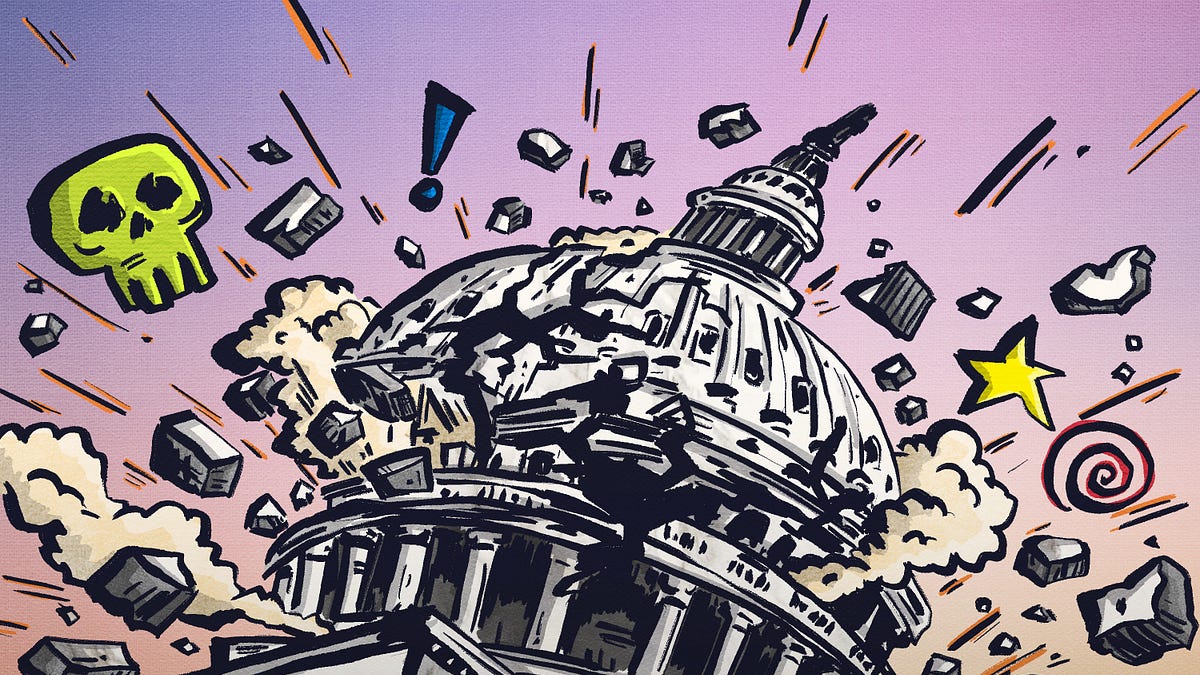
In the murky depths of Washington's federal bureaucracy, a new edition of Racket News' "The Swamp Log" has surfaced, cataloging an astonishing array of taxpayer-funded absurdities that read like satire but hit like a sledgehammer to fiscal sanity. From $1.5 million earmarked for "climate-resilient" playgrounds in affluent suburbs to a $750,000 grant studying the "intersectionality of raccoon behavior in urban environments," the log exposes the unchecked extravagance persisting even as national debt soars past $35 trillion.
Matt Taibbi, the investigative journalist behind Racket News, compiles the Swamp Log as a weekly chronicle of government waste, drawing from public records, FOIA requests, and obscure federal registries. This latest installment, released amid heated budget battles in Congress, highlights over 50 entries, including the Department of Education's $2.3 million allocation for virtual reality simulations of "decolonizing American history curricula" and the EPA's $400,000 project on "equity audits for national park wildlife viewing platforms." Taibbi's meticulous sourcing underscores a pattern: agencies bloated with post-pandemic funds continue dispensing grants with little oversight, often prioritizing ideological buzzwords over practical outcomes.
The revelations come at a pivotal moment, as House Republicans push for spending cuts under the banner of "draining the swamp"—a phrase revived in the Trump era but now tested against entrenched administrative state inertia. Critics like Heritage Foundation budget expert Romina Boccia argue that the log exemplifies "mission creep," where agencies morph mandates into perpetual slush funds. "These aren't isolated boondoggles," Boccia said in an interview. "They're symptomatic of a system where accountability evaporated decades ago, fueling inflation and eroding public trust."
Beyond the dollars, the Swamp Log delves into cultural flashpoints fueling America's divides. Entries detail NIH funding for research on "microaggressions in AI chatbots" ($1.2 million) and USAID's $800,000 initiative promoting "gender-fluid pronouns in international aid manuals." Analysts see this as ground zero in the culture war, where progressive orthodoxies embedded in bureaucracy clash with populist demands for restraint. With midterm elections looming, the log has gone viral on platforms like X, amplifying calls from figures like Elon Musk and Vivek Ramaswamy for radical reforms, including sunset clauses on federal programs.
Yet, defenders of the system, including White House spokesperson Karine Jean-Pierre, dismiss the log as "cherry-picked anecdotes" distracting from essential investments. As debates rage, one thing remains clear: The Swamp Log isn't just a ledger of lunacy—it's a mirror reflecting the chasm between governance and the governed, challenging citizens to demand transparency in an era of opaque empire-building.
