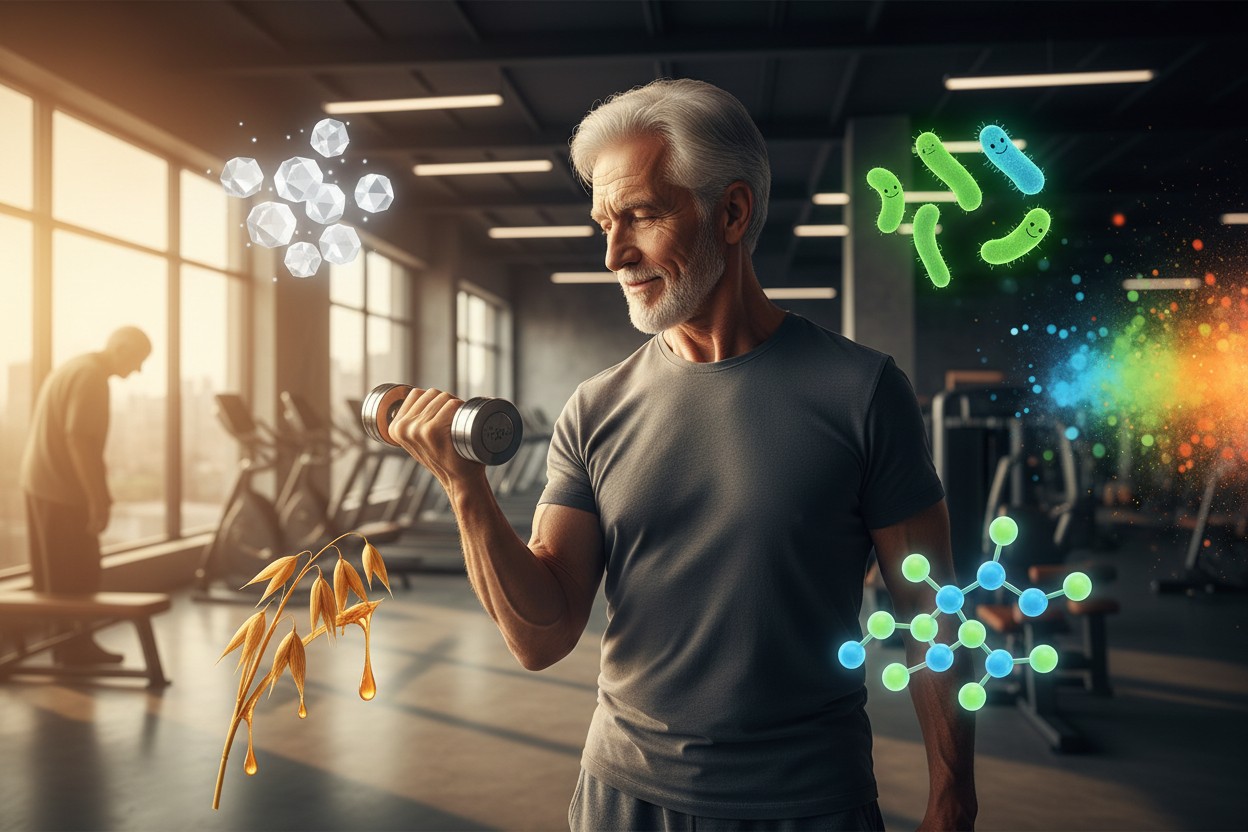
Age-related muscle and bone loss, known asosteosarcopenia, becomes increasingly common as people grow older. The condition raises the risk of frailty, loss of independence, and reduced longevity, according to a review published in the journalNutrients. The review examined four supplements, namely creatine, probiotics, prebiotics, and beta-hydroxy-beta-methylbutyrate (HMB), for their potential to help prevent or manage this condition.After age 30, muscle mass can decline by 3 to 8% per decade, accelerating after age 60, according to a report fromNaturalNews.com. When combined with bone loss, the effects can be debilitating.The review authors stated that osteosarcopenia significantly increases the likelihood of falls, fractures, and long-term disability. [1]Creatine Shows Dual Benefits for Muscle and BoneCreatineis best known as a sports supplement that supplies muscles and the brain with phosphocreatine, a compound used to generate cellular energy. When paired with strength training, creatine helps individuals train harder and longer, which in turn stimulates muscle protein synthesis and muscle growth, researchers reported.Studies consistently show greater results with creatine combined with exercise than with exercise alone.Clinical studies have also indicated that creatine may improve bone geometry, or the structure of bones, in a way that could help protect against fractures.The review authors noted that combining creatine with other supplements such as whey protein and branched-chain amino acids may produce even greater results. They concluded that creatine can be a smart addition to strength training for managing or preventing osteosarcopenia. [2]Probiotics May Support Muscle and Bone via Gut HealthProbioticsare live microorganisms found in fermented foods such as yogurt and kefir, as well as in supplements. They may indirectly help preserve muscle by calming chronic inflammation, lowering oxidative stress, and improving nutrient metabolism, according to the review.Some probiotic strains also support insulin sensitivity, and insulin resistance is known to accelerate muscle loss.Several animal studies suggest that probiotics may boost bone mineral density and increase vitamin D absorption, which promotes calcium uptake.The authors of the book "The Whole-Body Microbiome" noted that modulation of the gut microbiome by probiotics, mainlyLactobacilli, increases bone mass and can prevent estrogen-mediated bone loss in mice. Human studies have shown that the probioticLactobacillus reuteriincreased circulating levels of vitamin D. [3]Prebiotics Aid Calcium Absorption and Reduce InflammationPrebioticsare specific types of fiber that gut bacteria ferment to produce short-chain fatty acids. These compounds help the body absorb calcium and lower the risk of bone loss, the review stated.Prebiotics also help keep chronic inflammation in check, a factor important for maintaining muscle mass.The study authors called the gut-muscle-bone axis a promising target for healthy aging. According to the same book source, research with prebiotics, along with probiotics, provides some of the best evidence that the microbiome affects bone density.Prebiotics are naturally found in foods such as oats and Jerusalem artichokes, as well as in supplements. [3]HMB Shows Promise, but the Evidence Remains InconclusiveHMB, orbeta-hydroxy-beta-methylbutyrate, is a metabolite of the amino acid leucine, which is the key amino acid that stimulates muscle protein synthesis. Only about 5% of leucine is converted to HMB in the body, but higher levels of this compound have been linked to muscle mass and grip strength.The "Textbook of Natural Medicine" references studies showing that HMB supplementation may help preserve or modestly increase muscle strength in older adults, though evidence for boosting actual muscle mass is mixed.In animal studies, HMB has shown promise for improving bone structure, but strong human evidence for bone benefits is lacking, according to the review. The authors concluded that HMB's role remains less certain, though it may enhance strength and recovery in active individuals. [4]Takeaway: Nutrients Complement Proven StrategiesThe review emphasized that strength training, protein intake, and vitamin D remain the primary lifestyle factors for preventing age-related muscle and bone loss. Exercise and adequate protein are essential for maintaining muscle and bone health. [2] [5]The study authors concluded that creatine, prebiotics, and probiotics may offer additional support for managing or preventing osteosarcopenia. HMB's role is less certain, though it may benefit strength and recovery in some individuals.The findings highlight the potential of these supplements as complementary strategies to established approaches for healthy aging.ReferencesNaturalNews.com. "Protein and exercise: Keys to preventing age-related muscle loss". April 12, 2026.GreenMedInfo.com. "Exercise and Whey Protein Slow Age Related Bone and Muscle Loss".Brett Finlay and Jessica Finlay. "The Whole-Body Microbiome".Dr Michael T Murray. "Textbook of Natural Medicine Fifth Edition".Mercola.com. "How to Help Prevent Age Related Muscle Loss". October 02, 2015.
After age 30, muscle mass can decline by 3 to 8% per decade, accelerating after age 60, according to a report fromNaturalNews.com. When combined with bone loss, the effects can be debilitating.The review authors stated that osteosarcopenia significantly increases the likelihood of falls, fractures, and long-term disability. [1]Creatine Shows Dual Benefits for Muscle and BoneCreatineis best known as a sports supplement that supplies muscles and the brain with phosphocreatine, a compound used to generate cellular energy. When paired with strength training, creatine helps individuals train harder and longer, which in turn stimulates muscle protein synthesis and muscle growth, researchers reported.Studies consistently show greater results with creatine combined with exercise than with exercise alone.Clinical studies have also indicated that creatine may improve bone geometry, or the structure of bones, in a way that could help protect against fractures.The review authors noted that combining creatine with other supplements such as whey protein and branched-chain amino acids may produce even greater results. They concluded that creatine can be a smart addition to strength training for managing or preventing osteosarcopenia. [2]Probiotics May Support Muscle and Bone via Gut HealthProbioticsare live microorganisms found in fermented foods such as yogurt and kefir, as well as in supplements. They may indirectly help preserve muscle by calming chronic inflammation, lowering oxidative stress, and improving nutrient metabolism, according to the review.Some probiotic strains also support insulin sensitivity, and insulin resistance is known to accelerate muscle loss.Several animal studies suggest that probiotics may boost bone mineral density and increase vitamin D absorption, which promotes calcium uptake.The authors of the book "The Whole-Body Microbiome" noted that modulation of the gut microbiome by probiotics, mainlyLactobacilli, increases bone mass and can prevent estrogen-mediated bone loss in mice. Human studies have shown that the probioticLactobacillus reuteriincreased circulating levels of vitamin D. [3]Prebiotics Aid Calcium Absorption and Reduce InflammationPrebioticsare specific types of fiber that gut bacteria ferment to produce short-chain fatty acids. These compounds help the body absorb calcium and lower the risk of bone loss, the review stated.Prebiotics also help keep chronic inflammation in check, a factor important for maintaining muscle mass.The study authors called the gut-muscle-bone axis a promising target for healthy aging. According to the same book source, research with prebiotics, along with probiotics, provides some of the best evidence that the microbiome affects bone density.Prebiotics are naturally found in foods such as oats and Jerusalem artichokes, as well as in supplements. [3]HMB Shows Promise, but the Evidence Remains InconclusiveHMB, orbeta-hydroxy-beta-methylbutyrate, is a metabolite of the amino acid leucine, which is the key amino acid that stimulates muscle protein synthesis. Only about 5% of leucine is converted to HMB in the body, but higher levels of this compound have been linked to muscle mass and grip strength.The "Textbook of Natural Medicine" references studies showing that HMB supplementation may help preserve or modestly increase muscle strength in older adults, though evidence for boosting actual muscle mass is mixed.In animal studies, HMB has shown promise for improving bone structure, but strong human evidence for bone benefits is lacking, according to the review. The authors concluded that HMB's role remains less certain, though it may enhance strength and recovery in active individuals. [4]Takeaway: Nutrients Complement Proven StrategiesThe review emphasized that strength training, protein intake, and vitamin D remain the primary lifestyle factors for preventing age-related muscle and bone loss. Exercise and adequate protein are essential for maintaining muscle and bone health. [2] [5]The study authors concluded that creatine, prebiotics, and probiotics may offer additional support for managing or preventing osteosarcopenia. HMB's role is less certain, though it may benefit strength and recovery in some individuals.The findings highlight the potential of these supplements as complementary strategies to established approaches for healthy aging.ReferencesNaturalNews.com. "Protein and exercise: Keys to preventing age-related muscle loss". April 12, 2026.GreenMedInfo.com. "Exercise and Whey Protein Slow Age Related Bone and Muscle Loss".Brett Finlay and Jessica Finlay. "The Whole-Body Microbiome".Dr Michael T Murray. "Textbook of Natural Medicine Fifth Edition".Mercola.com. "How to Help Prevent Age Related Muscle Loss". October 02, 2015.
After age 30, muscle mass can decline by 3 to 8% per decade, accelerating after age 60, according to a report fromNaturalNews.com. When combined with bone loss, the effects can be debilitating.The review authors stated that osteosarcopenia significantly increases the likelihood of falls, fractures, and long-term disability. [1]Creatine Shows Dual Benefits for Muscle and BoneCreatineis best known as a sports supplement that supplies muscles and the brain with phosphocreatine, a compound used to generate cellular energy. When paired with strength training, creatine helps individuals train harder and longer, which in turn stimulates muscle protein synthesis and muscle growth, researchers reported.Studies consistently show greater results with creatine combined with exercise than with exercise alone.Clinical studies have also indicated that creatine may improve bone geometry, or the structure of bones, in a way that could help protect against fractures.The review authors noted that combining creatine with other supplements such as whey protein and branched-chain amino acids may produce even greater results. They concluded that creatine can be a smart addition to strength training for managing or preventing osteosarcopenia. [2]Probiotics May Support Muscle and Bone via Gut HealthProbioticsare live microorganisms found in fermented foods such as yogurt and kefir, as well as in supplements. They may indirectly help preserve muscle by calming chronic inflammation, lowering oxidative stress, and improving nutrient metabolism, according to the review.Some probiotic strains also support insulin sensitivity, and insulin resistance is known to accelerate muscle loss.Several animal studies suggest that probiotics may boost bone mineral density and increase vitamin D absorption, which promotes calcium uptake.The authors of the book "The Whole-Body Microbiome" noted that modulation of the gut microbiome by probiotics, mainlyLactobacilli, increases bone mass and can prevent estrogen-mediated bone loss in mice. Human studies have shown that the probioticLactobacillus reuteriincreased circulating levels of vitamin D. [3]Prebiotics Aid Calcium Absorption and Reduce InflammationPrebioticsare specific types of fiber that gut bacteria ferment to produce short-chain fatty acids. These compounds help the body absorb calcium and lower the risk of bone loss, the review stated.Prebiotics also help keep chronic inflammation in check, a factor important for maintaining muscle mass.The study authors called the gut-muscle-bone axis a promising target for healthy aging. According to the same book source, research with prebiotics, along with probiotics, provides some of the best evidence that the microbiome affects bone density.Prebiotics are naturally found in foods such as oats and Jerusalem artichokes, as well as in supplements. [3]HMB Shows Promise, but the Evidence Remains InconclusiveHMB, orbeta-hydroxy-beta-methylbutyrate, is a metabolite of the amino acid leucine, which is the key amino acid that stimulates muscle protein synthesis. Only about 5% of leucine is converted to HMB in the body, but higher levels of this compound have been linked to muscle mass and grip strength.The "Textbook of Natural Medicine" references studies showing that HMB supplementation may help preserve or modestly increase muscle strength in older adults, though evidence for boosting actual muscle mass is mixed.In animal studies, HMB has shown promise for improving bone structure, but strong human evidence for bone benefits is lacking, according to the review. The authors concluded that HMB's role remains less certain, though it may enhance strength and recovery in active individuals. [4]Takeaway: Nutrients Complement Proven StrategiesThe review emphasized that strength training, protein intake, and vitamin D remain the primary lifestyle factors for preventing age-related muscle and bone loss. Exercise and adequate protein are essential for maintaining muscle and bone health. [2] [5]The study authors concluded that creatine, prebiotics, and probiotics may offer additional support for managing or preventing osteosarcopenia. HMB's role is less certain, though it may benefit strength and recovery in some individuals.The findings highlight the potential of these supplements as complementary strategies to established approaches for healthy aging.ReferencesNaturalNews.com. "Protein and exercise: Keys to preventing age-related muscle loss". April 12, 2026.GreenMedInfo.com. "Exercise and Whey Protein Slow Age Related Bone and Muscle Loss".Brett Finlay and Jessica Finlay. "The Whole-Body Microbiome".Dr Michael T Murray. "Textbook of Natural Medicine Fifth Edition".Mercola.com. "How to Help Prevent Age Related Muscle Loss". October 02, 2015.
The review authors stated that osteosarcopenia significantly increases the likelihood of falls, fractures, and long-term disability. [1]Creatine Shows Dual Benefits for Muscle and BoneCreatineis best known as a sports supplement that supplies muscles and the brain with phosphocreatine, a compound used to generate cellular energy. When paired with strength training, creatine helps individuals train harder and longer, which in turn stimulates muscle protein synthesis and muscle growth, researchers reported.Studies consistently show greater results with creatine combined with exercise than with exercise alone.Clinical studies have also indicated that creatine may improve bone geometry, or the structure of bones, in a way that could help protect against fractures.The review authors noted that combining creatine with other supplements such as whey protein and branched-chain amino acids may produce even greater results. They concluded that creatine can be a smart addition to strength training for managing or preventing osteosarcopenia. [2]Probiotics May Support Muscle and Bone via Gut HealthProbioticsare live microorganisms found in fermented foods such as yogurt and kefir, as well as in supplements. They may indirectly help preserve muscle by calming chronic inflammation, lowering oxidative stress, and improving nutrient metabolism, according to the review.Some probiotic strains also support insulin sensitivity, and insulin resistance is known to accelerate muscle loss.Several animal studies suggest that probiotics may boost bone mineral density and increase vitamin D absorption, which promotes calcium uptake.The authors of the book "The Whole-Body Microbiome" noted that modulation of the gut microbiome by probiotics, mainlyLactobacilli, increases bone mass and can prevent estrogen-mediated bone loss in mice. Human studies have shown that the probioticLactobacillus reuteriincreased circulating levels of vitamin D. [3]Prebiotics Aid Calcium Absorption and Reduce InflammationPrebioticsare specific types of fiber that gut bacteria ferment to produce short-chain fatty acids. These compounds help the body absorb calcium and lower the risk of bone loss, the review stated.Prebiotics also help keep chronic inflammation in check, a factor important for maintaining muscle mass.The study authors called the gut-muscle-bone axis a promising target for healthy aging. According to the same book source, research with prebiotics, along with probiotics, provides some of the best evidence that the microbiome affects bone density.Prebiotics are naturally found in foods such as oats and Jerusalem artichokes, as well as in supplements. [3]HMB Shows Promise, but the Evidence Remains InconclusiveHMB, orbeta-hydroxy-beta-methylbutyrate, is a metabolite of the amino acid leucine, which is the key amino acid that stimulates muscle protein synthesis. Only about 5% of leucine is converted to HMB in the body, but higher levels of this compound have been linked to muscle mass and grip strength.The "Textbook of Natural Medicine" references studies showing that HMB supplementation may help preserve or modestly increase muscle strength in older adults, though evidence for boosting actual muscle mass is mixed.In animal studies, HMB has shown promise for improving bone structure, but strong human evidence for bone benefits is lacking, according to the review. The authors concluded that HMB's role remains less certain, though it may enhance strength and recovery in active individuals. [4]Takeaway: Nutrients Complement Proven StrategiesThe review emphasized that strength training, protein intake, and vitamin D remain the primary lifestyle factors for preventing age-related muscle and bone loss. Exercise and adequate protein are essential for maintaining muscle and bone health. [2] [5]The study authors concluded that creatine, prebiotics, and probiotics may offer additional support for managing or preventing osteosarcopenia. HMB's role is less certain, though it may benefit strength and recovery in some individuals.The findings highlight the potential of these supplements as complementary strategies to established approaches for healthy aging.ReferencesNaturalNews.com. "Protein and exercise: Keys to preventing age-related muscle loss". April 12, 2026.GreenMedInfo.com. "Exercise and Whey Protein Slow Age Related Bone and Muscle Loss".Brett Finlay and Jessica Finlay. "The Whole-Body Microbiome".Dr Michael T Murray. "Textbook of Natural Medicine Fifth Edition".Mercola.com. "How to Help Prevent Age Related Muscle Loss". October 02, 2015.
The review authors stated that osteosarcopenia significantly increases the likelihood of falls, fractures, and long-term disability. [1]Creatine Shows Dual Benefits for Muscle and BoneCreatineis best known as a sports supplement that supplies muscles and the brain with phosphocreatine, a compound used to generate cellular energy. When paired with strength training, creatine helps individuals train harder and longer, which in turn stimulates muscle protein synthesis and muscle growth, researchers reported.Studies consistently show greater results with creatine combined with exercise than with exercise alone.Clinical studies have also indicated that creatine may improve bone geometry, or the structure of bones, in a way that could help protect against fractures.The review authors noted that combining creatine with other supplements such as whey protein and branched-chain amino acids may produce even greater results. They concluded that creatine can be a smart addition to strength training for managing or preventing osteosarcopenia. [2]Probiotics May Support Muscle and Bone via Gut HealthProbioticsare live microorganisms found in fermented foods such as yogurt and kefir, as well as in supplements. They may indirectly help preserve muscle by calming chronic inflammation, lowering oxidative stress, and improving nutrient metabolism, according to the review.Some probiotic strains also support insulin sensitivity, and insulin resistance is known to accelerate muscle loss.Several animal studies suggest that probiotics may boost bone mineral density and increase vitamin D absorption, which promotes calcium uptake.The authors of the book "The Whole-Body Microbiome" noted that modulation of the gut microbiome by probiotics, mainlyLactobacilli, increases bone mass and can prevent estrogen-mediated bone loss in mice. Human studies have shown that the probioticLactobacillus reuteriincreased circulating levels of vitamin D. [3]Prebiotics Aid Calcium Absorption and Reduce InflammationPrebioticsare specific types of fiber that gut bacteria ferment to produce short-chain fatty acids. These compounds help the body absorb calcium and lower the risk of bone loss, the review stated.Prebiotics also help keep chronic inflammation in check, a factor important for maintaining muscle mass.The study authors called the gut-muscle-bone axis a promising target for healthy aging. According to the same book source, research with prebiotics, along with probiotics, provides some of the best evidence that the microbiome affects bone density.Prebiotics are naturally found in foods such as oats and Jerusalem artichokes, as well as in supplements. [3]HMB Shows Promise, but the Evidence Remains InconclusiveHMB, orbeta-hydroxy-beta-methylbutyrate, is a metabolite of the amino acid leucine, which is the key amino acid that stimulates muscle protein synthesis. Only about 5% of leucine is converted to HMB in the body, but higher levels of this compound have been linked to muscle mass and grip strength.The "Textbook of Natural Medicine" references studies showing that HMB supplementation may help preserve or modestly increase muscle strength in older adults, though evidence for boosting actual muscle mass is mixed.In animal studies, HMB has shown promise for improving bone structure, but strong human evidence for bone benefits is lacking, according to the review. The authors concluded that HMB's role remains less certain, though it may enhance strength and recovery in active individuals. [4]Takeaway: Nutrients Complement Proven StrategiesThe review emphasized that strength training, protein intake, and vitamin D remain the primary lifestyle factors for preventing age-related muscle and bone loss. Exercise and adequate protein are essential for maintaining muscle and bone health. [2] [5]The study authors concluded that creatine, prebiotics, and probiotics may offer additional support for managing or preventing osteosarcopenia. HMB's role is less certain, though it may benefit strength and recovery in some individuals.The findings highlight the potential of these supplements as complementary strategies to established approaches for healthy aging.ReferencesNaturalNews.com. "Protein and exercise: Keys to preventing age-related muscle loss". April 12, 2026.GreenMedInfo.com. "Exercise and Whey Protein Slow Age Related Bone and Muscle Loss".Brett Finlay and Jessica Finlay. "The Whole-Body Microbiome".Dr Michael T Murray. "Textbook of Natural Medicine Fifth Edition".Mercola.com. "How to Help Prevent Age Related Muscle Loss". October 02, 2015.
Creatine Shows Dual Benefits for Muscle and BoneCreatineis best known as a sports supplement that supplies muscles and the brain with phosphocreatine, a compound used to generate cellular energy. When paired with strength training, creatine helps individuals train harder and longer, which in turn stimulates muscle protein synthesis and muscle growth, researchers reported.Studies consistently show greater results with creatine combined with exercise than with exercise alone.Clinical studies have also indicated that creatine may improve bone geometry, or the structure of bones, in a way that could help protect against fractures.The review authors noted that combining creatine with other supplements such as whey protein and branched-chain amino acids may produce even greater results. They concluded that creatine can be a smart addition to strength training for managing or preventing osteosarcopenia. [2]Probiotics May Support Muscle and Bone via Gut HealthProbioticsare live microorganisms found in fermented foods such as yogurt and kefir, as well as in supplements. They may indirectly help preserve muscle by calming chronic inflammation, lowering oxidative stress, and improving nutrient metabolism, according to the review.Some probiotic strains also support insulin sensitivity, and insulin resistance is known to accelerate muscle loss.Several animal studies suggest that probiotics may boost bone mineral density and increase vitamin D absorption, which promotes calcium uptake.The authors of the book "The Whole-Body Microbiome" noted that modulation of the gut microbiome by probiotics, mainlyLactobacilli, increases bone mass and can prevent estrogen-mediated bone loss in mice. Human studies have shown that the probioticLactobacillus reuteriincreased circulating levels of vitamin D. [3]Prebiotics Aid Calcium Absorption and Reduce InflammationPrebioticsare specific types of fiber that gut bacteria ferment to produce short-chain fatty acids. These compounds help the body absorb calcium and lower the risk of bone loss, the review stated.Prebiotics also help keep chronic inflammation in check, a factor important for maintaining muscle mass.The study authors called the gut-muscle-bone axis a promising target for healthy aging. According to the same book source, research with prebiotics, along with probiotics, provides some of the best evidence that the microbiome affects bone density.Prebiotics are naturally found in foods such as oats and Jerusalem artichokes, as well as in supplements. [3]HMB Shows Promise, but the Evidence Remains InconclusiveHMB, orbeta-hydroxy-beta-methylbutyrate, is a metabolite of the amino acid leucine, which is the key amino acid that stimulates muscle protein synthesis. Only about 5% of leucine is converted to HMB in the body, but higher levels of this compound have been linked to muscle mass and grip strength.The "Textbook of Natural Medicine" references studies showing that HMB supplementation may help preserve or modestly increase muscle strength in older adults, though evidence for boosting actual muscle mass is mixed.In animal studies, HMB has shown promise for improving bone structure, but strong human evidence for bone benefits is lacking, according to the review. The authors concluded that HMB's role remains less certain, though it may enhance strength and recovery in active individuals. [4]Takeaway: Nutrients Complement Proven StrategiesThe review emphasized that strength training, protein intake, and vitamin D remain the primary lifestyle factors for preventing age-related muscle and bone loss. Exercise and adequate protein are essential for maintaining muscle and bone health. [2] [5]The study authors concluded that creatine, prebiotics, and probiotics may offer additional support for managing or preventing osteosarcopenia. HMB's role is less certain, though it may benefit strength and recovery in some individuals.The findings highlight the potential of these supplements as complementary strategies to established approaches for healthy aging.ReferencesNaturalNews.com. "Protein and exercise: Keys to preventing age-related muscle loss". April 12, 2026.GreenMedInfo.com. "Exercise and Whey Protein Slow Age Related Bone and Muscle Loss".Brett Finlay and Jessica Finlay. "The Whole-Body Microbiome".Dr Michael T Murray. "Textbook of Natural Medicine Fifth Edition".Mercola.com. "How to Help Prevent Age Related Muscle Loss". October 02, 2015.
Creatineis best known as a sports supplement that supplies muscles and the brain with phosphocreatine, a compound used to generate cellular energy. When paired with strength training, creatine helps individuals train harder and longer, which in turn stimulates muscle protein synthesis and muscle growth, researchers reported.Studies consistently show greater results with creatine combined with exercise than with exercise alone.Clinical studies have also indicated that creatine may improve bone geometry, or the structure of bones, in a way that could help protect against fractures.The review authors noted that combining creatine with other supplements such as whey protein and branched-chain amino acids may produce even greater results. They concluded that creatine can be a smart addition to strength training for managing or preventing osteosarcopenia. [2]Probiotics May Support Muscle and Bone via Gut HealthProbioticsare live microorganisms found in fermented foods such as yogurt and kefir, as well as in supplements. They may indirectly help preserve muscle by calming chronic inflammation, lowering oxidative stress, and improving nutrient metabolism, according to the review.Some probiotic strains also support insulin sensitivity, and insulin resistance is known to accelerate muscle loss.Several animal studies suggest that probiotics may boost bone mineral density and increase vitamin D absorption, which promotes calcium uptake.The authors of the book "The Whole-Body Microbiome" noted that modulation of the gut microbiome by probiotics, mainlyLactobacilli, increases bone mass and can prevent estrogen-mediated bone loss in mice. Human studies have shown that the probioticLactobacillus reuteriincreased circulating levels of vitamin D. [3]Prebiotics Aid Calcium Absorption and Reduce InflammationPrebioticsare specific types of fiber that gut bacteria ferment to produce short-chain fatty acids. These compounds help the body absorb calcium and lower the risk of bone loss, the review stated.Prebiotics also help keep chronic inflammation in check, a factor important for maintaining muscle mass.The study authors called the gut-muscle-bone axis a promising target for healthy aging. According to the same book source, research with prebiotics, along with probiotics, provides some of the best evidence that the microbiome affects bone density.Prebiotics are naturally found in foods such as oats and Jerusalem artichokes, as well as in supplements. [3]HMB Shows Promise, but the Evidence Remains InconclusiveHMB, orbeta-hydroxy-beta-methylbutyrate, is a metabolite of the amino acid leucine, which is the key amino acid that stimulates muscle protein synthesis. Only about 5% of leucine is converted to HMB in the body, but higher levels of this compound have been linked to muscle mass and grip strength.The "Textbook of Natural Medicine" references studies showing that HMB supplementation may help preserve or modestly increase muscle strength in older adults, though evidence for boosting actual muscle mass is mixed.In animal studies, HMB has shown promise for improving bone structure, but strong human evidence for bone benefits is lacking, according to the review. The authors concluded that HMB's role remains less certain, though it may enhance strength and recovery in active individuals. [4]Takeaway: Nutrients Complement Proven StrategiesThe review emphasized that strength training, protein intake, and vitamin D remain the primary lifestyle factors for preventing age-related muscle and bone loss. Exercise and adequate protein are essential for maintaining muscle and bone health. [2] [5]The study authors concluded that creatine, prebiotics, and probiotics may offer additional support for managing or preventing osteosarcopenia. HMB's role is less certain, though it may benefit strength and recovery in some individuals.The findings highlight the potential of these supplements as complementary strategies to established approaches for healthy aging.ReferencesNaturalNews.com. "Protein and exercise: Keys to preventing age-related muscle loss". April 12, 2026.GreenMedInfo.com. "Exercise and Whey Protein Slow Age Related Bone and Muscle Loss".Brett Finlay and Jessica Finlay. "The Whole-Body Microbiome".Dr Michael T Murray. "Textbook of Natural Medicine Fifth Edition".Mercola.com. "How to Help Prevent Age Related Muscle Loss". October 02, 2015.
Studies consistently show greater results with creatine combined with exercise than with exercise alone.Clinical studies have also indicated that creatine may improve bone geometry, or the structure of bones, in a way that could help protect against fractures.The review authors noted that combining creatine with other supplements such as whey protein and branched-chain amino acids may produce even greater results. They concluded that creatine can be a smart addition to strength training for managing or preventing osteosarcopenia. [2]Probiotics May Support Muscle and Bone via Gut HealthProbioticsare live microorganisms found in fermented foods such as yogurt and kefir, as well as in supplements. They may indirectly help preserve muscle by calming chronic inflammation, lowering oxidative stress, and improving nutrient metabolism, according to the review.Some probiotic strains also support insulin sensitivity, and insulin resistance is known to accelerate muscle loss.Several animal studies suggest that probiotics may boost bone mineral density and increase vitamin D absorption, which promotes calcium uptake.The authors of the book "The Whole-Body Microbiome" noted that modulation of the gut microbiome by probiotics, mainlyLactobacilli, increases bone mass and can prevent estrogen-mediated bone loss in mice. Human studies have shown that the probioticLactobacillus reuteriincreased circulating levels of vitamin D. [3]Prebiotics Aid Calcium Absorption and Reduce InflammationPrebioticsare specific types of fiber that gut bacteria ferment to produce short-chain fatty acids. These compounds help the body absorb calcium and lower the risk of bone loss, the review stated.Prebiotics also help keep chronic inflammation in check, a factor important for maintaining muscle mass.The study authors called the gut-muscle-bone axis a promising target for healthy aging. According to the same book source, research with prebiotics, along with probiotics, provides some of the best evidence that the microbiome affects bone density.Prebiotics are naturally found in foods such as oats and Jerusalem artichokes, as well as in supplements. [3]HMB Shows Promise, but the Evidence Remains InconclusiveHMB, orbeta-hydroxy-beta-methylbutyrate, is a metabolite of the amino acid leucine, which is the key amino acid that stimulates muscle protein synthesis. Only about 5% of leucine is converted to HMB in the body, but higher levels of this compound have been linked to muscle mass and grip strength.The "Textbook of Natural Medicine" references studies showing that HMB supplementation may help preserve or modestly increase muscle strength in older adults, though evidence for boosting actual muscle mass is mixed.In animal studies, HMB has shown promise for improving bone structure, but strong human evidence for bone benefits is lacking, according to the review. The authors concluded that HMB's role remains less certain, though it may enhance strength and recovery in active individuals. [4]Takeaway: Nutrients Complement Proven StrategiesThe review emphasized that strength training, protein intake, and vitamin D remain the primary lifestyle factors for preventing age-related muscle and bone loss. Exercise and adequate protein are essential for maintaining muscle and bone health. [2] [5]The study authors concluded that creatine, prebiotics, and probiotics may offer additional support for managing or preventing osteosarcopenia. HMB's role is less certain, though it may benefit strength and recovery in some individuals.The findings highlight the potential of these supplements as complementary strategies to established approaches for healthy aging.ReferencesNaturalNews.com. "Protein and exercise: Keys to preventing age-related muscle loss". April 12, 2026.GreenMedInfo.com. "Exercise and Whey Protein Slow Age Related Bone and Muscle Loss".Brett Finlay and Jessica Finlay. "The Whole-Body Microbiome".Dr Michael T Murray. "Textbook of Natural Medicine Fifth Edition".Mercola.com. "How to Help Prevent Age Related Muscle Loss". October 02, 2015.
Studies consistently show greater results with creatine combined with exercise than with exercise alone.Clinical studies have also indicated that creatine may improve bone geometry, or the structure of bones, in a way that could help protect against fractures.The review authors noted that combining creatine with other supplements such as whey protein and branched-chain amino acids may produce even greater results. They concluded that creatine can be a smart addition to strength training for managing or preventing osteosarcopenia. [2]Probiotics May Support Muscle and Bone via Gut HealthProbioticsare live microorganisms found in fermented foods such as yogurt and kefir, as well as in supplements. They may indirectly help preserve muscle by calming chronic inflammation, lowering oxidative stress, and improving nutrient metabolism, according to the review.Some probiotic strains also support insulin sensitivity, and insulin resistance is known to accelerate muscle loss.Several animal studies suggest that probiotics may boost bone mineral density and increase vitamin D absorption, which promotes calcium uptake.The authors of the book "The Whole-Body Microbiome" noted that modulation of the gut microbiome by probiotics, mainlyLactobacilli, increases bone mass and can prevent estrogen-mediated bone loss in mice. Human studies have shown that the probioticLactobacillus reuteriincreased circulating levels of vitamin D. [3]Prebiotics Aid Calcium Absorption and Reduce InflammationPrebioticsare specific types of fiber that gut bacteria ferment to produce short-chain fatty acids. These compounds help the body absorb calcium and lower the risk of bone loss, the review stated.Prebiotics also help keep chronic inflammation in check, a factor important for maintaining muscle mass.The study authors called the gut-muscle-bone axis a promising target for healthy aging. According to the same book source, research with prebiotics, along with probiotics, provides some of the best evidence that the microbiome affects bone density.Prebiotics are naturally found in foods such as oats and Jerusalem artichokes, as well as in supplements. [3]HMB Shows Promise, but the Evidence Remains InconclusiveHMB, orbeta-hydroxy-beta-methylbutyrate, is a metabolite of the amino acid leucine, which is the key amino acid that stimulates muscle protein synthesis. Only about 5% of leucine is converted to HMB in the body, but higher levels of this compound have been linked to muscle mass and grip strength.The "Textbook of Natural Medicine" references studies showing that HMB supplementation may help preserve or modestly increase muscle strength in older adults, though evidence for boosting actual muscle mass is mixed.In animal studies, HMB has shown promise for improving bone structure, but strong human evidence for bone benefits is lacking, according to the review. The authors concluded that HMB's role remains less certain, though it may enhance strength and recovery in active individuals. [4]Takeaway: Nutrients Complement Proven StrategiesThe review emphasized that strength training, protein intake, and vitamin D remain the primary lifestyle factors for preventing age-related muscle and bone loss. Exercise and adequate protein are essential for maintaining muscle and bone health. [2] [5]The study authors concluded that creatine, prebiotics, and probiotics may offer additional support for managing or preventing osteosarcopenia. HMB's role is less certain, though it may benefit strength and recovery in some individuals.The findings highlight the potential of these supplements as complementary strategies to established approaches for healthy aging.ReferencesNaturalNews.com. "Protein and exercise: Keys to preventing age-related muscle loss". April 12, 2026.GreenMedInfo.com. "Exercise and Whey Protein Slow Age Related Bone and Muscle Loss".Brett Finlay and Jessica Finlay. "The Whole-Body Microbiome".Dr Michael T Murray. "Textbook of Natural Medicine Fifth Edition".Mercola.com. "How to Help Prevent Age Related Muscle Loss". October 02, 2015.
Clinical studies have also indicated that creatine may improve bone geometry, or the structure of bones, in a way that could help protect against fractures.The review authors noted that combining creatine with other supplements such as whey protein and branched-chain amino acids may produce even greater results. They concluded that creatine can be a smart addition to strength training for managing or preventing osteosarcopenia. [2]Probiotics May Support Muscle and Bone via Gut HealthProbioticsare live microorganisms found in fermented foods such as yogurt and kefir, as well as in supplements. They may indirectly help preserve muscle by calming chronic inflammation, lowering oxidative stress, and improving nutrient metabolism, according to the review.Some probiotic strains also support insulin sensitivity, and insulin resistance is known to accelerate muscle loss.Several animal studies suggest that probiotics may boost bone mineral density and increase vitamin D absorption, which promotes calcium uptake.The authors of the book "The Whole-Body Microbiome" noted that modulation of the gut microbiome by probiotics, mainlyLactobacilli, increases bone mass and can prevent estrogen-mediated bone loss in mice. Human studies have shown that the probioticLactobacillus reuteriincreased circulating levels of vitamin D. [3]Prebiotics Aid Calcium Absorption and Reduce InflammationPrebioticsare specific types of fiber that gut bacteria ferment to produce short-chain fatty acids. These compounds help the body absorb calcium and lower the risk of bone loss, the review stated.Prebiotics also help keep chronic inflammation in check, a factor important for maintaining muscle mass.The study authors called the gut-muscle-bone axis a promising target for healthy aging. According to the same book source, research with prebiotics, along with probiotics, provides some of the best evidence that the microbiome affects bone density.Prebiotics are naturally found in foods such as oats and Jerusalem artichokes, as well as in supplements. [3]HMB Shows Promise, but the Evidence Remains InconclusiveHMB, orbeta-hydroxy-beta-methylbutyrate, is a metabolite of the amino acid leucine, which is the key amino acid that stimulates muscle protein synthesis. Only about 5% of leucine is converted to HMB in the body, but higher levels of this compound have been linked to muscle mass and grip strength.The "Textbook of Natural Medicine" references studies showing that HMB supplementation may help preserve or modestly increase muscle strength in older adults, though evidence for boosting actual muscle mass is mixed.In animal studies, HMB has shown promise for improving bone structure, but strong human evidence for bone benefits is lacking, according to the review. The authors concluded that HMB's role remains less certain, though it may enhance strength and recovery in active individuals. [4]Takeaway: Nutrients Complement Proven StrategiesThe review emphasized that strength training, protein intake, and vitamin D remain the primary lifestyle factors for preventing age-related muscle and bone loss. Exercise and adequate protein are essential for maintaining muscle and bone health. [2] [5]The study authors concluded that creatine, prebiotics, and probiotics may offer additional support for managing or preventing osteosarcopenia. HMB's role is less certain, though it may benefit strength and recovery in some individuals.The findings highlight the potential of these supplements as complementary strategies to established approaches for healthy aging.ReferencesNaturalNews.com. "Protein and exercise: Keys to preventing age-related muscle loss". April 12, 2026.GreenMedInfo.com. "Exercise and Whey Protein Slow Age Related Bone and Muscle Loss".Brett Finlay and Jessica Finlay. "The Whole-Body Microbiome".Dr Michael T Murray. "Textbook of Natural Medicine Fifth Edition".Mercola.com. "How to Help Prevent Age Related Muscle Loss". October 02, 2015.
Source: NaturalNews.com
