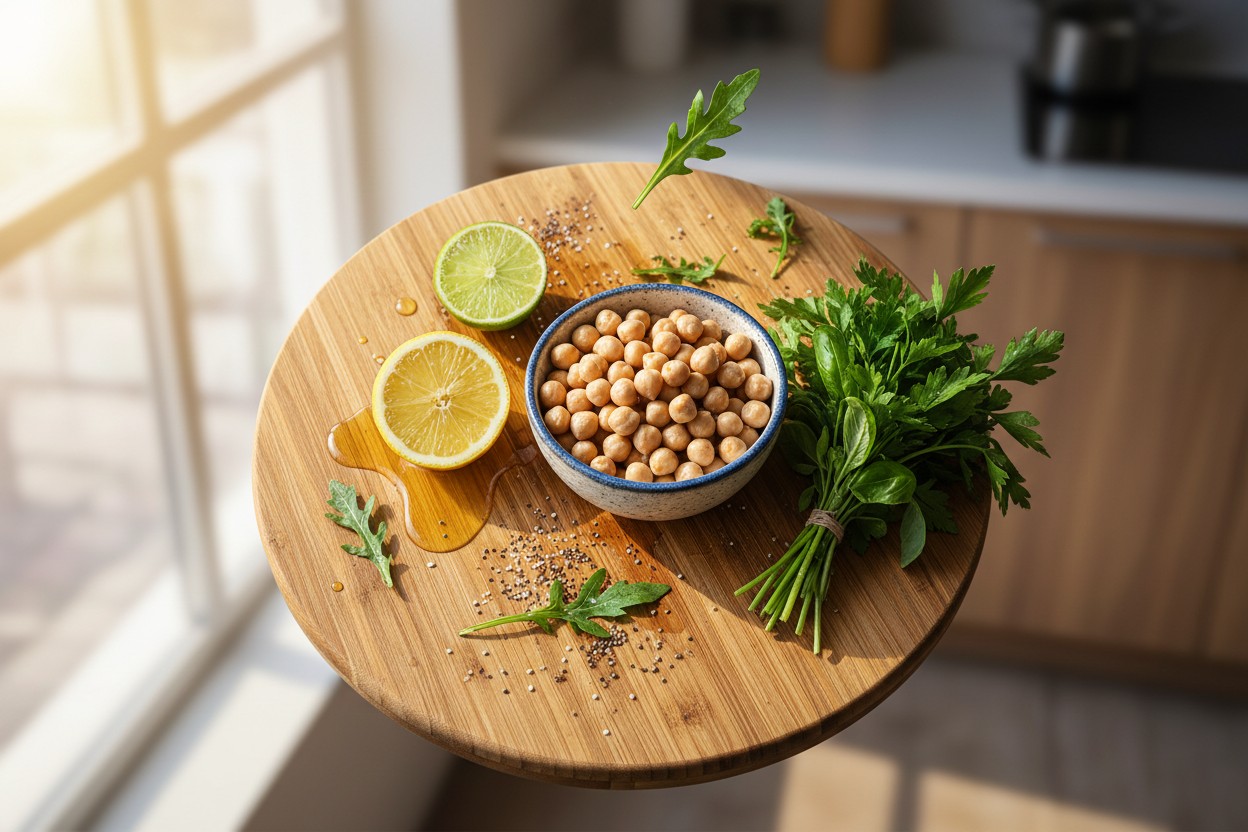
According to Knudsen, the habits include adding beans or chickpeas to meals, squeezing citrus juice over vegetables, topping dishes with fresh herbs, stirring in chia seeds, tossing arugula into warm plates, and upgrading to a bamboo cutting board. The report emphasized that these small adjustments can help address common dietary shortfalls, such as the 97 percent of American adults who do not consume enough fiber, according to Michael Greger, M.D., in the book "How Not to Die." [5]Habit 1-3: Beans, Citrus, HerbsKnudsen recommended adding beans or chickpeas to salads, soups, and grain bowls to increase fiber and plant protein content. A half-cup serving of black beans provides about 7 grams of fiber, according to the report. Fiber-rich beans help support digestion and satiety, and a 2016 survey cited by Dr. Pura Jacinto in "Complete 2 in 1 Vegetarian Diabetes and Anti-Inflammatory Cookbook" found that people who ate legumes daily lost weight faster than those who did not. [7]Squeezing fresh lemon or lime juice over vegetables can enhance iron absorption, according to Knudsen. Vitamin C has been shown to increase non-heme iron absorption by two- to threefold, though the provided sources do not contain specific research on this mechanism. Citrus fruits are recognized as nutrient-dense foods, with an article on NaturalNews.com noting that winter citrus offers a vibrant array of vitamins and antioxidants. [3]Topping meals with fresh herbs such as parsley, cilantro, or basil adds polyphenols and micronutrients, according to the dietitian. Herbs can reduce reliance on sodium and sugary sauces. An article on NaturalNews.com described herbs and spices as superfoods that can improve overall health when used regularly. [2]Habit 4-6: Chia Seeds, Arugula, Cutting BoardStirring chia seeds into oatmeal, yogurt, or smoothies adds fiber, omega-3 fatty acids, and magnesium, according to the report. One tablespoon of chia seeds contains about 4 grams of fiber. The book "How Not to Die" highlighted that 97 percent of American adults do not get enough fiber, underscoring the value of such simple additions. [5]Tossing arugula into warm meals like pasta or grain bowls provides nitrates that support circulation, according to Knudsen. Arugula is listed among cruciferous vegetables in the book "Energy Paradox" by Dr. Steven R. Gundry, M.D., which includes arugula as part of an energy-boosting food list. [8] Leafy greens in general are rich in folic acid, vitamin C, potassium, and phytochemicals, as noted in "Eat Like You Give a Fork" by Ibrahim Mareya. [6]The report recommended switching to a bamboo cutting board to reduce potential microplastic exposure from plastic kitchen tools. Knudsen cited a study (PMID 37220346) on microplastics. The provided sources do not contain this specific study, but general concerns about kitchen toxins are discussed in other materials, such as the recommendation to avoid BPA in cans in "The Blood Sugar Solution Cookbook." [9]Additional Context and TakeawayThe mindbodygreen article includes a related read on microplastic exposure and promotes a fiber supplement, though the core message remains focused on simple dietary adjustments. Knudsen concluded that upgrading meals does not require complicated recipes; the listed habits can add fiber, flavor, and micronutrients with minimal effort.Several of the habits align with broader dietary advice from independent sources. For example, herbs such as cilantro are noted in "The Alzheimerâs Prevention Food Guide" for their anti-inflammatory and memory-supporting properties. [4] Additionally, fiber-rich diets have been linked to reduced risk of chronic diseases, as discussed in an article on NaturalNews.com about fiber benefits. [1]ConclusionThe six habitsâbeans, citrus, herbs, chia seeds, arugula, and bamboo cutting boardsâare presented as low-effort strategies based on the dietitianâs experience and cited research. According to the report, small changes can support digestion, heart health, and overall nutrient intake without significant time commitment. The recommendations emphasize whole foods and practical kitchen swaps, reflecting a holistic approach to nutrition that prioritizes natural ingredients over processed alternatives.ReferencesNaturalNews.com. "5 Good reasons why you need fiber in your diet plus tips for eating more." NaturalNews.com. August 04, 2020.NaturalNews.com. "Herbs spices and everything nice: 7 Superfoods you can find in your kitchen." NaturalNews.com. May 07, 2021.NaturalNews.com. "Big Pharma HATES This Citrus Fruits Are Natures Ultimate Winter Superfood." NaturalNews.com. February 08, 2026.Linja Sue Stillman. "The Alzheimer's prevention food guide a quick nutritional reference to foods that nourish and protect the brain."Michael Greger, M.D. "How Not to Die."Ibrahim Mareya. "Eat like you give a fork the real dish on eating to thrive."Dr. Pura Jacinto. "Complete 2 in 1 VEGETARIAN DIABETES AND ANTI-INFLAMMATORY COOKBOOK MEAL PLAN FOR BEGINNERS 30 Minutes Stress-Free."Dr. Steven R. Gundry, M.D. "Energy Paradox: What to Do When Your Get-up-and-go Has Got Up and Gone."Mark Hyman. "The blood sugar solution cookbook more than 175 ultra-tasty recipes for total health and weight loss."
According to Knudsen, the habits include adding beans or chickpeas to meals, squeezing citrus juice over vegetables, topping dishes with fresh herbs, stirring in chia seeds, tossing arugula into warm plates, and upgrading to a bamboo cutting board. The report emphasized that these small adjustments can help address common dietary shortfalls, such as the 97 percent of American adults who do not consume enough fiber, according to Michael Greger, M.D., in the book "How Not to Die." [5]Habit 1-3: Beans, Citrus, HerbsKnudsen recommended adding beans or chickpeas to salads, soups, and grain bowls to increase fiber and plant protein content. A half-cup serving of black beans provides about 7 grams of fiber, according to the report. Fiber-rich beans help support digestion and satiety, and a 2016 survey cited by Dr. Pura Jacinto in "Complete 2 in 1 Vegetarian Diabetes and Anti-Inflammatory Cookbook" found that people who ate legumes daily lost weight faster than those who did not. [7]Squeezing fresh lemon or lime juice over vegetables can enhance iron absorption, according to Knudsen. Vitamin C has been shown to increase non-heme iron absorption by two- to threefold, though the provided sources do not contain specific research on this mechanism. Citrus fruits are recognized as nutrient-dense foods, with an article on NaturalNews.com noting that winter citrus offers a vibrant array of vitamins and antioxidants. [3]Topping meals with fresh herbs such as parsley, cilantro, or basil adds polyphenols and micronutrients, according to the dietitian. Herbs can reduce reliance on sodium and sugary sauces. An article on NaturalNews.com described herbs and spices as superfoods that can improve overall health when used regularly. [2]Habit 4-6: Chia Seeds, Arugula, Cutting BoardStirring chia seeds into oatmeal, yogurt, or smoothies adds fiber, omega-3 fatty acids, and magnesium, according to the report. One tablespoon of chia seeds contains about 4 grams of fiber. The book "How Not to Die" highlighted that 97 percent of American adults do not get enough fiber, underscoring the value of such simple additions. [5]Tossing arugula into warm meals like pasta or grain bowls provides nitrates that support circulation, according to Knudsen. Arugula is listed among cruciferous vegetables in the book "Energy Paradox" by Dr. Steven R. Gundry, M.D., which includes arugula as part of an energy-boosting food list. [8] Leafy greens in general are rich in folic acid, vitamin C, potassium, and phytochemicals, as noted in "Eat Like You Give a Fork" by Ibrahim Mareya. [6]The report recommended switching to a bamboo cutting board to reduce potential microplastic exposure from plastic kitchen tools. Knudsen cited a study (PMID 37220346) on microplastics. The provided sources do not contain this specific study, but general concerns about kitchen toxins are discussed in other materials, such as the recommendation to avoid BPA in cans in "The Blood Sugar Solution Cookbook." [9]Additional Context and TakeawayThe mindbodygreen article includes a related read on microplastic exposure and promotes a fiber supplement, though the core message remains focused on simple dietary adjustments. Knudsen concluded that upgrading meals does not require complicated recipes; the listed habits can add fiber, flavor, and micronutrients with minimal effort.Several of the habits align with broader dietary advice from independent sources. For example, herbs such as cilantro are noted in "The Alzheimerâs Prevention Food Guide" for their anti-inflammatory and memory-supporting properties. [4] Additionally, fiber-rich diets have been linked to reduced risk of chronic diseases, as discussed in an article on NaturalNews.com about fiber benefits. [1]ConclusionThe six habitsâbeans, citrus, herbs, chia seeds, arugula, and bamboo cutting boardsâare presented as low-effort strategies based on the dietitianâs experience and cited research. According to the report, small changes can support digestion, heart health, and overall nutrient intake without significant time commitment. The recommendations emphasize whole foods and practical kitchen swaps, reflecting a holistic approach to nutrition that prioritizes natural ingredients over processed alternatives.ReferencesNaturalNews.com. "5 Good reasons why you need fiber in your diet plus tips for eating more." NaturalNews.com. August 04, 2020.NaturalNews.com. "Herbs spices and everything nice: 7 Superfoods you can find in your kitchen." NaturalNews.com. May 07, 2021.NaturalNews.com. "Big Pharma HATES This Citrus Fruits Are Natures Ultimate Winter Superfood." NaturalNews.com. February 08, 2026.Linja Sue Stillman. "The Alzheimer's prevention food guide a quick nutritional reference to foods that nourish and protect the brain."Michael Greger, M.D. "How Not to Die."Ibrahim Mareya. "Eat like you give a fork the real dish on eating to thrive."Dr. Pura Jacinto. "Complete 2 in 1 VEGETARIAN DIABETES AND ANTI-INFLAMMATORY COOKBOOK MEAL PLAN FOR BEGINNERS 30 Minutes Stress-Free."Dr. Steven R. Gundry, M.D. "Energy Paradox: What to Do When Your Get-up-and-go Has Got Up and Gone."Mark Hyman. "The blood sugar solution cookbook more than 175 ultra-tasty recipes for total health and weight loss."
Habit 1-3: Beans, Citrus, HerbsKnudsen recommended adding beans or chickpeas to salads, soups, and grain bowls to increase fiber and plant protein content. A half-cup serving of black beans provides about 7 grams of fiber, according to the report. Fiber-rich beans help support digestion and satiety, and a 2016 survey cited by Dr. Pura Jacinto in "Complete 2 in 1 Vegetarian Diabetes and Anti-Inflammatory Cookbook" found that people who ate legumes daily lost weight faster than those who did not. [7]Squeezing fresh lemon or lime juice over vegetables can enhance iron absorption, according to Knudsen. Vitamin C has been shown to increase non-heme iron absorption by two- to threefold, though the provided sources do not contain specific research on this mechanism. Citrus fruits are recognized as nutrient-dense foods, with an article on NaturalNews.com noting that winter citrus offers a vibrant array of vitamins and antioxidants. [3]Topping meals with fresh herbs such as parsley, cilantro, or basil adds polyphenols and micronutrients, according to the dietitian. Herbs can reduce reliance on sodium and sugary sauces. An article on NaturalNews.com described herbs and spices as superfoods that can improve overall health when used regularly. [2]Habit 4-6: Chia Seeds, Arugula, Cutting BoardStirring chia seeds into oatmeal, yogurt, or smoothies adds fiber, omega-3 fatty acids, and magnesium, according to the report. One tablespoon of chia seeds contains about 4 grams of fiber. The book "How Not to Die" highlighted that 97 percent of American adults do not get enough fiber, underscoring the value of such simple additions. [5]Tossing arugula into warm meals like pasta or grain bowls provides nitrates that support circulation, according to Knudsen. Arugula is listed among cruciferous vegetables in the book "Energy Paradox" by Dr. Steven R. Gundry, M.D., which includes arugula as part of an energy-boosting food list. [8] Leafy greens in general are rich in folic acid, vitamin C, potassium, and phytochemicals, as noted in "Eat Like You Give a Fork" by Ibrahim Mareya. [6]The report recommended switching to a bamboo cutting board to reduce potential microplastic exposure from plastic kitchen tools. Knudsen cited a study (PMID 37220346) on microplastics. The provided sources do not contain this specific study, but general concerns about kitchen toxins are discussed in other materials, such as the recommendation to avoid BPA in cans in "The Blood Sugar Solution Cookbook." [9]Additional Context and TakeawayThe mindbodygreen article includes a related read on microplastic exposure and promotes a fiber supplement, though the core message remains focused on simple dietary adjustments. Knudsen concluded that upgrading meals does not require complicated recipes; the listed habits can add fiber, flavor, and micronutrients with minimal effort.Several of the habits align with broader dietary advice from independent sources. For example, herbs such as cilantro are noted in "The Alzheimerâs Prevention Food Guide" for their anti-inflammatory and memory-supporting properties. [4] Additionally, fiber-rich diets have been linked to reduced risk of chronic diseases, as discussed in an article on NaturalNews.com about fiber benefits. [1]ConclusionThe six habitsâbeans, citrus, herbs, chia seeds, arugula, and bamboo cutting boardsâare presented as low-effort strategies based on the dietitianâs experience and cited research. According to the report, small changes can support digestion, heart health, and overall nutrient intake without significant time commitment. The recommendations emphasize whole foods and practical kitchen swaps, reflecting a holistic approach to nutrition that prioritizes natural ingredients over processed alternatives.ReferencesNaturalNews.com. "5 Good reasons why you need fiber in your diet plus tips for eating more." NaturalNews.com. August 04, 2020.NaturalNews.com. "Herbs spices and everything nice: 7 Superfoods you can find in your kitchen." NaturalNews.com. May 07, 2021.NaturalNews.com. "Big Pharma HATES This Citrus Fruits Are Natures Ultimate Winter Superfood." NaturalNews.com. February 08, 2026.Linja Sue Stillman. "The Alzheimer's prevention food guide a quick nutritional reference to foods that nourish and protect the brain."Michael Greger, M.D. "How Not to Die."Ibrahim Mareya. "Eat like you give a fork the real dish on eating to thrive."Dr. Pura Jacinto. "Complete 2 in 1 VEGETARIAN DIABETES AND ANTI-INFLAMMATORY COOKBOOK MEAL PLAN FOR BEGINNERS 30 Minutes Stress-Free."Dr. Steven R. Gundry, M.D. "Energy Paradox: What to Do When Your Get-up-and-go Has Got Up and Gone."Mark Hyman. "The blood sugar solution cookbook more than 175 ultra-tasty recipes for total health and weight loss."
Knudsen recommended adding beans or chickpeas to salads, soups, and grain bowls to increase fiber and plant protein content. A half-cup serving of black beans provides about 7 grams of fiber, according to the report. Fiber-rich beans help support digestion and satiety, and a 2016 survey cited by Dr. Pura Jacinto in "Complete 2 in 1 Vegetarian Diabetes and Anti-Inflammatory Cookbook" found that people who ate legumes daily lost weight faster than those who did not. [7]Squeezing fresh lemon or lime juice over vegetables can enhance iron absorption, according to Knudsen. Vitamin C has been shown to increase non-heme iron absorption by two- to threefold, though the provided sources do not contain specific research on this mechanism. Citrus fruits are recognized as nutrient-dense foods, with an article on NaturalNews.com noting that winter citrus offers a vibrant array of vitamins and antioxidants. [3]Topping meals with fresh herbs such as parsley, cilantro, or basil adds polyphenols and micronutrients, according to the dietitian. Herbs can reduce reliance on sodium and sugary sauces. An article on NaturalNews.com described herbs and spices as superfoods that can improve overall health when used regularly. [2]Habit 4-6: Chia Seeds, Arugula, Cutting BoardStirring chia seeds into oatmeal, yogurt, or smoothies adds fiber, omega-3 fatty acids, and magnesium, according to the report. One tablespoon of chia seeds contains about 4 grams of fiber. The book "How Not to Die" highlighted that 97 percent of American adults do not get enough fiber, underscoring the value of such simple additions. [5]Tossing arugula into warm meals like pasta or grain bowls provides nitrates that support circulation, according to Knudsen. Arugula is listed among cruciferous vegetables in the book "Energy Paradox" by Dr. Steven R. Gundry, M.D., which includes arugula as part of an energy-boosting food list. [8] Leafy greens in general are rich in folic acid, vitamin C, potassium, and phytochemicals, as noted in "Eat Like You Give a Fork" by Ibrahim Mareya. [6]The report recommended switching to a bamboo cutting board to reduce potential microplastic exposure from plastic kitchen tools. Knudsen cited a study (PMID 37220346) on microplastics. The provided sources do not contain this specific study, but general concerns about kitchen toxins are discussed in other materials, such as the recommendation to avoid BPA in cans in "The Blood Sugar Solution Cookbook." [9]Additional Context and TakeawayThe mindbodygreen article includes a related read on microplastic exposure and promotes a fiber supplement, though the core message remains focused on simple dietary adjustments. Knudsen concluded that upgrading meals does not require complicated recipes; the listed habits can add fiber, flavor, and micronutrients with minimal effort.Several of the habits align with broader dietary advice from independent sources. For example, herbs such as cilantro are noted in "The Alzheimerâs Prevention Food Guide" for their anti-inflammatory and memory-supporting properties. [4] Additionally, fiber-rich diets have been linked to reduced risk of chronic diseases, as discussed in an article on NaturalNews.com about fiber benefits. [1]ConclusionThe six habitsâbeans, citrus, herbs, chia seeds, arugula, and bamboo cutting boardsâare presented as low-effort strategies based on the dietitianâs experience and cited research. According to the report, small changes can support digestion, heart health, and overall nutrient intake without significant time commitment. The recommendations emphasize whole foods and practical kitchen swaps, reflecting a holistic approach to nutrition that prioritizes natural ingredients over processed alternatives.ReferencesNaturalNews.com. "5 Good reasons why you need fiber in your diet plus tips for eating more." NaturalNews.com. August 04, 2020.NaturalNews.com. "Herbs spices and everything nice: 7 Superfoods you can find in your kitchen." NaturalNews.com. May 07, 2021.NaturalNews.com. "Big Pharma HATES This Citrus Fruits Are Natures Ultimate Winter Superfood." NaturalNews.com. February 08, 2026.Linja Sue Stillman. "The Alzheimer's prevention food guide a quick nutritional reference to foods that nourish and protect the brain."Michael Greger, M.D. "How Not to Die."Ibrahim Mareya. "Eat like you give a fork the real dish on eating to thrive."Dr. Pura Jacinto. "Complete 2 in 1 VEGETARIAN DIABETES AND ANTI-INFLAMMATORY COOKBOOK MEAL PLAN FOR BEGINNERS 30 Minutes Stress-Free."Dr. Steven R. Gundry, M.D. "Energy Paradox: What to Do When Your Get-up-and-go Has Got Up and Gone."Mark Hyman. "The blood sugar solution cookbook more than 175 ultra-tasty recipes for total health and weight loss."
Squeezing fresh lemon or lime juice over vegetables can enhance iron absorption, according to Knudsen. Vitamin C has been shown to increase non-heme iron absorption by two- to threefold, though the provided sources do not contain specific research on this mechanism. Citrus fruits are recognized as nutrient-dense foods, with an article on NaturalNews.com noting that winter citrus offers a vibrant array of vitamins and antioxidants. [3]Topping meals with fresh herbs such as parsley, cilantro, or basil adds polyphenols and micronutrients, according to the dietitian. Herbs can reduce reliance on sodium and sugary sauces. An article on NaturalNews.com described herbs and spices as superfoods that can improve overall health when used regularly. [2]Habit 4-6: Chia Seeds, Arugula, Cutting BoardStirring chia seeds into oatmeal, yogurt, or smoothies adds fiber, omega-3 fatty acids, and magnesium, according to the report. One tablespoon of chia seeds contains about 4 grams of fiber. The book "How Not to Die" highlighted that 97 percent of American adults do not get enough fiber, underscoring the value of such simple additions. [5]Tossing arugula into warm meals like pasta or grain bowls provides nitrates that support circulation, according to Knudsen. Arugula is listed among cruciferous vegetables in the book "Energy Paradox" by Dr. Steven R. Gundry, M.D., which includes arugula as part of an energy-boosting food list. [8] Leafy greens in general are rich in folic acid, vitamin C, potassium, and phytochemicals, as noted in "Eat Like You Give a Fork" by Ibrahim Mareya. [6]The report recommended switching to a bamboo cutting board to reduce potential microplastic exposure from plastic kitchen tools. Knudsen cited a study (PMID 37220346) on microplastics. The provided sources do not contain this specific study, but general concerns about kitchen toxins are discussed in other materials, such as the recommendation to avoid BPA in cans in "The Blood Sugar Solution Cookbook." [9]Additional Context and TakeawayThe mindbodygreen article includes a related read on microplastic exposure and promotes a fiber supplement, though the core message remains focused on simple dietary adjustments. Knudsen concluded that upgrading meals does not require complicated recipes; the listed habits can add fiber, flavor, and micronutrients with minimal effort.Several of the habits align with broader dietary advice from independent sources. For example, herbs such as cilantro are noted in "The Alzheimerâs Prevention Food Guide" for their anti-inflammatory and memory-supporting properties. [4] Additionally, fiber-rich diets have been linked to reduced risk of chronic diseases, as discussed in an article on NaturalNews.com about fiber benefits. [1]ConclusionThe six habitsâbeans, citrus, herbs, chia seeds, arugula, and bamboo cutting boardsâare presented as low-effort strategies based on the dietitianâs experience and cited research. According to the report, small changes can support digestion, heart health, and overall nutrient intake without significant time commitment. The recommendations emphasize whole foods and practical kitchen swaps, reflecting a holistic approach to nutrition that prioritizes natural ingredients over processed alternatives.ReferencesNaturalNews.com. "5 Good reasons why you need fiber in your diet plus tips for eating more." NaturalNews.com. August 04, 2020.NaturalNews.com. "Herbs spices and everything nice: 7 Superfoods you can find in your kitchen." NaturalNews.com. May 07, 2021.NaturalNews.com. "Big Pharma HATES This Citrus Fruits Are Natures Ultimate Winter Superfood." NaturalNews.com. February 08, 2026.Linja Sue Stillman. "The Alzheimer's prevention food guide a quick nutritional reference to foods that nourish and protect the brain."Michael Greger, M.D. "How Not to Die."Ibrahim Mareya. "Eat like you give a fork the real dish on eating to thrive."Dr. Pura Jacinto. "Complete 2 in 1 VEGETARIAN DIABETES AND ANTI-INFLAMMATORY COOKBOOK MEAL PLAN FOR BEGINNERS 30 Minutes Stress-Free."Dr. Steven R. Gundry, M.D. "Energy Paradox: What to Do When Your Get-up-and-go Has Got Up and Gone."Mark Hyman. "The blood sugar solution cookbook more than 175 ultra-tasty recipes for total health and weight loss."
Squeezing fresh lemon or lime juice over vegetables can enhance iron absorption, according to Knudsen. Vitamin C has been shown to increase non-heme iron absorption by two- to threefold, though the provided sources do not contain specific research on this mechanism. Citrus fruits are recognized as nutrient-dense foods, with an article on NaturalNews.com noting that winter citrus offers a vibrant array of vitamins and antioxidants. [3]Topping meals with fresh herbs such as parsley, cilantro, or basil adds polyphenols and micronutrients, according to the dietitian. Herbs can reduce reliance on sodium and sugary sauces. An article on NaturalNews.com described herbs and spices as superfoods that can improve overall health when used regularly. [2]Habit 4-6: Chia Seeds, Arugula, Cutting BoardStirring chia seeds into oatmeal, yogurt, or smoothies adds fiber, omega-3 fatty acids, and magnesium, according to the report. One tablespoon of chia seeds contains about 4 grams of fiber. The book "How Not to Die" highlighted that 97 percent of American adults do not get enough fiber, underscoring the value of such simple additions. [5]Tossing arugula into warm meals like pasta or grain bowls provides nitrates that support circulation, according to Knudsen. Arugula is listed among cruciferous vegetables in the book "Energy Paradox" by Dr. Steven R. Gundry, M.D., which includes arugula as part of an energy-boosting food list. [8] Leafy greens in general are rich in folic acid, vitamin C, potassium, and phytochemicals, as noted in "Eat Like You Give a Fork" by Ibrahim Mareya. [6]The report recommended switching to a bamboo cutting board to reduce potential microplastic exposure from plastic kitchen tools. Knudsen cited a study (PMID 37220346) on microplastics. The provided sources do not contain this specific study, but general concerns about kitchen toxins are discussed in other materials, such as the recommendation to avoid BPA in cans in "The Blood Sugar Solution Cookbook." [9]Additional Context and TakeawayThe mindbodygreen article includes a related read on microplastic exposure and promotes a fiber supplement, though the core message remains focused on simple dietary adjustments. Knudsen concluded that upgrading meals does not require complicated recipes; the listed habits can add fiber, flavor, and micronutrients with minimal effort.Several of the habits align with broader dietary advice from independent sources. For example, herbs such as cilantro are noted in "The Alzheimerâs Prevention Food Guide" for their anti-inflammatory and memory-supporting properties. [4] Additionally, fiber-rich diets have been linked to reduced risk of chronic diseases, as discussed in an article on NaturalNews.com about fiber benefits. [1]ConclusionThe six habitsâbeans, citrus, herbs, chia seeds, arugula, and bamboo cutting boardsâare presented as low-effort strategies based on the dietitianâs experience and cited research. According to the report, small changes can support digestion, heart health, and overall nutrient intake without significant time commitment. The recommendations emphasize whole foods and practical kitchen swaps, reflecting a holistic approach to nutrition that prioritizes natural ingredients over processed alternatives.ReferencesNaturalNews.com. "5 Good reasons why you need fiber in your diet plus tips for eating more." NaturalNews.com. August 04, 2020.NaturalNews.com. "Herbs spices and everything nice: 7 Superfoods you can find in your kitchen." NaturalNews.com. May 07, 2021.NaturalNews.com. "Big Pharma HATES This Citrus Fruits Are Natures Ultimate Winter Superfood." NaturalNews.com. February 08, 2026.Linja Sue Stillman. "The Alzheimer's prevention food guide a quick nutritional reference to foods that nourish and protect the brain."Michael Greger, M.D. "How Not to Die."Ibrahim Mareya. "Eat like you give a fork the real dish on eating to thrive."Dr. Pura Jacinto. "Complete 2 in 1 VEGETARIAN DIABETES AND ANTI-INFLAMMATORY COOKBOOK MEAL PLAN FOR BEGINNERS 30 Minutes Stress-Free."Dr. Steven R. Gundry, M.D. "Energy Paradox: What to Do When Your Get-up-and-go Has Got Up and Gone."Mark Hyman. "The blood sugar solution cookbook more than 175 ultra-tasty recipes for total health and weight loss."
Topping meals with fresh herbs such as parsley, cilantro, or basil adds polyphenols and micronutrients, according to the dietitian. Herbs can reduce reliance on sodium and sugary sauces. An article on NaturalNews.com described herbs and spices as superfoods that can improve overall health when used regularly. [2]Habit 4-6: Chia Seeds, Arugula, Cutting BoardStirring chia seeds into oatmeal, yogurt, or smoothies adds fiber, omega-3 fatty acids, and magnesium, according to the report. One tablespoon of chia seeds contains about 4 grams of fiber. The book "How Not to Die" highlighted that 97 percent of American adults do not get enough fiber, underscoring the value of such simple additions. [5]Tossing arugula into warm meals like pasta or grain bowls provides nitrates that support circulation, according to Knudsen. Arugula is listed among cruciferous vegetables in the book "Energy Paradox" by Dr. Steven R. Gundry, M.D., which includes arugula as part of an energy-boosting food list. [8] Leafy greens in general are rich in folic acid, vitamin C, potassium, and phytochemicals, as noted in "Eat Like You Give a Fork" by Ibrahim Mareya. [6]The report recommended switching to a bamboo cutting board to reduce potential microplastic exposure from plastic kitchen tools. Knudsen cited a study (PMID 37220346) on microplastics. The provided sources do not contain this specific study, but general concerns about kitchen toxins are discussed in other materials, such as the recommendation to avoid BPA in cans in "The Blood Sugar Solution Cookbook." [9]Additional Context and TakeawayThe mindbodygreen article includes a related read on microplastic exposure and promotes a fiber supplement, though the core message remains focused on simple dietary adjustments. Knudsen concluded that upgrading meals does not require complicated recipes; the listed habits can add fiber, flavor, and micronutrients with minimal effort.Several of the habits align with broader dietary advice from independent sources. For example, herbs such as cilantro are noted in "The Alzheimerâs Prevention Food Guide" for their anti-inflammatory and memory-supporting properties. [4] Additionally, fiber-rich diets have been linked to reduced risk of chronic diseases, as discussed in an article on NaturalNews.com about fiber benefits. [1]ConclusionThe six habitsâbeans, citrus, herbs, chia seeds, arugula, and bamboo cutting boardsâare presented as low-effort strategies based on the dietitianâs experience and cited research. According to the report, small changes can support digestion, heart health, and overall nutrient intake without significant time commitment. The recommendations emphasize whole foods and practical kitchen swaps, reflecting a holistic approach to nutrition that prioritizes natural ingredients over processed alternatives.ReferencesNaturalNews.com. "5 Good reasons why you need fiber in your diet plus tips for eating more." NaturalNews.com. August 04, 2020.NaturalNews.com. "Herbs spices and everything nice: 7 Superfoods you can find in your kitchen." NaturalNews.com. May 07, 2021.NaturalNews.com. "Big Pharma HATES This Citrus Fruits Are Natures Ultimate Winter Superfood." NaturalNews.com. February 08, 2026.Linja Sue Stillman. "The Alzheimer's prevention food guide a quick nutritional reference to foods that nourish and protect the brain."Michael Greger, M.D. "How Not to Die."Ibrahim Mareya. "Eat like you give a fork the real dish on eating to thrive."Dr. Pura Jacinto. "Complete 2 in 1 VEGETARIAN DIABETES AND ANTI-INFLAMMATORY COOKBOOK MEAL PLAN FOR BEGINNERS 30 Minutes Stress-Free."Dr. Steven R. Gundry, M.D. "Energy Paradox: What to Do When Your Get-up-and-go Has Got Up and Gone."Mark Hyman. "The blood sugar solution cookbook more than 175 ultra-tasty recipes for total health and weight loss."
Topping meals with fresh herbs such as parsley, cilantro, or basil adds polyphenols and micronutrients, according to the dietitian. Herbs can reduce reliance on sodium and sugary sauces. An article on NaturalNews.com described herbs and spices as superfoods that can improve overall health when used regularly. [2]Habit 4-6: Chia Seeds, Arugula, Cutting BoardStirring chia seeds into oatmeal, yogurt, or smoothies adds fiber, omega-3 fatty acids, and magnesium, according to the report. One tablespoon of chia seeds contains about 4 grams of fiber. The book "How Not to Die" highlighted that 97 percent of American adults do not get enough fiber, underscoring the value of such simple additions. [5]Tossing arugula into warm meals like pasta or grain bowls provides nitrates that support circulation, according to Knudsen. Arugula is listed among cruciferous vegetables in the book "Energy Paradox" by Dr. Steven R. Gundry, M.D., which includes arugula as part of an energy-boosting food list. [8] Leafy greens in general are rich in folic acid, vitamin C, potassium, and phytochemicals, as noted in "Eat Like You Give a Fork" by Ibrahim Mareya. [6]The report recommended switching to a bamboo cutting board to reduce potential microplastic exposure from plastic kitchen tools. Knudsen cited a study (PMID 37220346) on microplastics. The provided sources do not contain this specific study, but general concerns about kitchen toxins are discussed in other materials, such as the recommendation to avoid BPA in cans in "The Blood Sugar Solution Cookbook." [9]Additional Context and TakeawayThe mindbodygreen article includes a related read on microplastic exposure and promotes a fiber supplement, though the core message remains focused on simple dietary adjustments. Knudsen concluded that upgrading meals does not require complicated recipes; the listed habits can add fiber, flavor, and micronutrients with minimal effort.Several of the habits align with broader dietary advice from independent sources. For example, herbs such as cilantro are noted in "The Alzheimerâs Prevention Food Guide" for their anti-inflammatory and memory-supporting properties. [4] Additionally, fiber-rich diets have been linked to reduced risk of chronic diseases, as discussed in an article on NaturalNews.com about fiber benefits. [1]ConclusionThe six habitsâbeans, citrus, herbs, chia seeds, arugula, and bamboo cutting boardsâare presented as low-effort strategies based on the dietitianâs experience and cited research. According to the report, small changes can support digestion, heart health, and overall nutrient intake without significant time commitment. The recommendations emphasize whole foods and practical kitchen swaps, reflecting a holistic approach to nutrition that prioritizes natural ingredients over processed alternatives.ReferencesNaturalNews.com. "5 Good reasons why you need fiber in your diet plus tips for eating more." NaturalNews.com. August 04, 2020.NaturalNews.com. "Herbs spices and everything nice: 7 Superfoods you can find in your kitchen." NaturalNews.com. May 07, 2021.NaturalNews.com. "Big Pharma HATES This Citrus Fruits Are Natures Ultimate Winter Superfood." NaturalNews.com. February 08, 2026.Linja Sue Stillman. "The Alzheimer's prevention food guide a quick nutritional reference to foods that nourish and protect the brain."Michael Greger, M.D. "How Not to Die."Ibrahim Mareya. "Eat like you give a fork the real dish on eating to thrive."Dr. Pura Jacinto. "Complete 2 in 1 VEGETARIAN DIABETES AND ANTI-INFLAMMATORY COOKBOOK MEAL PLAN FOR BEGINNERS 30 Minutes Stress-Free."Dr. Steven R. Gundry, M.D. "Energy Paradox: What to Do When Your Get-up-and-go Has Got Up and Gone."Mark Hyman. "The blood sugar solution cookbook more than 175 ultra-tasty recipes for total health and weight loss."
Habit 4-6: Chia Seeds, Arugula, Cutting BoardStirring chia seeds into oatmeal, yogurt, or smoothies adds fiber, omega-3 fatty acids, and magnesium, according to the report. One tablespoon of chia seeds contains about 4 grams of fiber. The book "How Not to Die" highlighted that 97 percent of American adults do not get enough fiber, underscoring the value of such simple additions. [5]Tossing arugula into warm meals like pasta or grain bowls provides nitrates that support circulation, according to Knudsen. Arugula is listed among cruciferous vegetables in the book "Energy Paradox" by Dr. Steven R. Gundry, M.D., which includes arugula as part of an energy-boosting food list. [8] Leafy greens in general are rich in folic acid, vitamin C, potassium, and phytochemicals, as noted in "Eat Like You Give a Fork" by Ibrahim Mareya. [6]The report recommended switching to a bamboo cutting board to reduce potential microplastic exposure from plastic kitchen tools. Knudsen cited a study (PMID 37220346) on microplastics. The provided sources do not contain this specific study, but general concerns about kitchen toxins are discussed in other materials, such as the recommendation to avoid BPA in cans in "The Blood Sugar Solution Cookbook." [9]Additional Context and TakeawayThe mindbodygreen article includes a related read on microplastic exposure and promotes a fiber supplement, though the core message remains focused on simple dietary adjustments. Knudsen concluded that upgrading meals does not require complicated recipes; the listed habits can add fiber, flavor, and micronutrients with minimal effort.Several of the habits align with broader dietary advice from independent sources. For example, herbs such as cilantro are noted in "The Alzheimerâs Prevention Food Guide" for their anti-inflammatory and memory-supporting properties. [4] Additionally, fiber-rich diets have been linked to reduced risk of chronic diseases, as discussed in an article on NaturalNews.com about fiber benefits. [1]ConclusionThe six habitsâbeans, citrus, herbs, chia seeds, arugula, and bamboo cutting boardsâare presented as low-effort strategies based on the dietitianâs experience and cited research. According to the report, small changes can support digestion, heart health, and overall nutrient intake without significant time commitment. The recommendations emphasize whole foods and practical kitchen swaps, reflecting a holistic approach to nutrition that prioritizes natural ingredients over processed alternatives.ReferencesNaturalNews.com. "5 Good reasons why you need fiber in your diet plus tips for eating more." NaturalNews.com. August 04, 2020.NaturalNews.com. "Herbs spices and everything nice: 7 Superfoods you can find in your kitchen." NaturalNews.com. May 07, 2021.NaturalNews.com. "Big Pharma HATES This Citrus Fruits Are Natures Ultimate Winter Superfood." NaturalNews.com. February 08, 2026.Linja Sue Stillman. "The Alzheimer's prevention food guide a quick nutritional reference to foods that nourish and protect the brain."Michael Greger, M.D. "How Not to Die."Ibrahim Mareya. "Eat like you give a fork the real dish on eating to thrive."Dr. Pura Jacinto. "Complete 2 in 1 VEGETARIAN DIABETES AND ANTI-INFLAMMATORY COOKBOOK MEAL PLAN FOR BEGINNERS 30 Minutes Stress-Free."Dr. Steven R. Gundry, M.D. "Energy Paradox: What to Do When Your Get-up-and-go Has Got Up and Gone."Mark Hyman. "The blood sugar solution cookbook more than 175 ultra-tasty recipes for total health and weight loss."
Stirring chia seeds into oatmeal, yogurt, or smoothies adds fiber, omega-3 fatty acids, and magnesium, according to the report. One tablespoon of chia seeds contains about 4 grams of fiber. The book "How Not to Die" highlighted that 97 percent of American adults do not get enough fiber, underscoring the value of such simple additions. [5]Tossing arugula into warm meals like pasta or grain bowls provides nitrates that support circulation, according to Knudsen. Arugula is listed among cruciferous vegetables in the book "Energy Paradox" by Dr. Steven R. Gundry, M.D., which includes arugula as part of an energy-boosting food list. [8] Leafy greens in general are rich in folic acid, vitamin C, potassium, and phytochemicals, as noted in "Eat Like You Give a Fork" by Ibrahim Mareya. [6]The report recommended switching to a bamboo cutting board to reduce potential microplastic exposure from plastic kitchen tools. Knudsen cited a study (PMID 37220346) on microplastics. The provided sources do not contain this specific study, but general concerns about kitchen toxins are discussed in other materials, such as the recommendation to avoid BPA in cans in "The Blood Sugar Solution Cookbook." [9]Additional Context and TakeawayThe mindbodygreen article includes a related read on microplastic exposure and promotes a fiber supplement, though the core message remains focused on simple dietary adjustments. Knudsen concluded that upgrading meals does not require complicated recipes; the listed habits can add fiber, flavor, and micronutrients with minimal effort.Several of the habits align with broader dietary advice from independent sources. For example, herbs such as cilantro are noted in "The Alzheimerâs Prevention Food Guide" for their anti-inflammatory and memory-supporting properties. [4] Additionally, fiber-rich diets have been linked to reduced risk of chronic diseases, as discussed in an article on NaturalNews.com about fiber benefits. [1]ConclusionThe six habitsâbeans, citrus, herbs, chia seeds, arugula, and bamboo cutting boardsâare presented as low-effort strategies based on the dietitianâs experience and cited research. According to the report, small changes can support digestion, heart health, and overall nutrient intake without significant time commitment. The recommendations emphasize whole foods and practical kitchen swaps, reflecting a holistic approach to nutrition that prioritizes natural ingredients over processed alternatives.ReferencesNaturalNews.com. "5 Good reasons why you need fiber in your diet plus tips for eating more." NaturalNews.com. August 04, 2020.NaturalNews.com. "Herbs spices and everything nice: 7 Superfoods you can find in your kitchen." NaturalNews.com. May 07, 2021.NaturalNews.com. "Big Pharma HATES This Citrus Fruits Are Natures Ultimate Winter Superfood." NaturalNews.com. February 08, 2026.Linja Sue Stillman. "The Alzheimer's prevention food guide a quick nutritional reference to foods that nourish and protect the brain."Michael Greger, M.D. "How Not to Die."Ibrahim Mareya. "Eat like you give a fork the real dish on eating to thrive."Dr. Pura Jacinto. "Complete 2 in 1 VEGETARIAN DIABETES AND ANTI-INFLAMMATORY COOKBOOK MEAL PLAN FOR BEGINNERS 30 Minutes Stress-Free."Dr. Steven R. Gundry, M.D. "Energy Paradox: What to Do When Your Get-up-and-go Has Got Up and Gone."Mark Hyman. "The blood sugar solution cookbook more than 175 ultra-tasty recipes for total health and weight loss."
Source: NaturalNews.com
