A temporary gallery in Lower Manhattan has turned one of America's darkest criminal scandals into a physical monument of paper, outrage and unresolved questions. Inside a modest Tribeca space, millions of pages tied to the investigation of Jeffrey Epstein now sit stacked across shelves in what organisers have deliberately titled 'The Donald J. Trump and Jeffrey Epstein Memorial Reading Room.'
The exhibition opened quietly on Reade Street, just blocks from the federal jail where Epstein died in 2019 while awaiting trial on sex trafficking charges involving minors. Yet the project itself is anything but restrained. More than 3.5 million Department of Justice documents have been printed, bound into 3,437 thick volumes and arranged like an archive of institutional failure.
Together, organisers say, the files weigh more than eight tonnes.
The project was created by the Institute for Primary Facts, a transparency-focused nonprofit founded by entrepreneur David Garrett. Garrett argues that the scale of the Epstein files becomes emotionally flattened online, swallowed by the endless churn of social media feeds and algorithmic distraction.
'You lose context,'Garrett said in interviews about the exhibition.
Walking through the space, visitors encounter tall shelves cordoned behind velvet ropes, artificial candles flickering in tribute to survivors and long rows of green curtains that soften what is otherwise an intentionally stark presentation. It resembles part memorial, part protest installation and part political accusation.
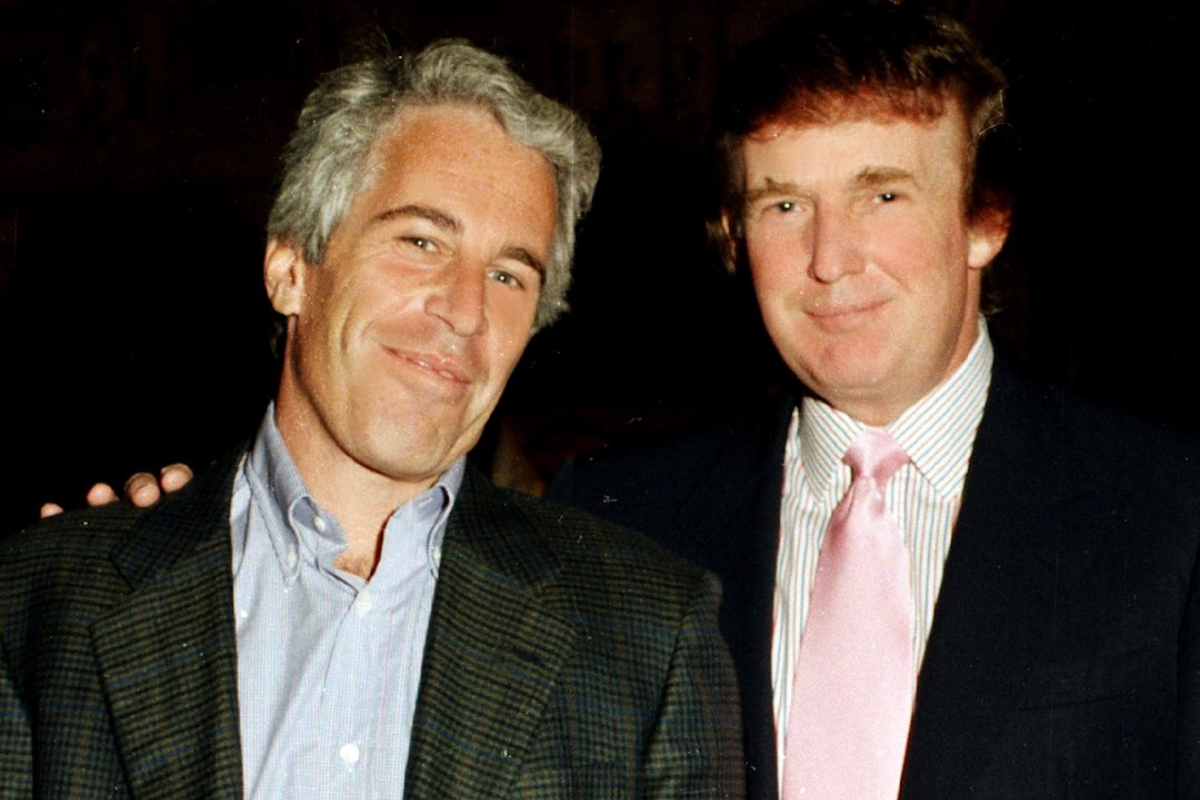
The exhibition's title leaves little ambiguity about where that accusation is aimed. Organisers openly connect the project to scrutiny surrounding Donald Trump and his past friendship with Epstein, a relationship documented repeatedly in public records, photographs and media reporting.
Trump has denied wrongdoing and has repeatedly distanced himself from Epstein, saying their friendship ended in the mid-2000s after a dispute involving staff at Mar-a-Lago. Still, his name appears thousands of times within the released files, a fact that continues to fuel public suspicion and political anger.
That anger hangs heavily inside the gallery.
Admission is free but tightly controlled. Only a limited number of visitors are permitted inside each hour through advance reservations, while journalists, lawyers and law enforcement officials may request special access to review the documents more closely.
Source: International Business Times UK
