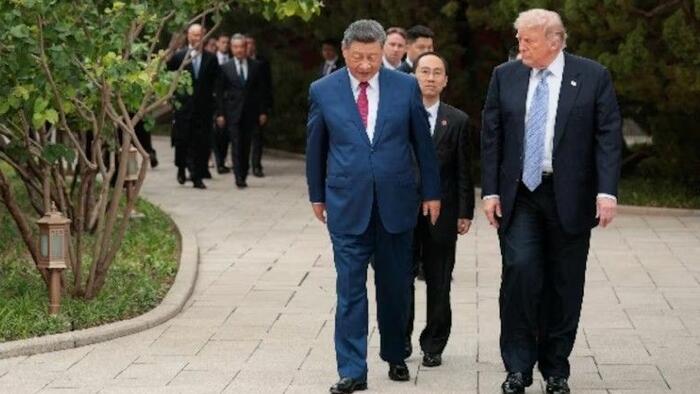
U.S. and Chinese leaders agreed to establish a new"Board of Trade"and a parallel"Board of Investment"during President Donald Trump’s two-day visit to Beijing - a summit that ended much as it began: with significant pageantry, warm personal rapport between the leaders, and modest, incremental progress on trade.The new boards aim to oversee bilateral purchases, manage trade differences, facilitate deals in non-sensitive sectors(with roughly $30 billion in goods identified), and provide a standing channel to prevent future escalations without constant high-level intervention.
The boards were a pre-summit priority pushed by U.S. officials,including Treasury Secretary Scott Bessent and U.S. Trade Representative Jamieson Greer. They build on preparatory talks in South Korea that produced what both sides described as "generally balanced and positive outcomes." Chinese state media, including Xinhua, highlighted the agreements as part of efforts to expand practical cooperation and maintain stable economic ties.
This development aligns with Xi Jinping’s broader push to reframe the bilateral relationship as one of"constructive strategic stability"- a new guiding vision intended to provide predictability for the next three years and beyond, emphasizing cooperation as the mainstay while allowing for "moderate competition" and "manageable differences." Xi described it as a positive, sound, constant, and enduring stability that should translate into concrete actions.
Trump touted "fantastic trade deals"upon departure, while Xi emphasized win-win outcomes and the importance of sustaining momentum in economic ties.
And hey,America apparently needs 500,000 Chinese students in the US,andChina should be able to purchase US farmlandso that collages and farm prices don't collapse, or something.
NOW - Trump says it's good to have 500,000 foreign Chinese students in the U.S. and for China to purchase U.S. farmland; otherwise, colleges and farm prices would collapse: "I frankly think that it's good that people come from other countries and they learn our culture."pic.twitter.com/3vQDXpjchz
Despite the institutional progress, several high-priority issues saw limited or no resolution:
Competing narratives quickly emerged from the summit - highlighting the persistent gap in how Washington and Beijing frame their relationship.Chinese state media, including Xinhua, emphasized Taiwan as "the most important issue"in bilateral ties, with Xi warning Trump that mishandling it could lead to confrontation or even conflict while reiterating opposition to “Taiwan independence.” (U.S. officials, including Secretary of State Marco Rubio, reaffirmed that American policy on Taiwan remains unchanged.)In contrast, the White House readout and Trump’s public comments focused heavily on international issues such as Iran, reopening the Strait of Hormuz, global energy security, and economic cooperation- including Xi’s reported interest in buying more U.S. oil to reduce Middle East dependence, fentanyl precursor controls, and increased agricultural purchases. Trump described the relationship as one that is “going to be better than ever before,” whileXi suggested that "cooperation benefits both, while conflict hurts both."Analystsnotedthat Beijing’s spotlight on Taiwan may serve to shape domestic and international perception and divert attention from other sensitive topics like trade imbalances, nuclear issues, and Iran.Meanwhile, the strong U.S. business delegation - including NVIDIA’s Jensen Huang - underscored Washington’s priority of securing concrete commercial wins. These divergent readouts reflect each side’s strategic messaging priorities: China seeking to reinforce red lines and stability on its terms, and the U.S. highlighting transactional progress and geopolitical alignment.
While markets kept a watchful eye on any headlines about the war in Iran, palates were left dry as only tepid announcements dripped out, such as that China “offered help” on Iran and “pledged not to send weapons.” What they did not manage to evade was a conversation about Taiwan. During the two and a half hour conversation with Trump,Xi underscored that US intervention in Taiwan could trigger a “highly dangerous situation.” While Rubio underscored that the topic of American arms sales to Taiwan wasn’t a major focus of discussion, it likely will be whenCongress’ approved USD 14bn arms sale to Taiwanlands on Trump’s desk, and again when Xi visits the White House in September.
Overall Assessment: The summit went a long way in stabilizing ties through new dialogue mechanisms and modest commercial wins rather than grand bargains. Trump returned with a few modest wins he can highlight domestically ahead of midterms - though the whole 'Chinese students and farms' might be a tough pitch to MAGA, while Xi secured a narrative of strategic predictability and time for China to address its economic challenges.
Source: ZeroHedge News
