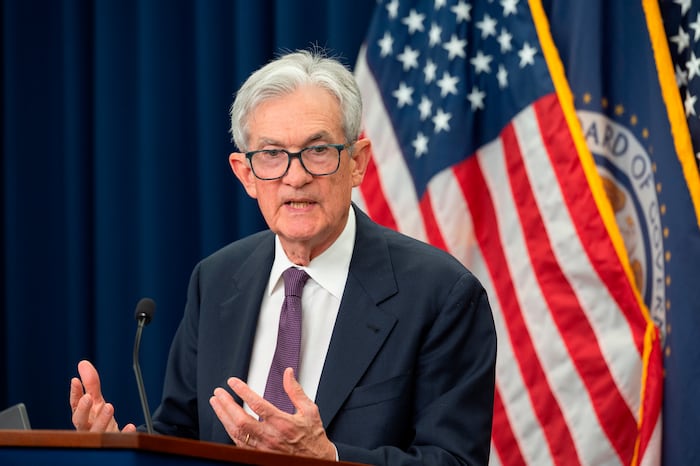
WASHINGTON (AP) — When Jerome Powell was sworn in as chair of the Federal Reserve eight years ago, economists worried that inflation and interest rates were too low and that too few Americans had jobs.
Now, as Powell steps down from the post after eight tumultuous years, the U.S. economy is transformed: Inflation soared after the pandemic and has remained above the Fed's 2% target for more than five years, angering voters and making rents, cars, and groceries harder to afford. The Fed's key short-term rate rose to a two-decade high in 2023, even as unemployment fell to a half-century low.
Along the way, Powell shrugged off relentless personal attacks from President Donald Trump that began just months after his appointment. But in January, he pushed back against an unprecedented legal investigation by the Justice Department, becoming one of the few top officials in Washington to stand up to the Trump White House.
Powell said he will continue serving on the governing board until he is confident the Fed’s independence is truly restored. His success at protecting the central bank from day-to-day politics will be a key part of his legacy.
“It is not an unblemished record, but in an extremely challenging context, he’s performed exceedingly well," said David Wilcox, a senior fellow at the Peterson Institute for International Economics and director of research at Bloomberg Economics. “And my overall assessment is that the country has been lucky indeed to have him as chair.”
Unlike many of his predecessors, Powell, 73, is not a trained economist, but a lawyer who also worked in finance before joining the Fed's board of governors in 2012. Unassuming in public and private, Powell often introduces himself as “Jay” and would display his guitar-playing skills, honed as a student busking through Europe, at the Fed's holiday parties.
‘Transitory’ inflation proved persistent
An inescapable part of Powell's legacy will be the post-pandemic inflation surge, when consumer prices rose by a four-decade high of 9.1% in June 2022.
Overall prices are now 27% higher than just before the pandemic six years ago, a staggering change for a country that had experienced little inflation for generations. Prices rose just 10% in the six years before the pandemic. Groceries are 30% more expensive than six years ago, after they rose just 3.6% in the six years preceding COVID.
Powell and other Fed officials — and indeed most economists — initially said the inflationary surge was “transitory,” a result of supply chain snarls brought about by the pandemic, as COVID shut down factories and slowed ports around the world.
Source: WPLG
