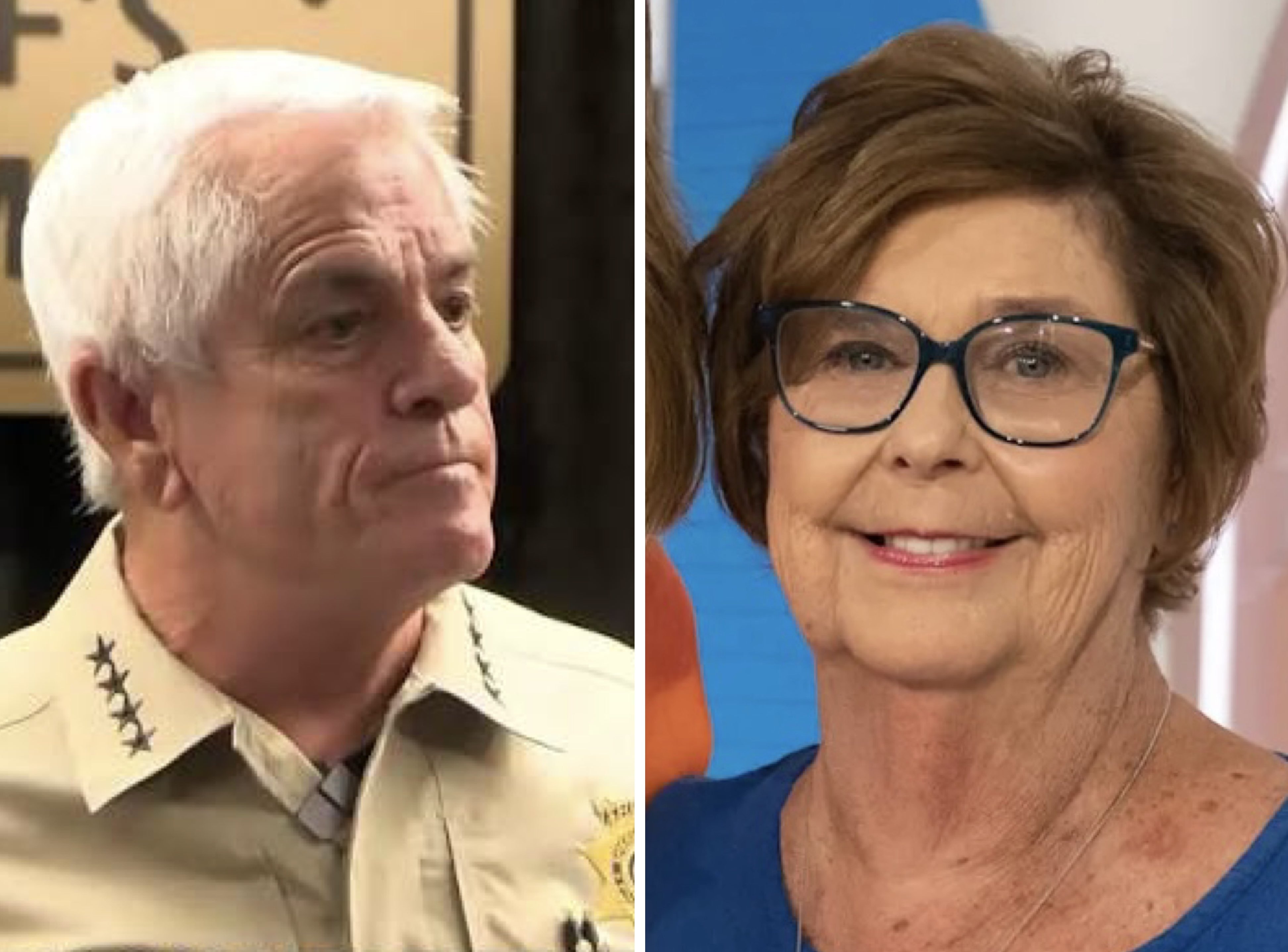
More than 100 days after Nancy Guthrie disappeared from her Tucson-area home, investigators say the DNA evidence in the case was first sent to a private laboratory in Florida before being transferred to theFBI's lab in Quantico, a move that has intensified scrutiny of how the inquiry is being handled.
Sheriff Chris Nanos has insisted key details are being withheldto protect the case, even as critics, including Khloé Kardashian, question why so little has been made public.
Sheriff Nanos has openly acknowledged that his team is keeping parts of the Nancy Guthrie investigation out of public view. Speaking to Arizona station KOLD, he was asked directly whether there was information that had not been released.
'Yes, absolutely there are,' he replied. 'But it's not done because we got to keep it a secret. It's done because we got to protect our case.'
The sheriff, who is leading the probe into Guthrie's apparent abduction from her Arizona home, pushed back at critics who see the silence as a sign of drift. He insisted that the Pima County Sheriff's Department, working alongside the FBI, is moving closer to an arrest.
'I believe, at some point in time, we will make an arrest on this case,' Nanos said. 'And whoever that individual is, that individual will have a right to a fair and impartial trial. We continue to work with our labs, whether it's on the digital end or the biological end, DNA.'
Officially, investigators say they are processing scientific evidence and digital data and are still actively following up leads. A department spokesperson has stressed that, despite the long timeline, the case remains very much open.
Beneath the arguments over transparency sits one awkward, technical storyline that has already raised eyebrows among armchair detectives: the handling of DNA from Nancy Guthrie's home.
Sheriff Nanos confirmed in March that multiple DNA samples had been collected from the Tucson‑area property, including material that did not belong to Guthrie or to those close to her. He described that evidence as a mixture that scientists were struggling to separate into individual profiles.
'It's a challenge because we know we have DNA, but now we have to deal with that mixture and how we're going to separate it,' he said, adding that his office was relying on forensic labs and on rapidly evolving technology to improve the odds of success.
Source: International Business Times UK
