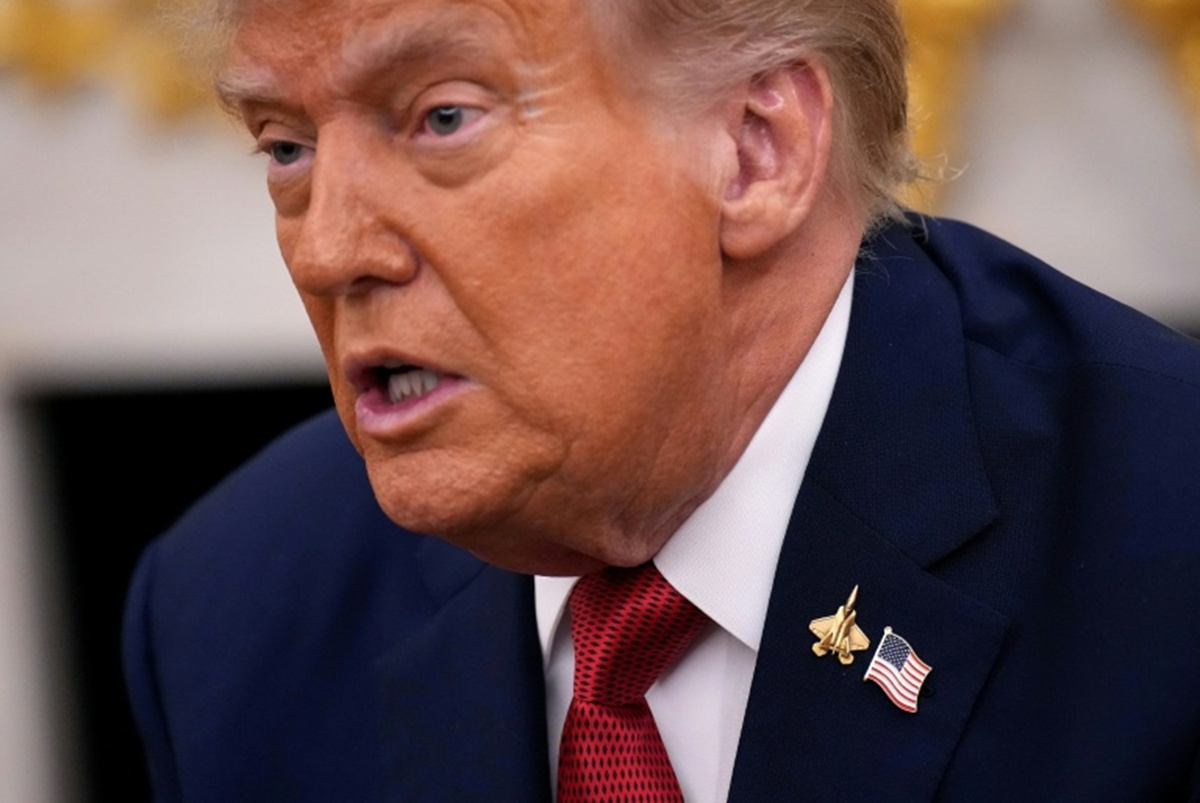
Federal judges, including those appointed byDonald Trumphimself, have now ruled against his administration'smandatory ICE detention policymore than 10,000 times, with several condemning it in language rarely seen in American courtrooms.
APolitico analysispublished on 13 May 2026 tracked tens of thousands of detention cases that have flooded the federal court system since ICE adopted the policy in July 2025, finding that roughly 90% of all rulings went against the administration.
The policy, which reclassified virtually any undocumented immigrant detained in the US interior as an 'applicant for admission' and stripped them of the right to a bond hearing, has triggered a volume of adverse judicial rulings described as unprecedented in modern immigration history.
The controversy originates from a single directive. On 8 July 2025,ICE Director Todd Lyons issued an interim memodeclaring that all immigrants targeted for deportation, regardless of how long they had lived in the United States, would be classified as 'applicants for admission' under section 235 of the Immigration and Nationality Act. The practical consequence was total: no bond hearings, no opportunity for a judge to assess individual risk, and no release pending proceedings.
Every previous administration for nearly 30 years had read the same statute to apply only to people apprehended at the border. TheNational Immigration Forumnoted that the shift affected longtime residents picked up during traffic stops, workplace raids, and routine immigration check-ins.
By January 2026, ICE was holding approximately 73,000 individuals in custody, a record high and nearly double the average daily detained population of prior years. More than 50,000 of those roughly 68,000 people detained by early February lacked any prior criminal record.
Habeas corpus petitions, the legal mechanism by which detainees challenge the lawfulness of their imprisonment in federal court, poured into district courts nationwide. Judges across the country began ruling on the policy's legality at a pace the system had never encountered. The adverse rulings mounted quickly. By the time Politico released its database in May 2026, more than 10,000 had ruled against the administration compared with approximately 1,200 that sided with it.
The language emerging from those rulings has been striking, particularly given the bench's political composition. US District Judge Gary R. Brown,nominated to the Eastern District of New York by Trump in 2019, wrote in March 2026 about a 24-year-old man named Hesler Asaf Garcia Lanza, a theatrical lighting designer who had been detained by ICE officers because he resembled someone else agents were seeking. After Brown ordered his release in January, ICE revoked his work authorisation card, sent it to a facility in Virginia, and assessed him a £4,034 ($5,130) fine.
'He was handcuffed, shackled and detained in a facility designed to hold charged and convicted criminals,' Brown wrote in his 24-page ruling. 'This isn't how things are supposed to work in America. Unquestionably, the laws of human decency condemn such villainy. While the Executive Branch retains the right to set policy regarding immigration matters, it is forbidden from trampling our system of laws, a system which has safeguarded this nation for close to 250 years.' Brown added that 'the problems documented in this case appear widespread.' He had been appointed by the very administration he was now rebuking.
The harshest language from appellate courts came on 28 April 2026, when a unanimous three-judge panel of the Second Circuit Court of Appeals struck down the policy for New York, Connecticut, and Vermont. Writing for the panel,Judge Joseph Bianco, also a Trump appointee, warned that the administration's reading of the 1996 law would 'send a seismic shock through our immigration detention system and society, straining our already overcrowded detention infrastructure, incarcerating millions, separating families, and disrupting communities.' Bianco acknowledged the conflict with other circuits, writing that the Second Circuit was joining 'the overwhelming majority of federal judges across the Nation' in concluding the government's interpretation 'defies their plain text.'
Source: International Business Times UK
