Days ahead of another round of talks with US negotiators -- and on the heels of more saber-rattling by the Trump administration --Iran is touting the potential mutual economic benefits of a deal that would terminate the West's long-running sanctions regimeagainst the second-largest and second-most-populous country in the Middle East.
"For the sake of an agreement's durability,it is essential that the U.S. also benefits in areas with high and quick economic returns,"said Iranian Deputy Director for Economic Diplomacy Hamid Ghanbari on Sunday, according to Iran's FARS news agency. He said that, during negotiations, there had been discussion of what FARS called "shared interests in the fields ofoil, gas, mining and even aircraft purchases."
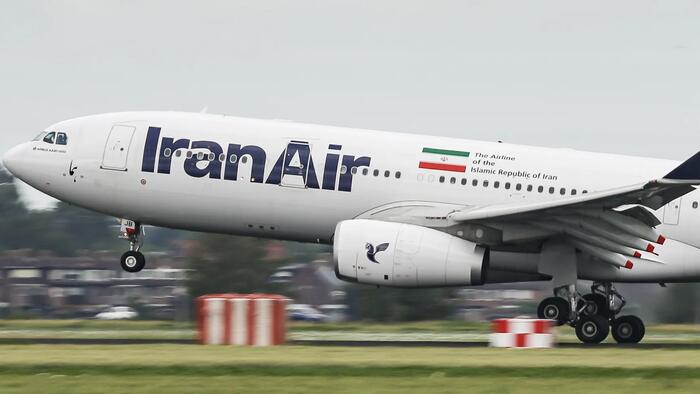
Sanctions have long thwarted Iran's need to update the country's passenger jet fleets. After the 2015 nuclear deal was reached and sanctions eased,Iran raced to put in orders for new aircraft from Western suppliers. When President Trump withdrew from the nuclear deal -- despite Iran's full compliance with it --Boeing instantly lost $20 billion worth of business.
Oil prices were flat in early-Monday global trading. "With both sides expected to hold firm on their core red lines,expectations are low that a deal can be reached and this is likely to be the calm before the storm,"IG analyst Tony Sycamore toldYahoo.
Oman is set to mediatetalks in Genevathis week. Foreign Minister Abbas Araghchi is leading the Iranian delegation, while the US delegation will be headed by Steve Witkoff and Trump son-in-law Jared Kushner. Ahead of the talks, Israeli Prime Minister Benjamin Netanyahu made his sixth US meeting with Trump in just the last year.Netanyahu continues to push for terms that guarantee Iranian refusalsand thus set the stage for more war.
Thosepoison-pill demandsinclude Iran ceasing all uranium enrichment and -- preposterously -- dismantling the conventional, ballistic missile program that proved so effective in responding to Israel's initiation of war last June.Trump reportedlytoldNetanyahu in December that he'd back Israeli strikeson Iran's ballistic missiles program if a new deal isn't reached.
In May 2018,Trump withdrew the United States from the nuclear dealthat had been negotiated between Iran and various Western governments and signed in 2015. Under that deal -- the Joint Comprehensive Plan of Action (JCPOA) -- Iran agreed toa wide array of nuclear safeguards. They included eliminating its medium-enriched uranium, reducing its low-enriched uranium inventory by 98%, capping future enrichment at 3.67%, slashing its number of centrifuges, submitting to enhanced external monitoring, and rendering its heavy-water reactor unusable bypouring concretein it.
At the time of Trump's withdrawal, Iran was in full compliance, according to the International Atomic Energy Agency.In response to the re-imposition of US sanctions, Iran began straying from its own commitments under the deal, seemingly pushing the only lever it had to bring the deal back and get out from under sanctions that have sapped Iran's economy and inflicted aharsh toll on innocent Iranian citizens.
On Friday,Reutersreportedthat thePentagon is preparing for a "sustained, weeks-long military campaign"against Iran if President Trump gives the green light. That news came asa second American aircraft carrier was making its way to the region.TheUSS Gerald Ford-- the world's largest --will jointheUSS Abraham Lincoln, which is already on station. Before receiving its new orders, theFordhad been operating in the Caribbean after being abruptly redeployed from the Mediterranean -- part of an earlier show of force tied to posturing against Venezuela.
Source: ZeroHedge News
