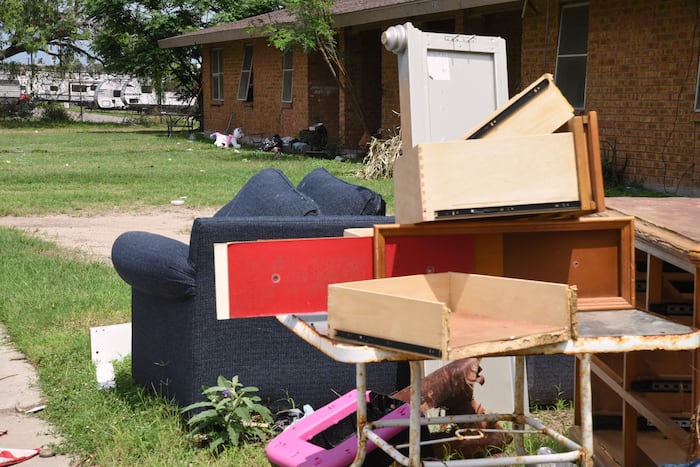
PORT ISABEL, Texas (AP) — Until recently, young children ran in and out of their public housing homes in this Gulf Coast town, playing on sun-dappled lawns as mothers looked over their shoulders for the school bus to drop off their older kids. Suddenly, couches, dressers and refrigerators started appearing curbside for movers or garbage collectors.
Within weeks, the neighborhood was a ghost town and the playground was empty.
What prompted the mass exodus was a bungled message from the housing authority in Port Isabel, a South Texas community of 5,000 people, many of whom are immigrants working at hotels and restaurants on the beaches of nearby South Padre Island. The Port Isabel Housing Authority indicated a Trump administration proposal was about to take effect that would end housing assistance to families with at least one member in the country illegally. The events that followed provided a glimpse of what could happen in communities across the U.S. if the proposed rule is actually finalized.
“The impact was not limited to undocumented immigrants, but really to immigrants who are here legally as well as people within their families who are citizens,” Marie Claire Tran-Leung, senior staff attorney at National Housing Law Project, said.
For decades, families with at least one legal or eligible resident have been allowed to live in public housing provided those who are here illegally or are otherwise ineligible due to their immigration status pay a full, unsubsidized share of rent. The U.S. Department of Housing and Urban Department wants to reverse that.
Advocates estimate up to 80,000 people would be kicked out of their homes nationwide under the measure that is part of President Donald Trump’s immigration crackdown. They include U.S. citizens, many of them children born in this country but whose parents were not.
A message from the Port Isabel Housing Authority
On Feb. 3, the Port Isabel Housing Authority sent residents a letter saying that the Trump administration wanted every household member to prove legal status within 30 days or face eviction. Three weeks later, the agency sent a note of “clarification” that no such proof was required.
Half of residents living in Port Isabel public housing left within a month of receiving the first letter. The occupancy rate plunged from 91% in January to 43% in May, far below the national average of 94%.
The proposed rule from HUD still has not taken effect.
Source: WPLG
