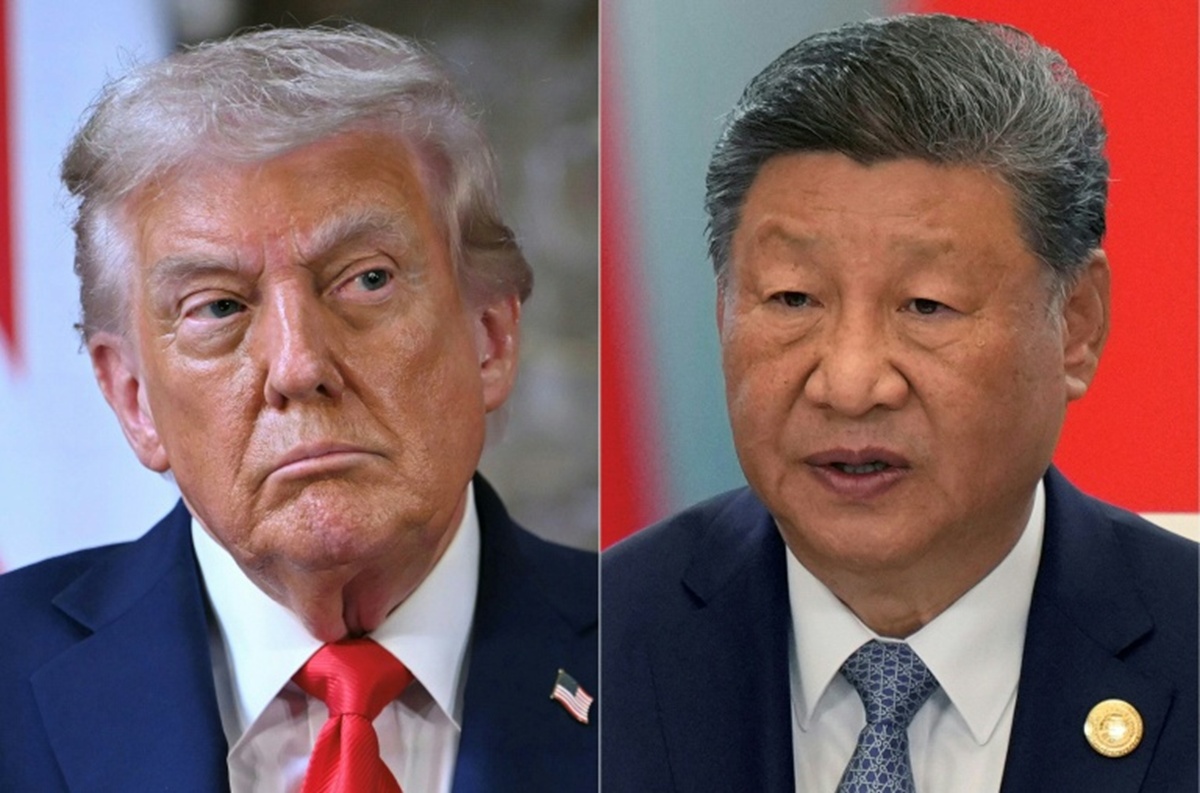
As Donald Trump and Xi Jinping convene in Beijing, a ghost from ancient Greece looms over their high-stakes negotiations.
This historic concept, used by the Chinese leader to frame modern tensions, suggests that a catastrophic clash between a rising power and an established giant might be unavoidable. Understanding this theory is now essential to grasping whether the world's two largest economies are on a collision course for war.
While Xi Jinping and Donald Trumpheld talksin Beijing this Thursday, an ancient Greek theory took an unlikely lead in the strategic debate between the two global giants: the 'Thucydides Trap.'
In his initial comments, Xi questioned, 'Whether China and the United States can transcend the so-called Thucydides Trap and create a new normalisation of relations between major powers; whether we can join hands to address global challenges and inject greater stability into the world; whether we can advance the well-being of the peoples of our two countries and the future destiny of humanity, and jointly create a better future for bilateral relations.'
Xi Jinping is putting on a clinic:“The whole world is watching our meeting. The International situation is turbulent. The world is at a new crossroads: Can China and the US overcome the Thucydides Trap and create a new paradigm to meet global challenges together.”The…pic.twitter.com/GyU0I10TV0
As the two-way talks began, Xi presented the path of China-US ties as a critical dilemma for the modern world. This phrase points to a profound worry in today's political landscape—whether the increasing friction between Washington and Beijing can remain within the bounds of competition or is destined to collapse into open war.
On the surface, the expression feels like something from a classroom, yet it is actually driving the real-world friction over trade battles, microchip bans, naval stand-offs in the Indo-Pacific, and the cutthroat scramble to lead in technology.
Harvard scholar Graham Allison brought the 'Thucydides Trap' into the mainstream, taking inspiration from the work of Thucydides, a historian from ancient Greece. Nearly 2,500 years ago, Thucydides examined the Peloponnesian War fought between Athens and Sparta, deciding that the growth of Athens and the panic it caused in Sparta made a military clash unavoidable.
Allison eventually applied this logic to the modern world. He argued that whenever an emerging nation begins to unseat a leading global power, deep-seated pressures build up that push both sides toward a clash—even if nobody actually wants to fight.
He turned to this perspective to study the shifting dynamics between Washington and Beijing as their roles on the world stage change.
Source: International Business Times UK
