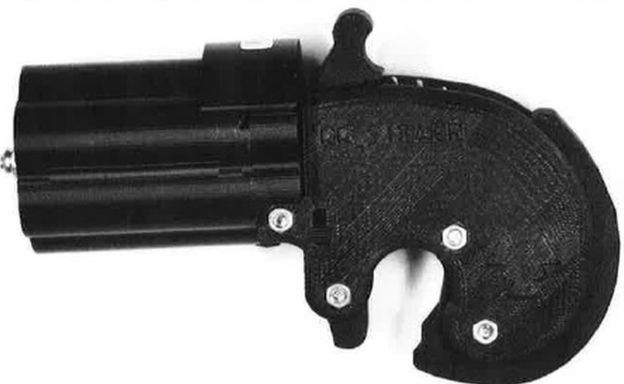
AsUS lawmakers consider billsthat would require 3D printers todetect and block the production of firearm components, longtime 3D printing policy expert Michael Weinberg once weighed in again on a debate he has been part of formore than a decade.
TheOSHWAboard member’s objection is not to gun control itself. Instead, he argues that embedding firearm screening requirements into 3D printers overlooks key technical realities.
Early experiments in 3D printing firearm componentsbegan drawing national headlines in 2012. Even then, Weinberg urged policymakers to step back and askwhether 3D printing truly represented a new threat.
Hobbyists had already been using CNC machines and other automated tools to manufacture firearms at home. The arrival of consumer 3D printers did not create home gunmaking, the policy expert argued at the time. It simply made the activity more visible and easier to discuss.
That distinction continues to shape his analysis today. In responding to the proposed screening mandates, Weinberg contends that focusingregulatory energy on the 3D printeritself risks confusing a tool with the behavior policymakers are attempting to address. Laws should target harmful conduct or regulated objects, in his view, rather than the general-purpose devices capable of producing them.
The Challenge of Identification
At the heart of his criticism is the technical feasibility of printer-based detection. Identifying firearm components based solely on a 3D file’s geometry is far more complicated than it may sound. Mechanical parts often resemble one another.
A component used in a firearm can look strikingly similar to a part intended for a door hinge, a tool housing, or another entirely benign application. Even sophisticated engineering software cannot reliablydetermine a part’s intended purposesimply by analyzing its shape.
The OSHWA member notes that one possible approach would rely on advanced algorithms capable of analyzing each file before printing begins. Yet most consumer-grade 3D printers lack the computational power to run that level of analysis locally. Moving the task to remote servers would require constant internet connectivity, a significant shift for devices that are frequently used offline.
Such an approach would also raise questions about who maintains the detection database, how updates are distributed, and what privacy safeguards would be in place.
Source: 3D Printing Industry
