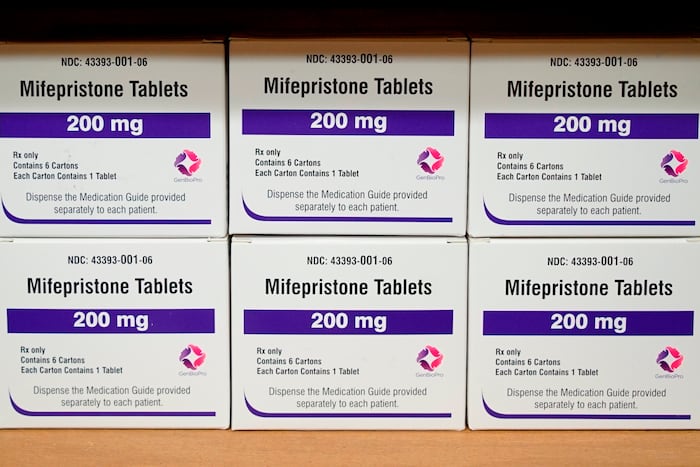
WASHINGTON (AP) — The Supreme Court on Thursday preserved women’s access to a drug used in the most common method of abortion, rejecting lower-court restrictions while a lawsuit continues.
The court’s order allows women seeking abortions to continue obtaining the drug, mifepristone, at pharmacies or through the mail, without an in-person visit to a doctor. Access is likely to remain uninterrupted at least until into next year as the case plays out, including a potential appeal to the high court.
The justices granted emergency requests from makers of mifepristone, who are appealing a federal appeals court ruling that would require women to see a doctor in person and halt delivery of mifepristone through the mail. The federal Food and Drug Administration, which first approved mifepristone for use in abortion in 2000, stopped requiring in-person visits five years ago.
Justices Clarence Thomas and Samuel Alito dissented, with Thomas writing that the two companies, Danco Laboratories and GenBioPro, are not entitled to the court's action to spare them “lost profits from their criminal enterprise.”
Anti-abortion groups, frustrated with President Donald Trump’s administration, are pushing the FDA to move faster with a review that they hope will result in restrictions on mifepristone, including blocking its prescribing via telehealth platforms. The Republican administration says the work takes time.
Earlier this week, FDA Commissioner Marty Makary resigned after months of criticism from Trump’s political allies, including abortion opponents.
Susan B. Anthony Pro-Life America and similarly aligned groups had called on Trump to fire Makary over the slow pace of the mifepristone review.
The court is dealing with its latest abortion controversy four years after its conservative majority overturned Roe v. Wade and allowed more than a dozen states to effectively ban abortion outright.
The case before the court stems from a lawsuit Louisiana filed to roll back the Food and Drug Administration’s rules on how mifepristone can be prescribed. The state claims that the policy undermines the ban there, and it questions the safety of the drug, which has repeatedly been deemed safe and effective by FDA scientists.
Alito, who wrote the opinion overturning Roe, agreed that the state's efforts have been thwarted by medical providers and private organizations that mail the pills to women in Louisiana, despite the abortion ban. Danco and GenBioPro “are obviously aware of what is going on yet nevertheless supply the drug and reap profits from its felonious use in Louisiana,” he wrote.
Source: WPLG
