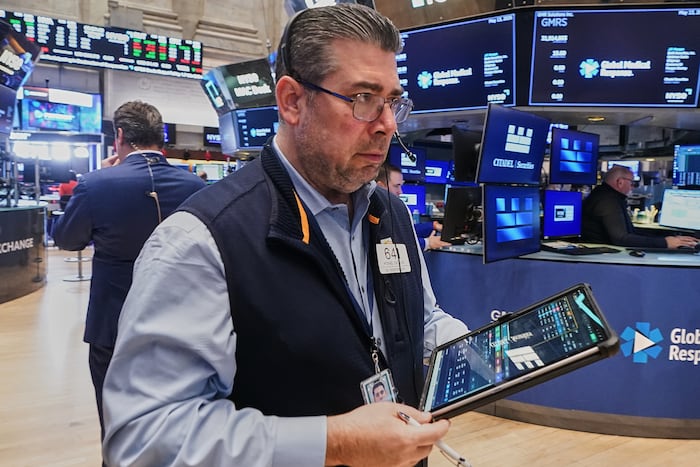
NEW YORK (AP) — The U.S. stock market rose to more records Thursday after Cisco Systems joined the parade of U.S. companies reporting fatter profits for the start of 2026 than analysts expected.
The S&P 500 climbed 0.8% to set an all-time high for a second straight day. The Dow Jones Industrial Average rose 370 points, or 0.7%, and finished above the 50,000 level for the first time since the war with Iran began, while the Nasdaq composite added 0.9% to its own record.
Cisco helped lead the market after reporting better profit and revenue for the latest quarter than analysts expected. The tech giant’s stock leaped 13.4% for its best day in nearly 15 years, and CEO Chuck Robbins said it saw “very strong, broad-based demand for our products.”
Big Tech behemoths in particular are pouring cash into artificial-intelligence technology, and Cisco gave a forecast for profit in the current quarter that easily topped analysts’ expectations.
Such voracious demand for AI, and the big profits it’s producing, have been major reasons the U.S. stock market has set records throughout this year. Cerebras Systems, an AI processor company, raised $5.55 billion after selling its stock in an initial public offering, and its shares surged 68.1% in their debut on the Nasdaq Thursday.
Corporate earnings reported so far this season have “reinforced that this is still an AI-led market, but one where the impact is broadening quickly,” according to Gargi Pal Chaudhuri, chief investment and portfolio strategist at BlackRock.
“What started with a handful of companies is now driving earnings growth across semiconductors, infrastructure, and even parts of the industrial economy,” she said.
Outside of AI, other stocks rallying after delivering better-than-expected profit reports included StubHub Holdings, up 13.7%, Viking Holdings, up 5.5% and Yeti Holdings, up 6.2%.
All three companies sell products that aren’t day-to-day essentials, such as concert tickets, river cruises and insulated water bottles. Strong results from them could be an indicator that customers are still willing to spend even though U.S. consumers have been telling surveys they’re feeling discouraged about the economy.
Whether U.S. households will keep spending and support the economy is a big question because pressure has been bearing down on them due to high oil prices and inflation created by the Iran war. A report released Thursday said that shoppers overall spent less at U.S. retailers last month than economists expected. But the deceleration after factoring out gasoline and automobile sales wasn’t quite as bad as economists thought it would be.
Source: WPLG
