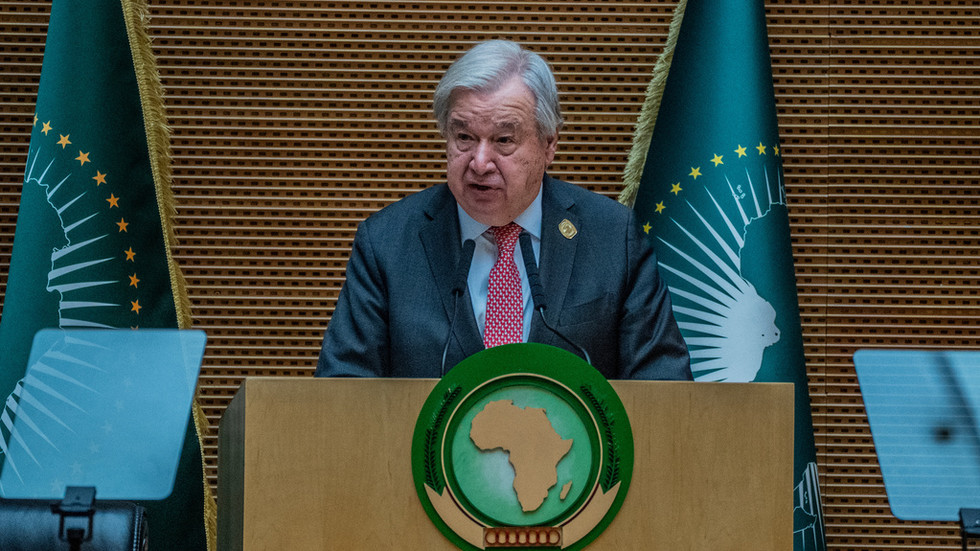
United Nations Secretary-General António Guterres delivered a scathing critique of the Security Council's structure during a high-level meeting on global governance reform in New York, labeling the absence of a permanent African seat as "indefensible" in today's world. Speaking to diplomats and civil society leaders, Guterres argued that the body's outdated composition undermines its legitimacy and effectiveness, particularly as Africa—home to 54 nations and over 1.4 billion people—continues to be sidelined despite its growing geopolitical weight.
Guterres' remarks come amid renewed calls for UNSC expansion, a debate that has simmered for decades without resolution. The Council currently comprises five permanent members—the United States, United Kingdom, France, Russia, and China—each wielding veto power, alongside ten non-permanent seats rotated regionally. Africa, representing more than a quarter of UN member states, holds three non-permanent seats but lacks the permanence and influence afforded to others, a disparity Guterres highlighted as a relic of the post-World War II era that no longer reflects global realities.
The Secretary-General pointed to Africa's substantial contributions to UN peacekeeping operations, where it provides the largest contingent of troops, as evidence of its stake in global security. "Africa is not just a victim of crises; it is a frontline responder," he stated, urging the P5 powers to confront their resistance to reform. Guterres also tied the issue to broader inequities, noting that the Council's paralysis on issues like conflicts in Sudan and the Sahel stems partly from this representational gap.
Reactions poured in swiftly, with African Union Chair Moussa Faki Mahamat praising Guterres for amplifying the continent's voice, while South African President Cyril Ramaphosa reiterated demands for at least two permanent seats for Africa, potentially for Nigeria and South Africa. However, veto-wielding powers showed little movement: China's foreign ministry expressed support for "necessary reforms" without specifics, and the U.S. State Department emphasized consensus-building over radical overhauls. Russian Ambassador Vassily Nebenzia dismissed the criticism as "rhetoric," accusing Western members of hypocrisy on veto usage.
Analysts view Guterres' intervention as a bold escalation, though prospects for change remain dim given the veto barrier—any expansion requires P5 unanimity. Past efforts, like the 2005 G4 proposal (India, Japan, Germany, Brazil) and Africa's Ezulwini Consensus for two seats plus veto rights, have faltered on competing interests. As multipolar tensions rise, the indefensibility Guterres decries could fuel alternative forums like the G20 or BRICS, eroding the UN's centrality in global affairs.
