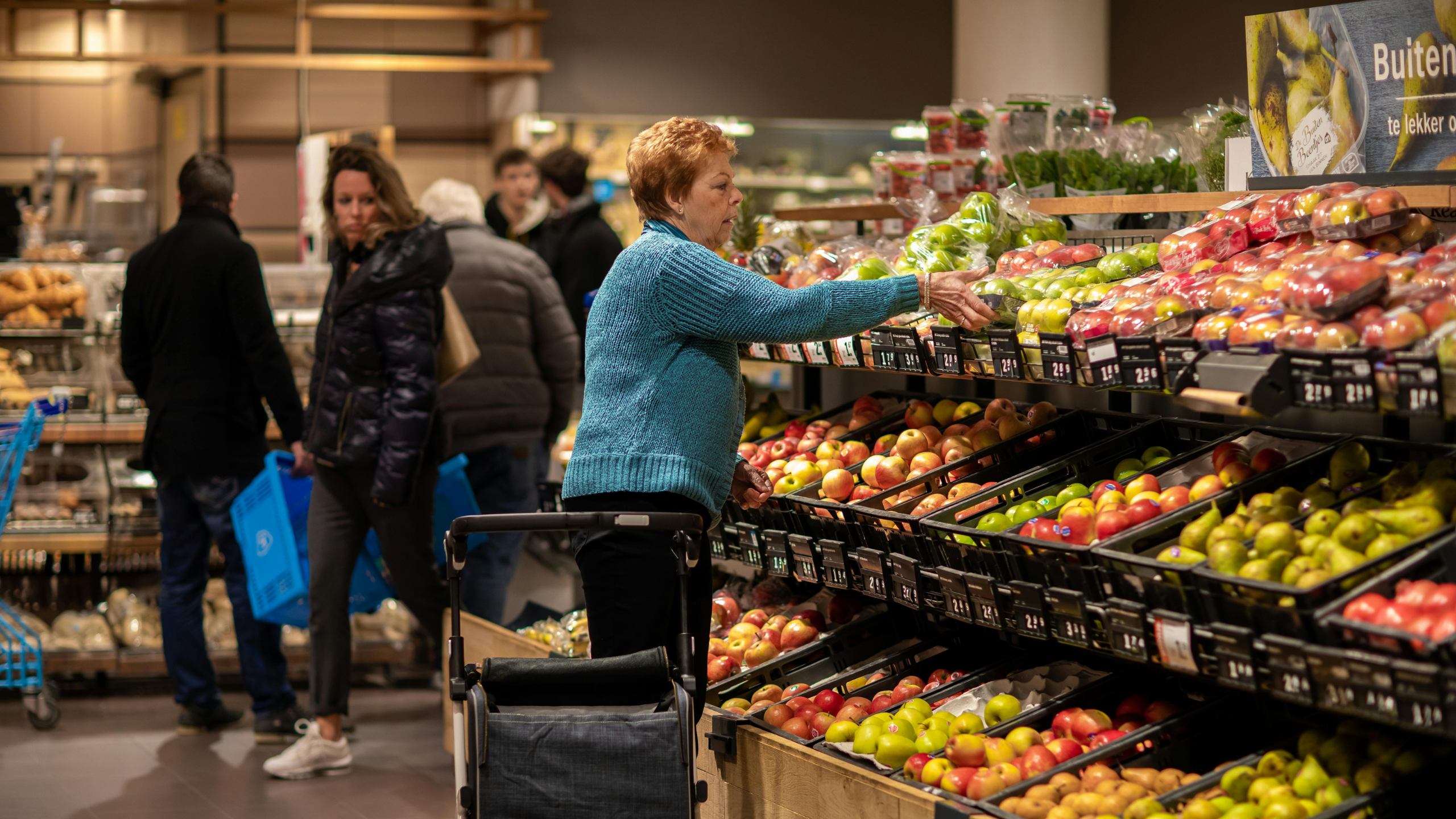
For the first time in three years,American workers' wages are no longer keeping pace with what they spend on food. Real average hourly earnings fell 0.3% year-on-year in April, just as grocery prices posted their sharpest monthly jump since August 2022.
The Consumer Price Index as a whole rose 3.8% over the past year, its highest annual rate since May 2023, with energy costs accounting for more than 40% of the monthly increase. The food-at-home index rose 0.7% from March to April, with five of six major supermarket food categories climbing, theBureau of Labor Statisticsconfirmed in its Consumer Price Index release on 12 May. Over the past 12 months, grocery prices have been up 2.9%.
Tomato prices tell the most dramatic story. They are up roughly 39% compared with April 2025, and the reasons go well beyond general inflation. The Trump administration imposed a 17% antidumping duty on fresh Mexican tomatoes in July 2025 after withdrawing from a 2019 trade agreement. That matters because Mexico supplies about 70% of the fresh tomatoes Americans eat, and the cost of that levy has been passed down the supply chain to shoppers.
Supply got tighter from the domestic side, too. Florida, the largest US tomato-growing state, was hit by multiple winter freezes and storms between December 2025 and January 2026 that cut output during the spring growing season. David Ortega, a food economist at Michigan State University, said no single cause explains the scale of the increase. 'The impact we're seeing is not just driven by one factor,' he told ABC News. 'It's really a combination.'
Running beneath all of it is a surge in diesel costs. TheIran war and the closure of the Strait of Hormuz— a route carrying an estimated one-fifth of global oil supply — have pushed diesel prices approximately 60% higher than a year ago, according to AAA data cited by ABC News. Diesel powers the lorries, refrigerated trailers and cargo ships that move food from farm to shelf. Perishable goods, with their short shelf lives, are the first to absorb those transport cost increases.
'Whenever there is disruption in energy markets, it works its way into food prices eventually,' Parke Wilde, a food economist at Tufts University, told the outlet.
Fresh vegetables as a whole climbed 11.5% year-on-year. Seafood is 6.2% more expensive than 12 months ago. Beef and veal jumped 14.8%, driven by a multi-year contraction of the US cattle herd that has squeezed supply while demand holds firm. Coffee rose 18.5%, fuelled by drought-related shortages in major growing regions. Dairy was one of the few bright spots, falling 0.6% annually, though it did tick up 0.8% in April alone.
The broader food index, which includes restaurant and takeaway spending, rose 3.2% over the year. Eating out is now 3.6% pricier than it was in April 2025. Gasoline, at a national average of $4.50 (£3.55) a gallon as of 12 May, is compounding the squeeze on household budgets.
TheUSDA Economic Research Serviceprojects grocery prices will rise 2.4% across 2026, with beef and veal expected to climb 10.1% and fresh vegetables forecast at 4.8% for the year. Those projections were issued before the April acceleration and may be revised upward.
The current pace sits well below 2022, when grocery inflation topped 11%. But that comparison lands differently after three consecutive years of above-average food costs. Consumers, meanwhile, have not cut back much on spending. 'Even at these high prices, consumption hasn't decreased much,' Ortega said — a pattern that tends to keep prices elevated.
Source: International Business Times UK
