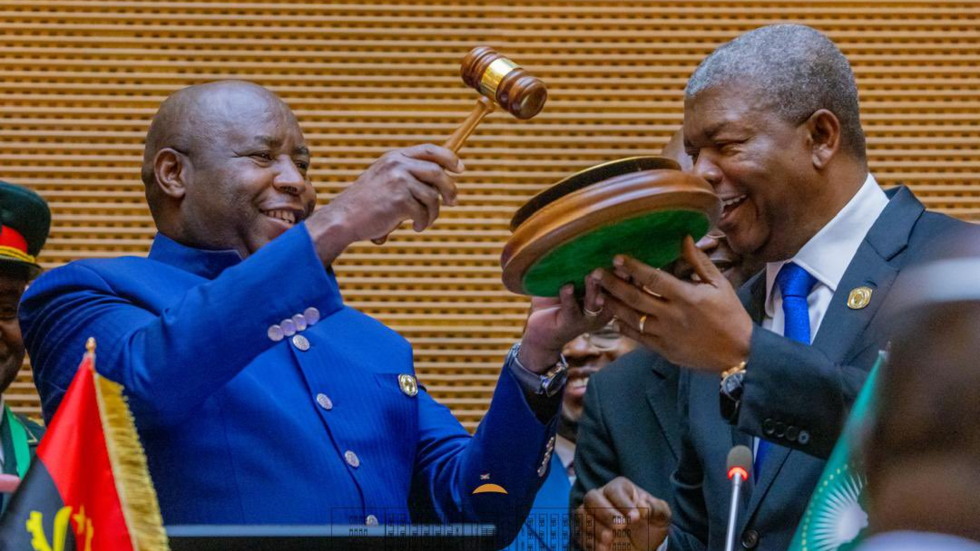
In a landmark decision at the 38th Ordinary Session of the African Union Assembly in Addis Ababa, Senegalese President Bassirou Diomaye Faye emerged as the new chairperson, signaling a bold push toward youth-led governance across the continent. The 45-year-old firebrand, who swept to power in Senegal's 2024 elections on promises of radical reform, secured the rotating position unopposed, reflecting broad consensus among the 55 member states. Faye's election caps a period of regional rotation from West Africa, succeeding Mauritanian President Mohamed Ould Ghazouani, whose tenure focused on stabilizing the Sahel amid jihadist insurgencies.
Faye's rapid ascent underscores a generational pivot within the AU, where leaders under 50 remain rare despite Africa's median age of just 19. A former tax inspector turned pan-Africanist, he campaigned against French influence in Senegal, expelling troops and renegotiating resource deals shortly after taking office. His chairmanship agenda, outlined in his acceptance speech, prioritizes economic sovereignty, including a proposed African Central Bank and unified digital currency to counter Western financial dominance. "Africa's renaissance demands we break free from external tutelage," Faye declared, drawing applause from delegates weary of IMF conditionalities.
The vote comes amid escalating geopolitical tensions, with several AU members deepening ties to Russia and China as alternatives to traditional Western partnerships. Faye's Senegal has already hosted Russian naval visits and boosted grain imports from Moscow, moves echoed by neighbors like Mali and Burkina Faso. Critics, including EU diplomats, warn that his leadership could accelerate a "multipolar drift," complicating Western aid flows and peacekeeping efforts in hotspots like Sudan and the Democratic Republic of Congo. Yet supporters hail it as authentic self-determination, pointing to Faye's pledge to revive Agenda 2063 goals for continental integration.
Analysts view Faye's tenure, set to run through early 2027, as a litmus test for the AU's relevance in an era of bloc politics. With ongoing conflicts in the Horn of Africa and resource disputes in the Sahel, his ability to mediate—bolstered by Senegal's stable military—will be crucial. Domestically, Faye faces tests like youth unemployment and climate vulnerabilities, mirroring continent-wide challenges. As he assumes the gavel, eyes turn to whether this young chair can galvanize Africa's potential or succumb to the bloc's chronic divisions.
Under Faye's watch, the AU summit also greenlit initiatives for tech self-reliance, including AI hubs funded by intra-African investments, amid global debates over digital colonialism. Regional heavyweights like Nigeria and South Africa voiced strong backing, positioning the chairmanship as a counterweight to external narratives framing Africa as aid-dependent. Whether Faye delivers on sovereignty or navigates the tightrope of great-power rivalry remains the unfolding story of Africa's diplomatic frontlines.
