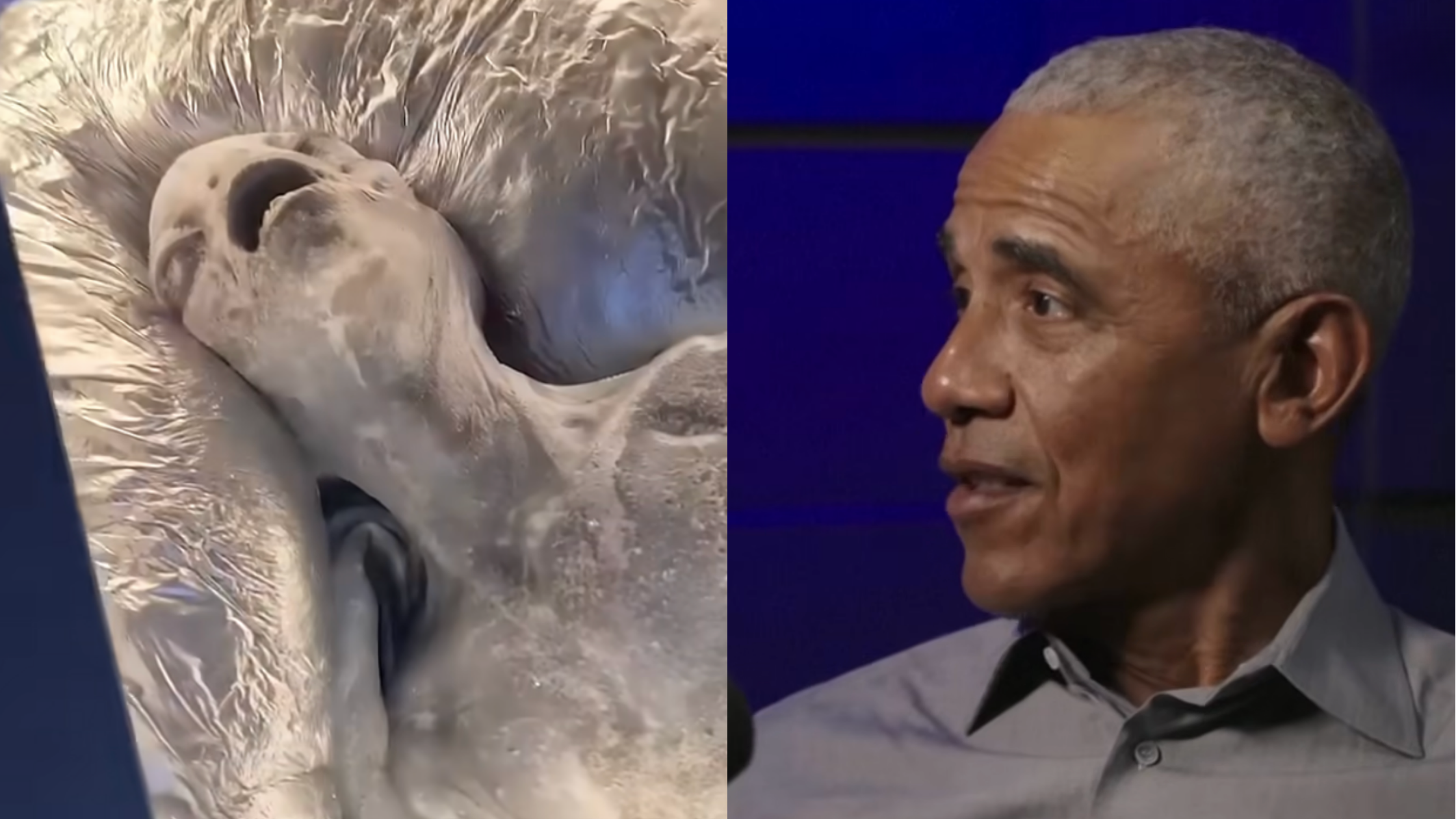
Former President Barack Obama ignited a wave of online speculation when he playfully affirmed the existence of aliens during a recent podcast appearance, prompting renewed questions about what U.S. leaders truly know regarding extraterrestrial life and government secrets.
In an interview released on February 14, 2026, on Brian Tyler Cohen's "No Lie" podcast, Obama fielded rapid-fire questions in a lightning round segment. When Cohen directly asked if aliens exist, Obama responded, "They're real, but I haven't seen them," before dismissing the notion that extraterrestrials are being held at Area 51. The lighthearted exchange quickly turned into a viral clip, captivating audiences amid longstanding public fascination with UFOs and classified intelligence.
The remark, though clearly delivered in jest, resonated deeply in a culture steeped in conspiracy theories about government cover-ups. Obama's comments touched on decades of curiosity surrounding Area 51 and potential hidden knowledge, blending entertainment with political intrigue and fueling fresh online chatter.
Beyond the humor, the exchange highlighted a broader question: how much can a president actually reveal about sensitive information? For many viewers, the real story lay not in the joke itself but in the implications for presidential access to classified data on phenomena like UFOs.
Contrary to popular belief, U.S. presidents do not automatically possess knowledge of all government secrets. Classified information is disseminated on a strict need-to-know basis, even at the highest levels of power. Presidents depend on briefings from intelligence agencies and advisers, with some programs remaining tightly compartmentalized to safeguard national security and prevent leaks.
This structured system ensures that only verified, documented, and relevant intelligence reaches the Oval Office. As a result, assumptions that presidents hold all the answers about extraterrestrial visitations or other mysteries often overestimate their access, underscoring the limitations imposed by security protocols.
