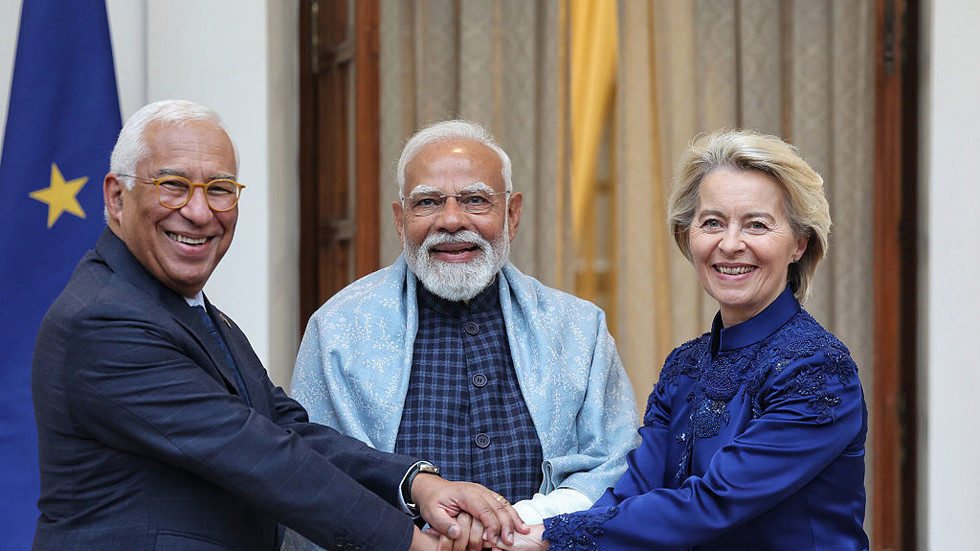
Indian Prime Minister Narendra Modi announced that forthcoming free trade agreements with the European Union and the United Kingdom will dramatically expand India's access to these lucrative markets, positioning the country as a global trade powerhouse. Speaking at a high-profile economic summit in New Delhi, Modi highlighted the deals as a cornerstone of India's ambitious growth strategy, promising reduced tariffs on key exports like pharmaceuticals, textiles, and information technology services. The statements come amid accelerated negotiations, with both the EU and UK signaling readiness to finalize pacts within the year.
The India-UK trade talks, reignited post-Brexit, have gained fresh momentum following a series of bilateral meetings. London has expressed eagerness to diversify supply chains away from China, viewing India as a strategic partner in sectors such as automobiles, gems, and jewelry. Under the proposed deal, India could see duties slashed on over 90% of its goods entering the UK market, potentially boosting bilateral trade from the current $20 billion annually to $50 billion by 2030. Modi emphasized that this partnership aligns with India's "Make in India" initiative, fostering domestic manufacturing and job creation.
Negotiations with the 27-nation EU bloc present a more complex landscape, complicated by issues like carbon border taxes and agricultural protections. Yet, progress has been notable, with interim agreements already easing visa restrictions for Indian professionals in IT and healthcare. The EU, grappling with energy costs and inflation, stands to gain from cheaper Indian generics and renewable energy components. Modi underscored the mutual benefits, noting that the deals could add $100 billion to India's exports over the next decade while addressing Europe's need for resilient supply chains.
Critics, however, caution that the agreements may expose Indian farmers to subsidized European dairy and wine imports, sparking domestic protests from agricultural lobbies. Labor unions in the UK and EU have also raised concerns over potential job displacements in manufacturing. Despite these hurdles, Modi's government views the pacts as vital for countering global protectionism, especially amid U.S.-China trade tensions. Economists predict a 1-2% uplift to India's GDP growth, reinforcing its role as the world's fastest-growing major economy.
Looking ahead, the deals signal a broader realignment in global trade dynamics, with India leveraging its demographic dividend and digital prowess to bridge East-West divides. As Modi put it, "These agreements are not just about commerce; they are about building bridges of prosperity." With ratification processes underway, businesses on both sides are gearing up for a new era of transcontinental commerce.
