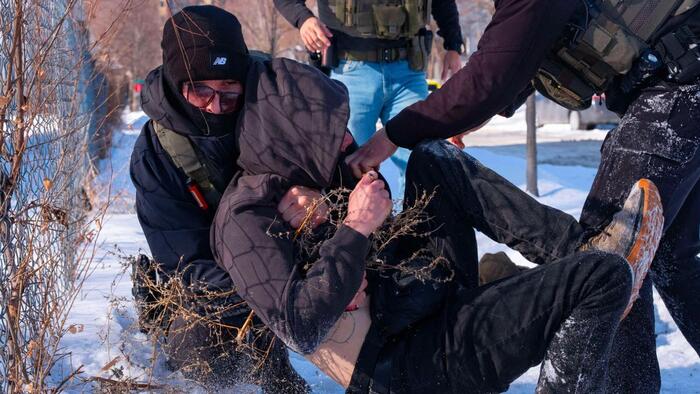
In a sweeping crackdown, federal authorities have indicted 158 individuals on a range of federal crimes stemming from coordinated anti-ICE protests that disrupted operations across Minnesota last summer. The charges, unsealed this week in U.S. District Court in Minneapolis, allege a conspiracy to obstruct law enforcement through blockades, vandalism, and assaults on federal agents at Immigration and Customs Enforcement facilities in the Twin Cities and surrounding areas.
The protests erupted in July amid heightened ICE enforcement actions targeting undocumented immigrants with criminal records, drawing hundreds of demonstrators who labeled the operations as "deportation raids." Organizers from groups like the Minnesota Immigrant Rights Action Committee reportedly mobilized participants via social media, instructing them to form human chains around ICE vans and processing centers. Federal prosecutors claim these actions escalated into violence, with protesters hurling rocks, fireworks, and commercial-grade fireworks at officers, resulting in injuries to at least a dozen agents and significant property damage estimated at over $500,000.
Among the charges are conspiracy to impede federal officers, civil disorder, and destruction of government property under 18 U.S.C. § 372 and related statutes. Several high-profile defendants, including local activists known for past involvement in Black Lives Matter demonstrations, face enhanced penalties for allegedly using encrypted apps to coordinate tactics and evade arrest. U.S. Attorney for the District of Minnesota, Rachel Carlson, emphasized in a press conference that "while the First Amendment protects peaceful assembly, it does not shield violent interference with essential public safety functions."
The indictments come against a backdrop of intensifying national debates over immigration enforcement, particularly in sanctuary-leaning states like Minnesota, where Democratic lawmakers have pushed legislation to limit local cooperation with ICE. Critics of the protests, including state Republicans and law enforcement unions, hail the charges as a necessary deterrent against what they call "domestic terrorism disguised as activism." Supporters of the demonstrators, however, decry the prosecutions as an overreach by the Biden administration, pointing to similar unrest during the 2020 riots that largely escaped federal scrutiny.
As trials loom over the coming months, the case could set precedents for handling mass civil disobedience in immigration hotspots. Legal experts predict plea deals for many of the lower-level participants, but the scale of the indictments—dwarfing previous federal responses to protest-related crimes—signals a tougher federal posture under incoming Trump administration priorities, potentially rippling into other states with active anti-ICE movements.