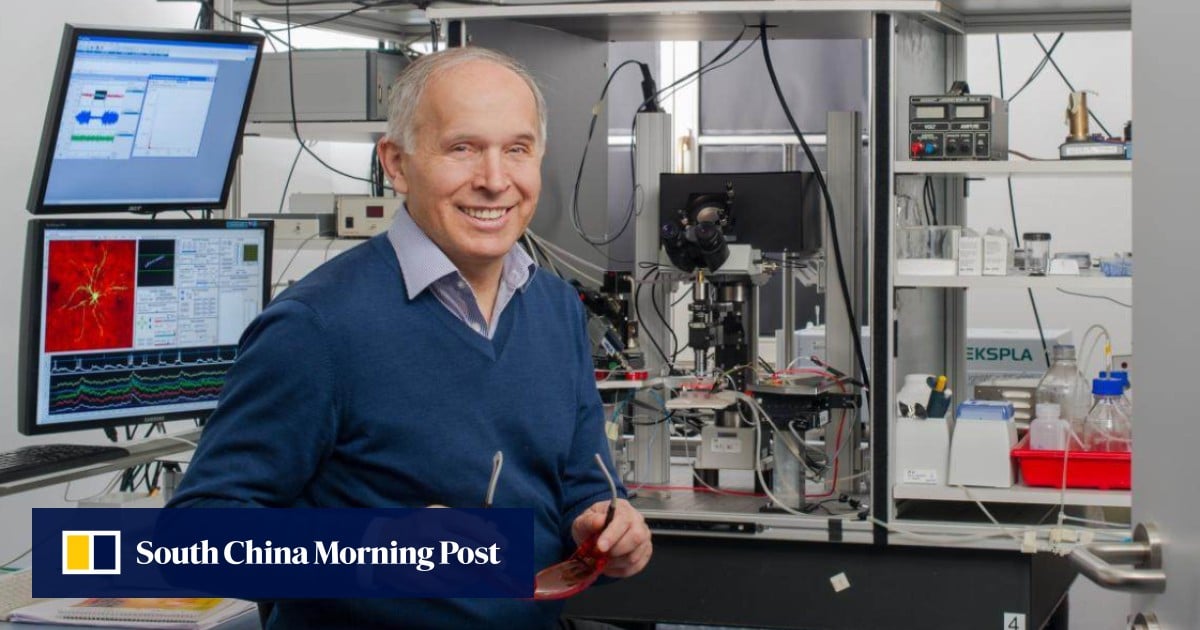
Renowned neuroscientist Arthur Konnerth, a winner of The Brain Prize and pioneer of groundbreaking brain imaging techniques, has left Germany to take up a full-time role at China's rapidly expanding Shenzhen Bay Laboratory.
Konnerth is celebrated for developing the in vitro brain slice patch-clamp recording method, which has become a cornerstone of modern neuroscience. This technique employs a glass microelectrode to form a seal against the surface of a brain cell, preventing electricity from leaking and enabling scientists to precisely measure electrical currents passing through a single "gate" in the cell's membrane.
In 1989, Konnerth collaborated with Bert Sakmann, Frances Edwards, and Tomoyuki Takahashi to revolutionize the method. They successfully extended its application from isolated cells to neurons still connected within slices of brain tissue, transforming it from a conceptual tool into a standard technique in the field. This advancement laid the foundation for modern slice electrophysiology.
Building on his earlier work, Konnerth and his team introduced a pioneering imaging method in 2003. For the first time, this technique allowed researchers to observe entire networks of brain cells in action, visualizing every individual cell simultaneously.
The method has since become widely adopted for studying how the brain controls behavior, marking a significant leap in understanding synaptic transmission and plasticity—areas where Konnerth has made fundamental discoveries.
His move to the Shenzhen Bay Laboratory underscores China's growing prominence in neuroscience research, as the institution continues to attract top global talent amid its rapid expansion.
