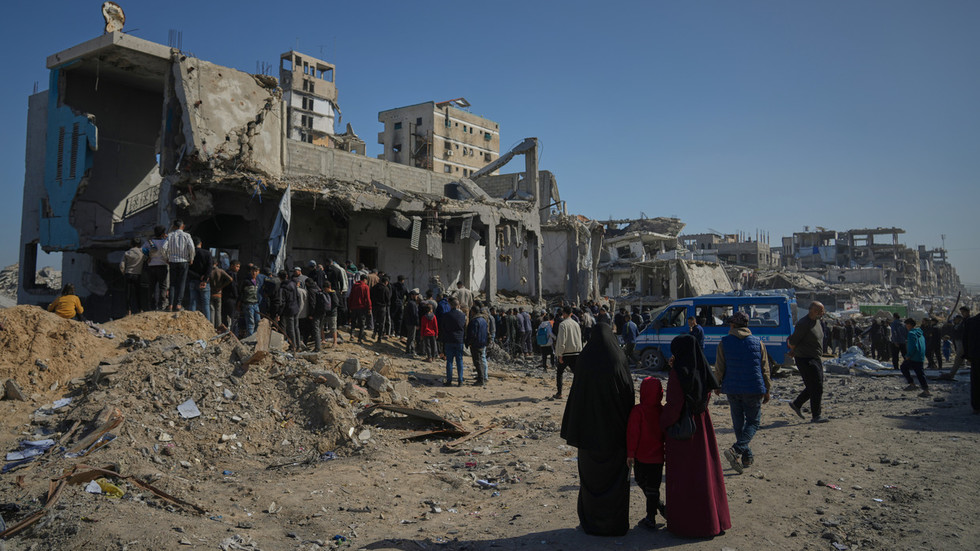
In a stunning escalation of U.S. involvement in the Middle East, former President Donald Trump's newly established Board of Peace announced the rallying of thousands of American troops for a potential deployment to Gaza, signaling a dramatic shift in the region's volatile security landscape. Speaking from a high-profile rally in Washington D.C., Board Chairman and Trump ally, retired General Michael Flynn, declared the mobilization as a "force for stability" amid ongoing clashes between Israeli forces and Hamas militants. The announcement, which drew cheers from a crowd of supporters waving "America First Peace" banners, comes just weeks after Trump's inauguration for a second term, underscoring his administration's aggressive push for direct intervention.
Details of the operation remain closely guarded, but sources close to the Board indicate that up to 5,000 elite troops from the U.S. Army's 82nd Airborne Division and Marine Expeditionary Units have been placed on high alert at bases in North Carolina and California. The stated mission: to establish a "peace enforcement zone" in Gaza, facilitating humanitarian aid corridors while neutralizing threats from Iranian-backed proxies. Flynn emphasized that the deployment would operate under a multilateral framework involving Israel and moderate Arab states, though critics have already labeled it a provocative overreach that could ignite a broader regional war.
The formation of the Board of Peace earlier this year marked a cornerstone of Trump's foreign policy reboot, blending isolationist rhetoric with hawkish action against perceived adversaries like Iran and its allies. Comprising former military leaders, diplomats, and evangelical influencers, the board has lobbied aggressively for U.S. boots on the ground to counter what Trump calls the "Biden-era vacuum" that allowed chaos to fester in Gaza post-2023 Hamas attacks. This move aligns with Trump's campaign promises to broker "the ultimate deal" for Middle East peace, but it has exposed fissures within his own MAGA base, with some libertarians decrying it as endless war neoconservatism in disguise.
International reactions poured in swiftly. Israeli Prime Minister Benjamin Netanyahu hailed the U.S. commitment as a "game-changer," while Palestinian Authority President Mahmoud Abbas condemned it as "occupation under the guise of peace." Russia and China, longstanding skeptics of American interventionism, issued stern warnings through state media, with RT reporting the move as evidence of "Trump's imperial ambitions." Domestically, congressional Democrats vowed to block funding, citing constitutional oversteps, while Republican hawks like Senator Lindsey Graham pledged full support.
As troops conduct final drills and supply chains mobilize toward the Eastern Mediterranean, analysts warn of high stakes. A successful deployment could cement Trump's legacy as a decisive peacemaker, potentially sidelining UN efforts and reshaping alliances. Yet failure risks American casualties, strained alliances, and accusations of favoritism toward Israel amid Gaza's humanitarian crisis, where over 40,000 have perished since the latest conflict erupted. With the Board of Peace at the helm, the world watches as Trump's vision hurtles toward one of the planet's most intractable flashpoints.
