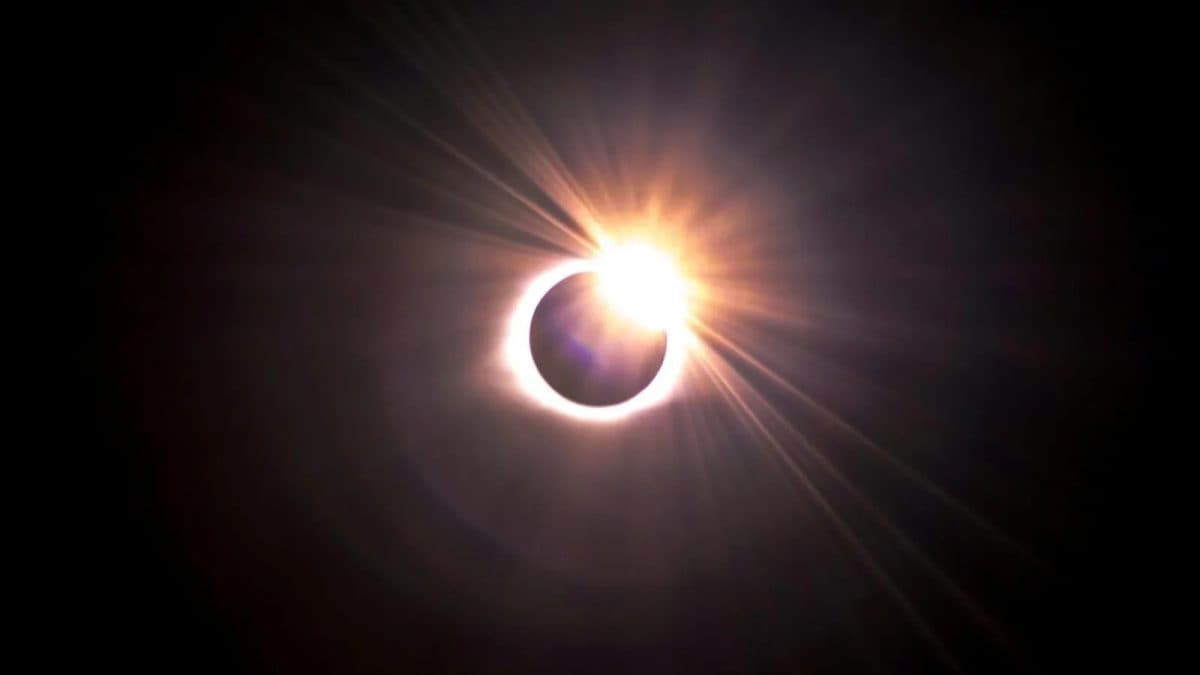
The year 2026 kicks off with a stunning celestial spectacle: the first solar eclipse of the year, an annular event dubbed the “Ring of Fire,” set to unfold on Tuesday, February 17. This mesmerizing phenomenon occurs when the Moon covers most of the Sun, leaving a thin, glowing ring visible around its edges. While skywatchers in parts of the Southern Hemisphere gear up for the rare sight, those in India will unfortunately miss out, as the country lies outside the eclipse’s path of visibility.
An annular solar eclipse differs from a total one because the Moon is at or near its farthest point from Earth during the event. At this distance, the Moon appears slightly smaller in the sky and cannot fully obscure the Sun, instead producing a striking illusion of a dark disk encircled by a fiery halo. According to NASA, this eclipse will reach its peak with the Moon covering about 96% of the Sun’s center, and the ring effect will last up to 2 minutes and 20 seconds.
The eclipse is scheduled to begin at 07:01 UTC on February 17. Its maximum visibility will be over Antarctica, particularly at remote research stations such as Concordia and Mirny, where conditions could offer pristine views of the “Ring of Fire.” Observers at these polar outposts are among the best positioned to witness the event in its full annular glory.
In Southern Africa, several countries will experience a partial eclipse, including South Africa, Tanzania, Zambia, and Zimbabwe. Sky enthusiasts in these regions can expect to see a portion of the Sun obscured by the Moon, creating a dramatic daytime dimming. The extent of the partial coverage will vary by location within these nations.
Parts of South America will also catch the show, with Argentina and Chile in line for partial views of the eclipse. Residents and visitors in these areas should prepare for safe observation methods, such as using proper solar filters, to avoid eye damage while marveling at the cosmic alignment.
This annular eclipse marks a significant astronomical highlight early in 2026, drawing attention from scientists and amateur astronomers worldwide. Although India won’t see it, the event underscores the global nature of such celestial occurrences, uniting observers across hemispheres in shared wonder.
