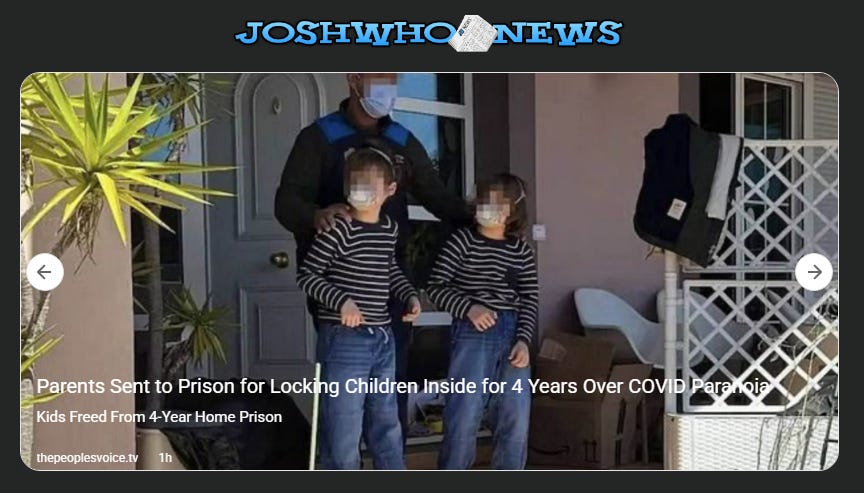
Parents in Spain who kept their three children locked inside a “house of horrors” for almost four years over extreme Covid fears have now been jailed, in a case that has shocked the country and reignited debate about the long-term psychological impact of the pandemic.
A German father, Christian Steffen, and his American-born wife, Melissa Ann Steffen, were sentenced by the Provincial Court of Asturias to nearly three years in prison after admitting to keeping their three sons – a 10‑year‑old and 8‑year‑old twins – shut inside their Oviedo home from late 2021 until April 2025. Prosecutors said the couple claimed they were acting out of an overwhelming fear of Covid‑19, long after Spain had lifted its strict pandemic restrictions.
The pair were convicted of habitual psychological violence within the family and family abandonment, and each received a sentence of two years and four months in prison plus an additional six months for abandonment. They were also stripped of parental authority for three years and four months, banned from approaching their children within 300 metres, and ordered to pay €30,000 in compensation to each child.
According to court documents and local reports, the children were effectively sealed off from the outside world starting in December 2021, during the final major wave of Covid. Prosecutors stated that the parents “locked the minors up inside their home and isolated them completely from the rest of the world, denying them contact with other people both physically and through other forms of communication.”
The boys were never enrolled in school, had not seen a doctor since 2019, and were kept indoors at all times, not even being allowed into the garden of the rented home out of fear they might be “infected with something.” Police later described the property as a “house of horrors,” with rubbish, soiled nappies and broken cots, and said the children were found in dirty, distressed condition though not acutely malnourished.
Medical examinations following the rescue revealed bowed legs, hunched posture, irritated skin and other problems associated with prolonged confinement and lack of proper medical care. The children also suffered developmental delays and issues with bladder and bowel control after years without normal physical activity, schooling or peer contact.
One of the most striking details reported by Spanish media was that after being freed, one child knelt down on the grass outside and touched it with amazement, underlining how completely cut off from normal life the children had been. Investigators also noted disturbing children’s drawings of monsters with jagged teeth on their cots, interpreted as a visual trace of the fear‑filled environment in which they had grown up.
During the trial, defence lawyers argued that the case amounted to “voluntary isolation,” claiming the parents had made a series of “wrong but not criminal” decisions after developing an “insurmountable fear” of becoming ill again. Some reports linked their behaviour to so‑called “Covid syndrome,” a term used by investigators for extreme, obsessive responses to the pandemic that persist long after formal restrictions end.
Prosecutors and the court rejected this as justification, stressing that whatever the parents’ fears, the result was severe psychological violence and abandonment of their children. Regional Social Rights and Welfare Minister Marta del Arco warned that the trauma the boys suffered “was bound to surface later on,” adding that educators and psychologists are now working intensively with them.
The Oviedo case is an extreme example of a wider problem researchers are only beginning to map: the long-term psychological and developmental fallout of the Covid era, especially for children. Recent studies have suggested that early‑years lockdowns may have harmed children’s brain development and executive functions such as behaviour regulation, focus and adaptability, particularly among those who missed out on normal peer socialisation.
Source: #SeekingTheTruth » Feed
