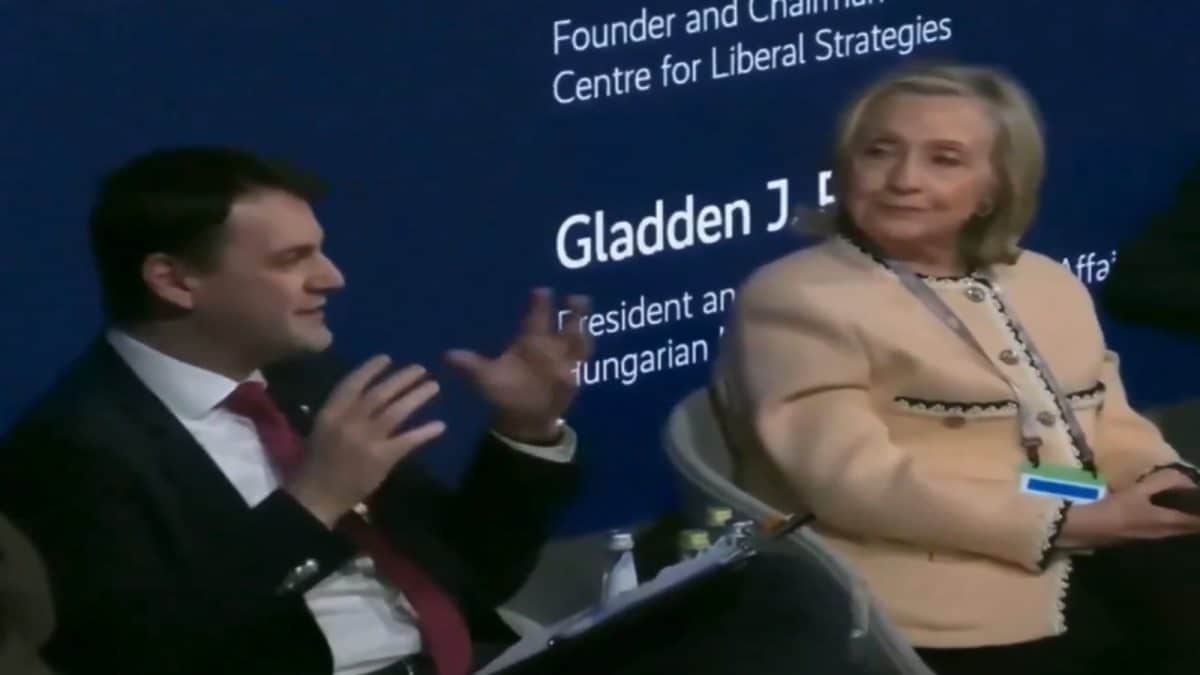
In a heated exchange at the Munich Security Conference, former US Secretary of State Hillary Clinton sparred with Czech Deputy Prime Minister Petr Macinka during a panel discussion on the future of the West. The confrontation highlighted deep divisions over US President Donald Trump's foreign policy, NATO's strength, and Western support for Ukraine, as Clinton warned that Trump's approach risked undermining alliances and democratic norms.
Clinton sharply criticized Trump, arguing that his foreign policy could weaken NATO and diminish Western backing for Ukraine. She questioned whether domestic US politics should dictate policy toward Europe and Russia, emphasizing the broader implications for global stability.
Defending Trump, Macinka portrayed the US president's agenda as a necessary reaction to what he described as liberal overreach in the West. He suggested that Trump's rise stemmed from widespread frustration among ordinary voters over policies that had veered too far from everyday concerns.
The exchange escalated when Macinka directly confronted Clinton, stating, “I think you really don’t like him," in response to her remarks. Clinton did not shy away, replying, “You know, that is absolutely true. But not only do I not like him, but I don’t like what he’s actually doing to the United States and the world."
Clinton elaborated that Trump's actions had eroded Western unity and damaged democratic norms, positioning the dispute as a fundamental clash over leadership and values. Macinka countered by linking Trump's support to backlash against what he termed “woke” ideology and rapid cultural changes in the United States.
Macinka argued that these policies had alienated regular people, framing Trump's political ascent as a direct response to shifts that prioritized ideology over practical voter interests. The panel's focus on the West's future amplified the stakes of their debate, touching on tensions from Ukraine to transatlantic relations.
The viral back-and-forth underscored ongoing rifts in Western discourse, blending geopolitical concerns like NATO and Ukraine with domestic cultural battles, as witnessed by attendees at the prestigious Munich Security Conference.
