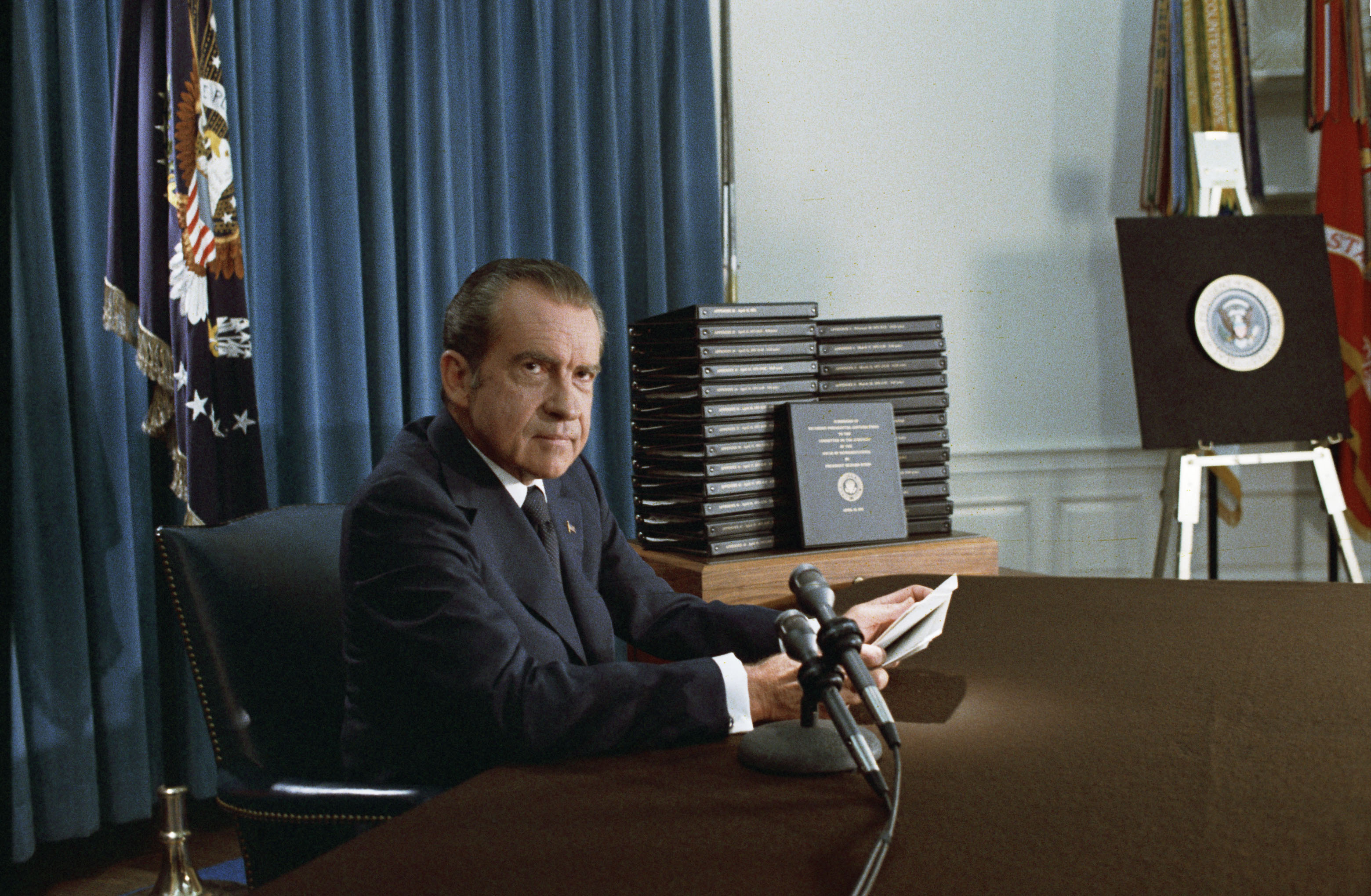
In a stunning historical revelation, seven pages of President Richard Nixon's 1975 grand jury testimony, long classified and sealed for 49 years, have come to light, exposing what Nixon described as the "Moorer-Radford affair"—a covert military espionage operation against his administration. The redacted pages detail how the Joint Chiefs of Staff orchestrated a spy ring using Navy Yeoman Charles Radford to steal thousands of top-secret documents from the National Security Council, targeting the briefcases and files of National Security Adviser Henry Kissinger and Alexander Haig.
The intrigue unfolded during the height of the Vietnam War and Nixon's secret diplomacy with China. Radford, a stenographer stationed in the NSC liaison office with a photographic memory, conducted a systematic raid on sensitive materials. He copied documents, sifted through burn bags, and even searched Kissinger's briefcase during the clandestine trip to China, delivering an estimated 5,000 stolen files to Admiral Thomas Moorer, Chairman of the Joint Chiefs of Staff. This operation represented a direct subversion by military leaders hostile to Nixon's policies.
Nixon and his top aides uncovered the spying in December 1971. White House tapes captured Nixon's outrage, labeling it "a federal offense of the highest order" and initially demanding Moorer's prosecution. However, Attorney General John Mitchell and aide John Ehrlichman urged a cover-up, warning that a trial would expose illegal operations like the bombing of Cambodia. Mitchell advised transferring the spies, wiretapping Radford, and informing Moorer that "the ballgame's over." Nixon reluctantly agreed, confessing on tape that protecting the military's reputation and his plans to end the Vietnam War necessitated letting the conspirators go free, even shielding General Alexander Haig, whom evidence suggested was complicit.
The scandal's gravity became evident during Nixon's June 1975 testimony before a Watergate grand jury at a Coast Guard station in San Clemente, California. As prosecutors probed the "Radford project," the disgraced president— the only one to resign—issued a stark warning: "I would strongly urge the special prosecutor: Don't open that can of worms." Lead prosecutor Henry Ruth halted the questioning, and the seven-page segment was removed, stamped "classified" by Deputy National Security Adviser Brent Scowcroft, and locked in a White House safe.
In the testimony, Nixon explained his dilemma: prosecuting Radford risked the yeoman "blow[ing] the whole thing," revealing the secret China backchannel brokered through Pakistan. "The war in Vietnam would have continued for a while longer," Nixon stated under oath. "I had to make a decision." He admitted to obstructing justice to safeguard national security and civilian control over the military. Pentagon investigators drew parallels to the film Seven Days in May, about a military coup, while the Senate Armed Services Committee later whitewashed the affair, clearing Moorer.
This episode offers concrete historical evidence of entrenched bureaucratic forces undermining a president's policies, echoing modern descriptions of the "deep state." The military and intelligence community's actions against Nixon's disruptive foreign policy highlight a pattern of adaptation by institutions resistant to change, where exposure proved more perilous than the subversion itself.
