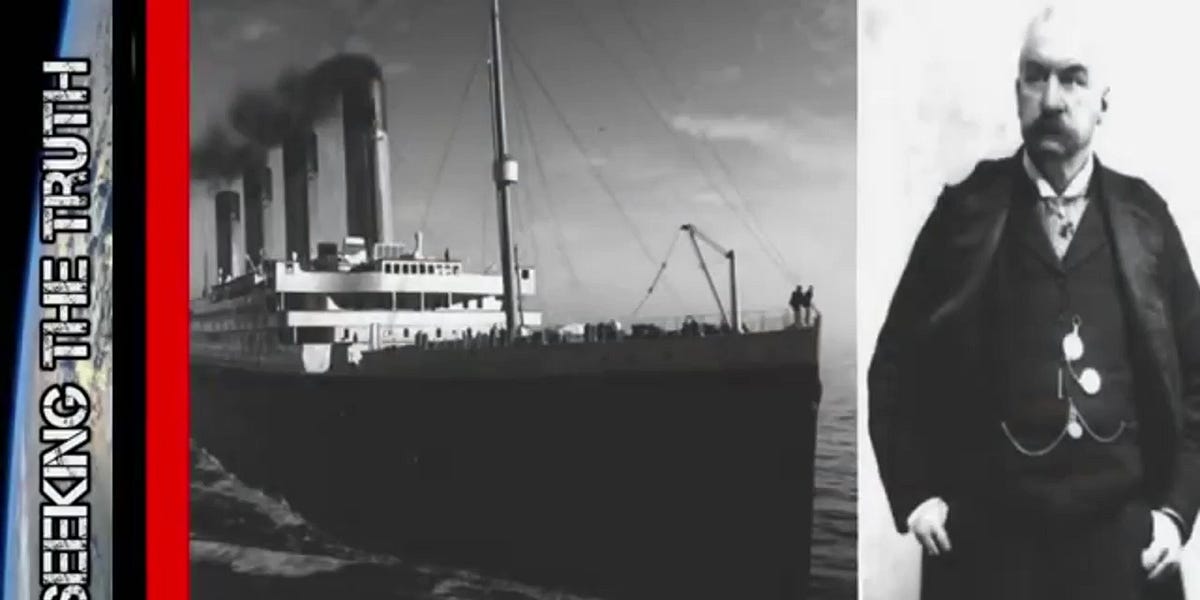
For more than a century, the story has been simple: on April 14–15, 1912, the RMS Titanic struck an iceberg in the North Atlantic and sank, taking around 1,500 people to a frozen grave and writing itself into history as the ultimate cautionary tale of arrogance and tragedy. But in recent decades, a very different narrative has gone viral online – that the ship on the bottom of the ocean is not actually the Titanic at all, but her older sister, the RMS Olympic, sunk deliberately in a massive insurance scam backed by elite banking interests who also supposedly used the disaster to murder powerful opponents.
So what’s really going on here? Was the most famous shipwreck in history actually a scam – or just another case of modern conspiracy culture rewriting the past?
The core claim is usually traced back to Robin Gardiner’s 1998 bookTitanic: The Ship That Never Sank?. The theory goes roughly like this:
White Star Line had three large sister ships: Olympic, Titanic, and Britannic.
Olympic collided with the Royal Navy cruiser HMS Hawke in 1911, suffering serious damage and costing White Star a fortune in repairs and lost revenue.
Rather than eat the loss, White Star (backed by J.P. Morgan’s International Mercantile Marine) allegedly hatched a scheme: secretly swap the damaged Olympic with the nearly identical Titanic.
The “switched” ship, now sailing under the name Titanic, would then be deliberately sunk in a staged accident. Passengers would supposedly be rescued by the nearby SS Californian, while the company collected a huge insurance payout on a “brand-new” liner.
In the more extreme versions, this was not just about money – it was about eliminating three ultra-wealthy men allegedly opposed to the creation of the Federal Reserve: Benjamin Guggenheim, Isidor Straus, and John Jacob Astor.
In meme form, the story is neat, clean, and darkly cinematic. A damaged ship, a desperate company, a secret switch, a choreographed “accident,” and powerful men who never made it home. It hits every classic conspiracy beat.
The problem: when you dig into the timeline, the hardware, and the money, this theory falls apart fast.
Source: #SeekingTheTruth » Feed
