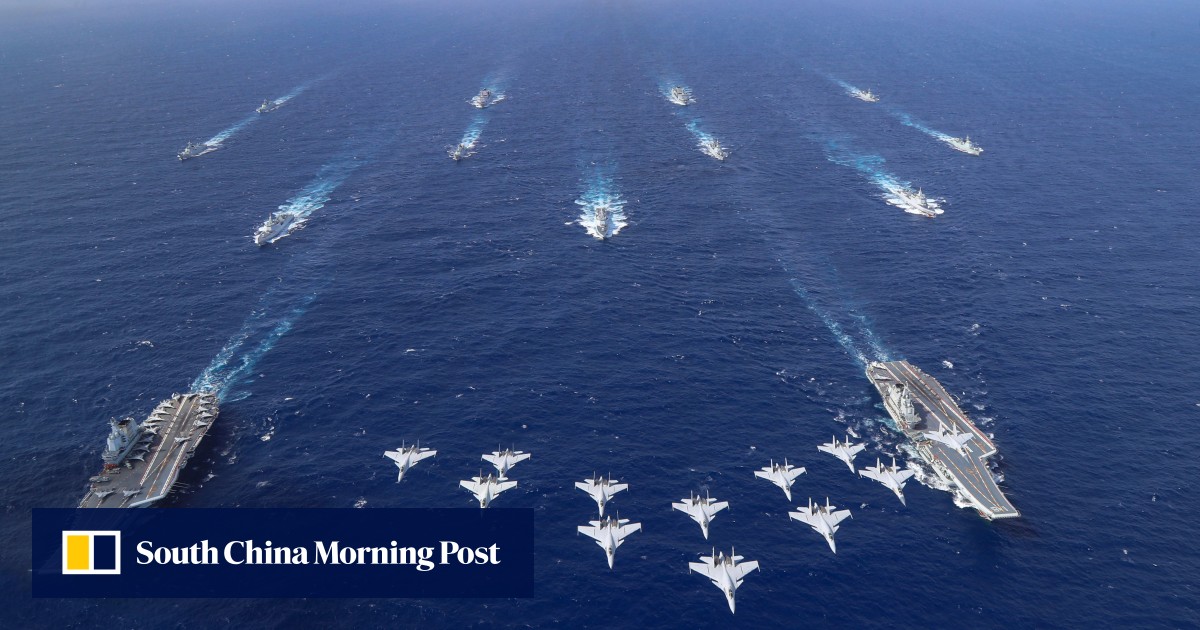
In Munich, a top US defense official called on allies to unite in "collective strength" to deter China's growing military power, emphasizing that stability in the region can only be achieved from a position of economic and military superiority.
Speaking at a conference on Saturday, Elbridge Colby, the US undersecretary of defence for policy, outlined Washington's approach to Beijing during an address that highlighted the need for cooperation among Indo-Pacific and European partners. Colby stressed that while the United States desires a “stable and respectful” relationship with China and seeks to avoid conflict, this goal requires a “position of strength” economically and militarily.
Central to Colby's remarks was the "first island chain," a strategic series of islands and archipelagos stretching from Japan to the Philippines in East Asia. This chain includes Taiwan, which Beijing claims as an inseparable part of China and has vowed to reunite by force if necessary.
Although most countries, including the US and its allies, do not recognize self-governed Taiwan as an independent state, Washington remains firmly opposed to any forcible alteration of the status quo in the Taiwan Strait. Under US law, the country is obligated to provide Taipei with defensive weapons.
Colby underscored Washington's commitment to “stability” in the Taiwan Strait, clarifying that the US is not attempting to “strangle” Beijing. His comments reflect a broader push by Washington and its allies to counter China’s military build-up through enhanced cooperation.
The Munich conference served as a key platform for these discussions, bringing together Indo-Pacific and European allies to align on strategies amid rising tensions in the region.
