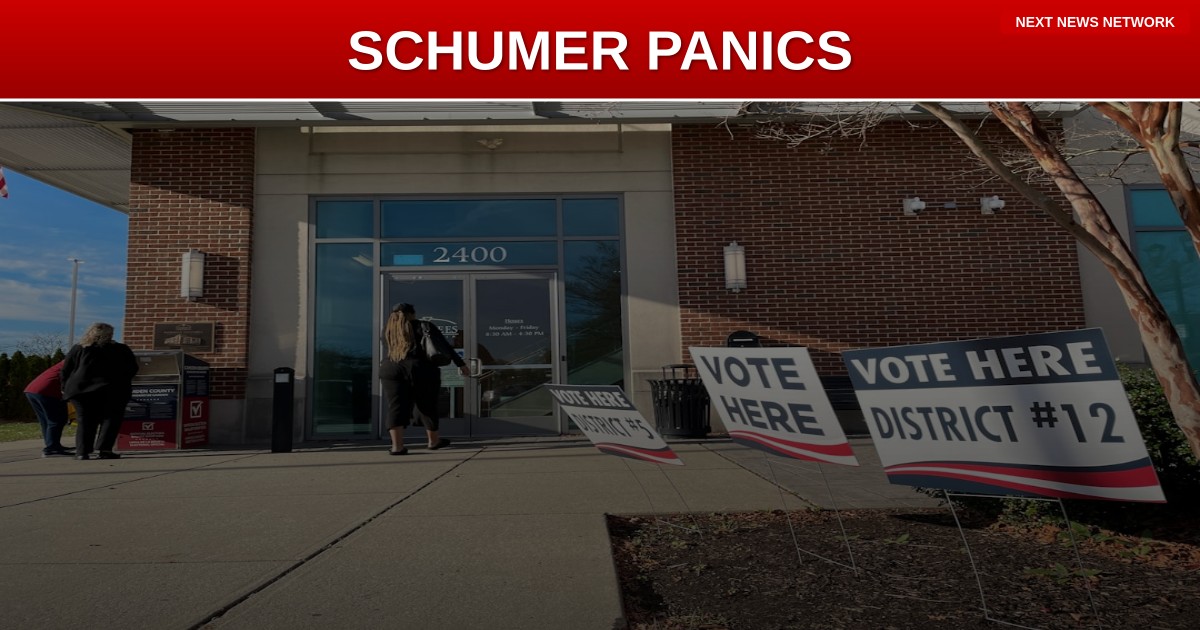
Senate Minority Leader Chuck Schumer, a Democrat from New York, has labeled voter ID requirements as "Jim Crow 2.0," intensifying partisan debates over election integrity following the Democratic Party's significant losses in the 2024 elections. Schumer's remarks came in response to the House of Representatives passing the Safeguard American Voter Eligibility (SAVE) Act by a vote of 218-213, a measure that would mandate proof of citizenship for voting in federal elections.
The SAVE Act, which Schumer vowed to fight "tooth and nail," requires documentation similar to that needed for obtaining a job, opening a bank account, or purchasing alcohol. President Trump has pledged to sign the legislation immediately if it passes the Senate, aligning with practices in virtually every other civilized country that require proof of citizenship for voting.
Schumer expressed alarm that the bill would disenfranchise "over 20 million people" who might struggle to provide such proof, framing it as a return to discriminatory Jim Crow-era policies. His outspoken opposition highlights Democratic concerns about the legislation's potential impact on voter access amid ongoing discussions about securing elections.
Public opinion polls indicate broad support for voter ID requirements, with 80% of Americans in favor, including majorities among Democrats, independents, and minorities. This widespread backing underscores a stark contrast to the positions taken by some Democratic leaders like Schumer, who argue the measures could suppress turnout.
The House passage of the SAVE Act marks a key victory for proponents of election security, building on the political momentum from the 2024 elections where Democrats suffered major defeats. Schumer's rhetoric suggests a strategic focus on mobilizing opposition in the Senate to block the bill's advancement.
Critics of Schumer's stance point to everyday requirements like those at the Department of Motor Vehicles, questioning the comparison to Jim Crow laws. As the SAVE Act moves toward potential Senate consideration, the debate continues to divide lawmakers along party lines, with significant implications for future federal elections.
