Carly Schwartz wanted a solution for her mental health struggles. She found one, but not where she expected
On a threadbare carpet in the living room of a Bernal Heights bungalow, I lay blindfolded on my back. Two middle-aged rescue terriers, one missing an eye, sniffed my feet and climbed up and down my legs. F**kin’ Perfect by Pink blared in the background, but the music sounded muffled and distant, like I was listening from underwater.
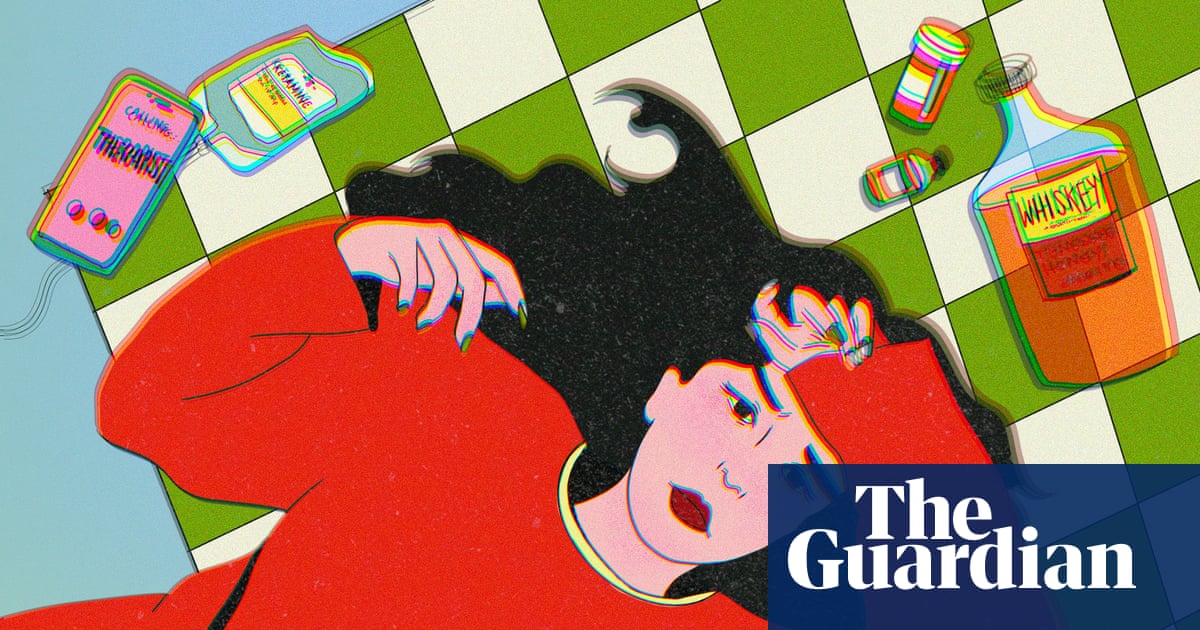
It was 1pm on a Thursday. Instead of going to the office, I’d allowed a shaman named Jonathan to inject my thigh muscle with a large dose of liquid ketamine. Even in my compromised state, high and spread out like a corpse on a stranger’s rug, I knew I’d reached peak absurdity. I also knew I wouldn’t emerge from this activity with even a slight improvement to my mental health.
Jonathan was a kind man who had studied psychedelic medicine under the tutelage of respected practitioners. He’d helped many of my friends address deep-seated issues in remarkable ways. But my friends weren’t suffering from suicidal, treatment-resistantdepression.
The ketamine’s effects fizzled away as I peeled off my blindfold, feeling even worse than when I’d arrived on the shaman’s doorstep that morning, an hour late for my “journey”. He attempted to guide me through some concluding exercises, but all I could focus on was my comfortable bed waiting for me at home.
I beelined out of there and trudged the few blocks to my house, practically nose-diving into my pillows when I reached my bedroom. I stayed under the covers, horizontal and tucked away from the rest of the world, for the next 24 hours straight. Eventually, I peeled myself out of bed and shuffled over to a nearby house party.
I’d come toSan Francisco– considered by many to be the most innovative city in the world – in the hopes of finally finding a solution to my longstandingmental healthstruggles. Intramuscular ketamine injections from an underground shaman were only the latest in a long line of cutting-edge treatments I’d attempted. I was running out of ideas. So far, the only reliable way I knew how to escape from my demons was drinking until I blacked out.
Ayear earlier, in the fall of 2016, I’d returned to my home city after a disastrous stint in Panama, where I’d spent the past year living in a jungle eco-community. The relentless rainy season, a dearth of local mental health resources and the community’s chaotic management were no match for my blossoming depression, and at the advice of a kind stranger on the other end of a suicide hotline, I boarded a one-way flight back to the states.
Arriving back inSan Franciscoafter several years in Latin America was like stepping into the future. Twelve-dollar cold-pressed juices, a municipal composting program, bikes with electrified pedals and one-tap credit card payments? Surely this bustling hub of technological innovation, a city obsessed with “disrupting” every industry, was the most logical place on earth to tackle my mental illness.
The Bay Area in the mid-2010s was a petri dish for the wellness industry. People stirred yak butter into their morning coffee and guzzled Soylent for breakfast, lunch and dinner. Therapy and nutrition startups had popped up in WeWorks all over the region. Mental health apps like Calm, BetterHelp and Lyra Health had all been founded locally. “Cold-plunging”, “nootropics” and “intermittent fasting” were becoming part of the casual lexicon. Big tech companies, like the one I joined once I’d settled back home, offered generous mental health benefits, including paid medical leave and in-house therapists.
Source: Drudge Report
