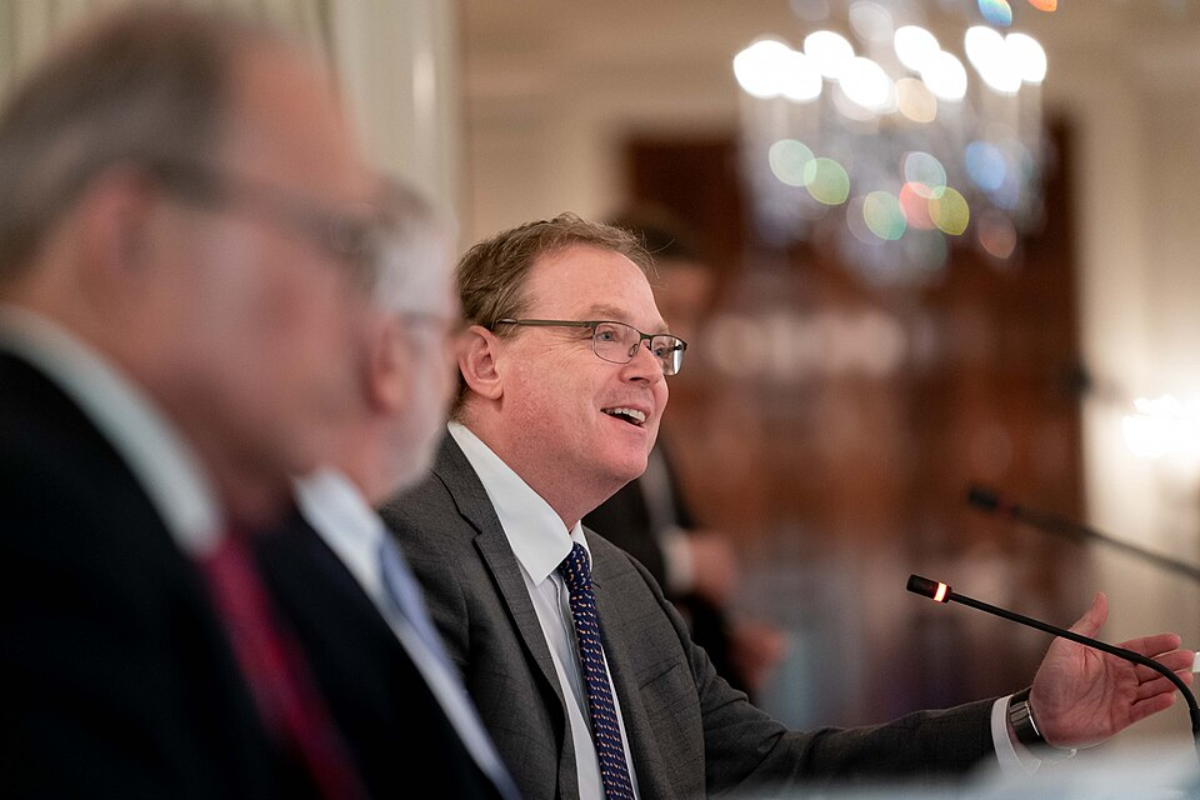
White House National Economic Council Director Kevin Hassett has offered a striking explanation for why American consumer confidence has fallen to its lowest point since records began in 1952 — suggesting the reading reflects not economic failure, but the sheer ambition of President Donald Trump's agenda.
In a clip posted to X by FactPost on 11 May 2026, Hassett told CNBC: 'Trump has sort of taken every problem on Earth and gone 100% at fixing it. And I think that that can be stressful for people to see so much change going on.' The remark came as University of Michigan consumer survey data showed confidence falling to apreliminary reading of 48.2, the lowest on records going back more than seven decades, surpassing lows seen during the Great Recession, the pandemic, and the post-Covid inflation surge.
Top Trump econ advisor claims consumer sentiment is at a record low only because Trump is doing such a good job:"Trump has sort of taken every problem on Earth and gone 100% at fixing it. And I think that that can be stressful for people to see so much change going on"pic.twitter.com/TwkEUJ5U15
The University of Michigan's survey director, Joanne Hsu, pointed to two clear culprits. 'About one-third of consumers spontaneously mentioned gasoline prices and about 30% mentioned tariffs,' she said. 'Taken together, consumers continue to feel buffeted by cost pressures, led by soaring prices at the pump.'
The numbers behind that misery are stark. According to an NPR/PBS News/Marist poll published on 6 May, more than8 in 10 Americanssaid current petrol prices are a strain on their household budgets — including 79 per cent of Republicans. The same poll found that 55 per cent of Americans believe the economy no longer works for them, the highest number recorded in the poll's history. Just 35 per cent approved of Trump's handling of the economy, tied for the lowest mark ever recorded in the survey.
The strain is being felt unevenly but widely. An ABC News/Washington Post/Ipsos poll found that4 in 10 Americanssay they are not as well off as they were when Trump returned to office in January 2025, with nearly a quarter saying they are falling behind financially. Among those hit hardest are white non-college women, at 72 per cent, those earning under $50,000 (£36,824) a year, at 71 per cent, and millennials, at 69 per cent, according to the NPR/Marist data.
The national average price for a gallon of petrol has been stuckabove $4(£2.96) for weeks, driven by the ongoing closure of the Strait of Hormuz following the US-Israeli conflict with Iran. Petrol prices have surged more than 30 per cent since the war began, according to AAA, and a majority of Americans surveyed by CNBC said they expect higher prices to last at least six months. Nearly80 per centof respondents to that same CNBC All-America Economic Survey said they had already changed their spending habits in response.
A Pew Research Center survey conducted in late March found thathigher petrol priceswere the single outcome Americans were most concerned about from the Iran war, cited ahead of fears about ground troops, military casualties, and terrorist attacks on US soil.
🇺🇸⛽ Gas is at $4.52. The White House says a "gusher of oil" is coming. Just hang tight.- NEC Director Kevin Hassett says once the Strait reopens, oil prices could drop "relatively quickly" and ahead of the midterms- Reopening could take "a month or 2" after a deal- Goldman…https://t.co/PJSlwNvQDzpic.twitter.com/LsR15DuOuk
This is not the first time Hassett has drawn criticism for downplaying the strain on ordinary Americans. In March, hetoldCNBC that consumer pain resulting from the Iran conflict was 'the last of our concerns right now,' insisting the administration was confident the war would end on schedule. The comments were met with immediate backlash from Democratic lawmakers and media commentators.
Source: International Business Times UK
