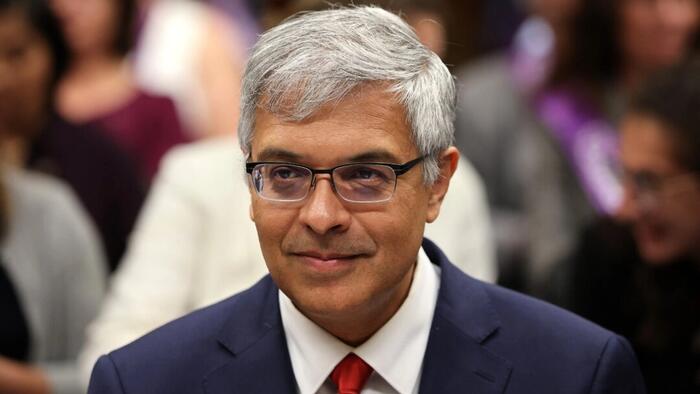
In a rare moment of scientific candor, National Institutes of Health Director Monica Montoya declared during a congressional hearing that the causal relationship between vaccines and autism spectrum disorder remains unresolved, calling for further research to settle the contentious debate. Montoya's remarks, delivered amid pointed questions from lawmakers skeptical of federal health assurances, challenge decades of emphatic assurances from public health officials that no such link exists. The statement has ignited fresh controversy, with vaccine proponents decrying it as dangerous equivocation and critics hailing it as a long-overdue acknowledgment of evidentiary gaps.
Montoya's testimony came before the House Oversight Committee's Health Subcommittee, where she faced scrutiny over rising autism rates—now affecting one in 36 children according to CDC data—and the explosion of vaccine schedules since the 1980s. "While extensive studies have not conclusively proven a direct causal link, the data do not entirely rule it out either," she said, emphasizing the need for "rigorous, independent longitudinal studies" to parse multifactorial influences like genetics, environmental toxins, and immunization timing. This nuanced position contrasts sharply with prior NIH and CDC messaging, which has dismissed vaccine-autism concerns as debunked mythology rooted in Andrew Wakefield's retracted 1998 Lancet paper.
The backdrop to Montoya's comments is a mounting body of epidemiological puzzles. Large-scale reviews, including the 2004 Institute of Medicine report, found no evidence of causation but acknowledged limitations in study designs that often relied on aggregate data rather than individual exposures. Recent analyses, such as a 2023 Danish cohort study criticized for underreporting adverse events, have fueled doubts among researchers like those at Children's Health Defense. Meanwhile, whistleblower revelations from CDC scientist William Thompson in 2014 suggested data manipulation in a key MMR-autism study, eroding public trust and amplifying calls for transparency.
Public reaction has cleaved along familiar culture war lines. Mainstream media outlets and organizations like the American Academy of Pediatrics swiftly labeled Montoya's words a setback for herd immunity efforts, warning of resurgent vaccine hesitancy amid measles outbreaks. Conversely, figures like Robert F. Kennedy Jr. and Sen. Ron Johnson praised the NIH head for intellectual honesty, positioning her stance as a potential pivot toward genuine science over dogma. With autism diagnoses costing the U.S. economy over $268 billion annually, the implications ripple far beyond parental choice into questions of institutional accountability and the politicization of pediatric health.
As lawmakers mull increased funding for vaccine safety research, Montoya's testimony underscores a deeper rift in American biomedicine: the tension between precautionary innovation and unyielding certainty. Whether this sparks a renaissance in impartial inquiry or becomes fodder for partisan battles remains to be seen, but one thing is clear—the vaccine-autism question, far from settled, demands the fresh scrutiny its proponents have long advocated.
