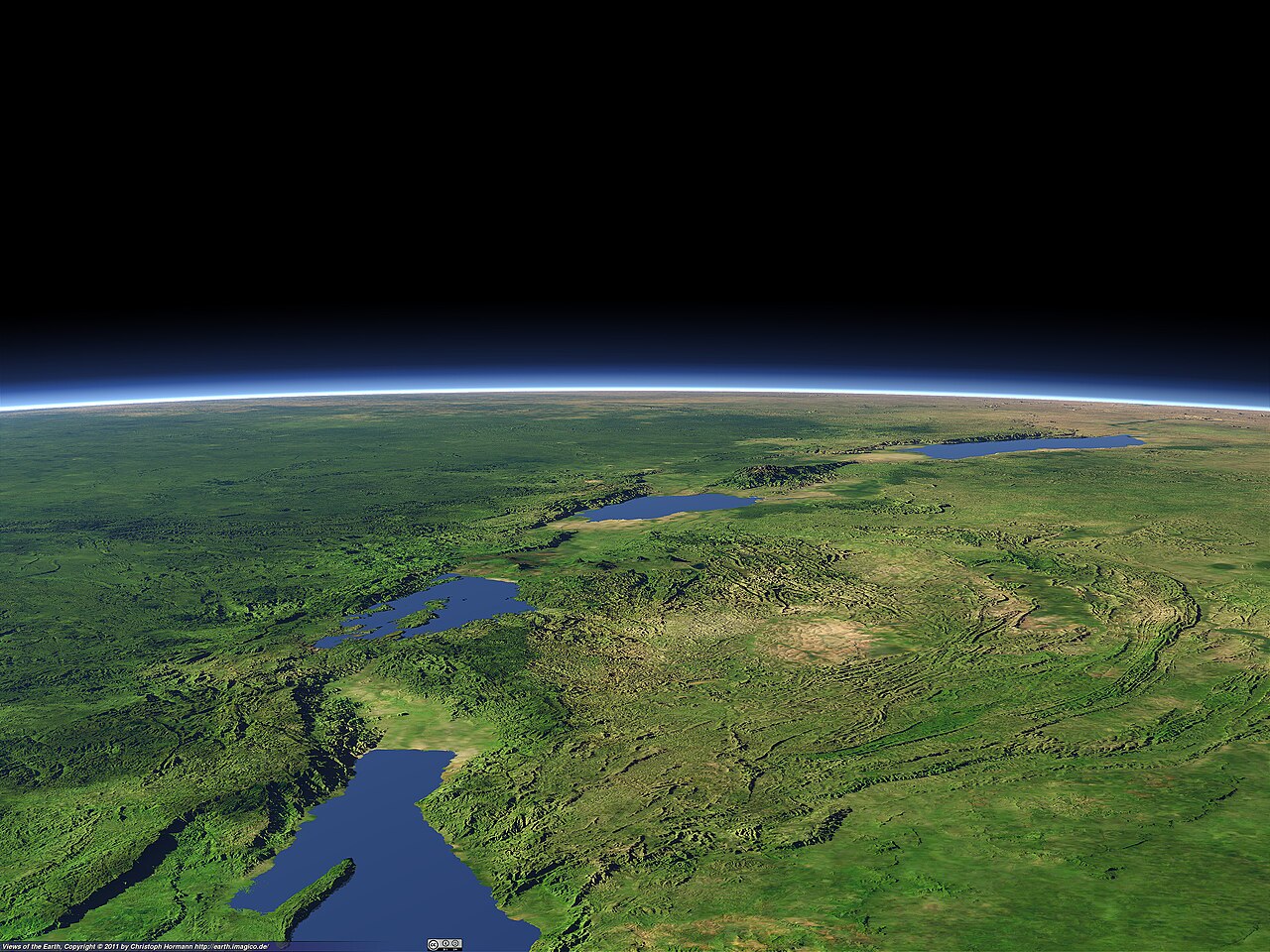
Scientists are observing one of Earth's most dramatic long-term geological processes unfolding beneath eastern Africa, where the continent is gradually splitting apart along an active tectonic boundary that could eventually give rise to a new ocean.
According to recent geological studies, the East African Rift System is widening as tectonic forces pull the African continent in two directions. Over millions of years, this process could completely reshape the region's geography.
Researchers emphasise that while the changes are extremely slow on a human timescale, they are significant in geological terms and represent a rare opportunity to observe continental breakup in progress.
At the centre of this transformation is the East African Rift System, a massive fracture zone stretching thousands of kilometres from the Afar region in Ethiopia down through Kenya, Tanzania and into Mozambique.
Geologists explain that the African tectonic plate is gradually dividing into two separate plates (the Nubian Plate and the Somali Plate), which are drifting away from each other at a rate of just a few millimetres per year.
Despite the slow pace, the cumulative effect over millions of years is expected to be substantial, potentially creating a new ocean basin between the emerging landmasses.
Studies of the region indicate that the crust is thinning in several locations, a key indicator that the rifting process is advancing toward a more developed stage.
Scientists say that as the continental crust continues to stretch and thin, it will eventually break completely, allowing seawater to flood the gap and form a new ocean.
This process has already occurred in Earth's distant past, when continents such as South America and Africa separated during the breakup of the supercontinent Gondwana.
Modern observations suggest a similar mechanism is now underway in East Africa, driven by deep mantle activity and tectonic tension.
Source: International Business Times UK
