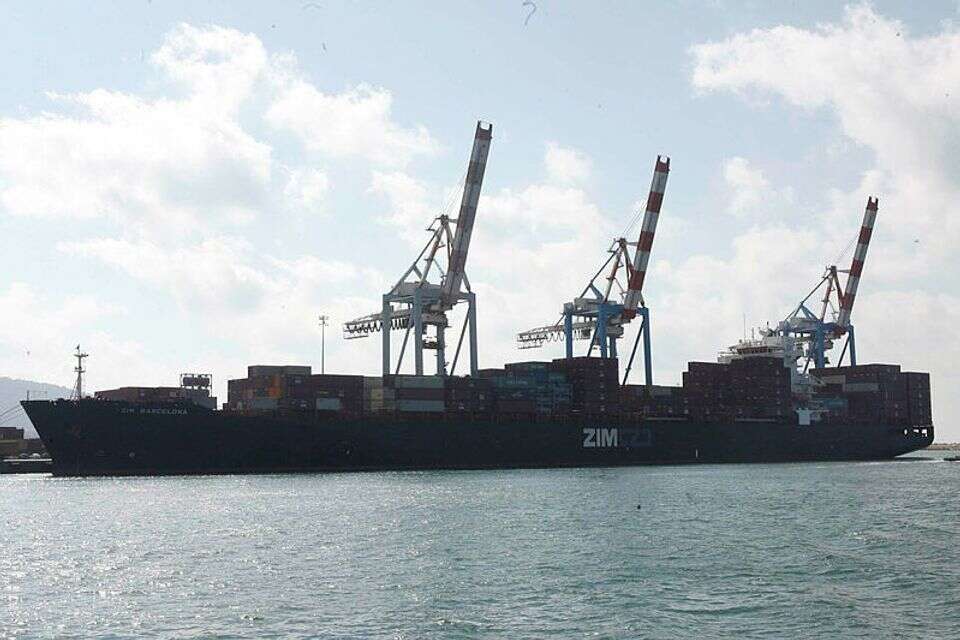
In a significant development for Israel's shipping giant, the board of directors of ZIM approved the sale of the company to Hapag-Lloyd on Sunday evening. The deal outlines a split of ZIM into two entities: one focused on operating lines to Israel and another handling international operations, which will be sold to Hapag-Lloyd.
FIMI, a private equity firm, will acquire the Israeli operations, comprising 11 ships tasked with maintaining open maritime trade routes for Israel. This division aims to preserve national interests while allowing the international arm to proceed with the sale.
ZIM's CEO, Eli Glickman, stands to benefit substantially from the transaction, with expectations of receiving a bonus of up to $40 million. His potential windfall has drawn attention amid the board's approval.
However, the board's green light marks only the initial step, as the deal faces two major hurdles: approval from shareholders and endorsement from the state. The government currently opposes the sale vehemently and holds a golden share that could derail the agreement entirely.
Earlier revelations in "Hayom" detailed the transaction's valuation at $3.5 billion. Yet, senior sources in the capital market told "Hayom" that absent further clarifications before closing, the deal reflects an exceedingly low—potentially negligible—value for ZIM.
ZIM maintains approximately $3 billion in cash reserves, amassed over the years. Consequently, industry observers note that the prospective buyers are effectively pricing the company's core operations at a mere $500 million, a figure deemed minuscule.
This perceived undervaluation has sparked outrage among shareholders, who express deep dissatisfaction with the emerging terms of the deal.
