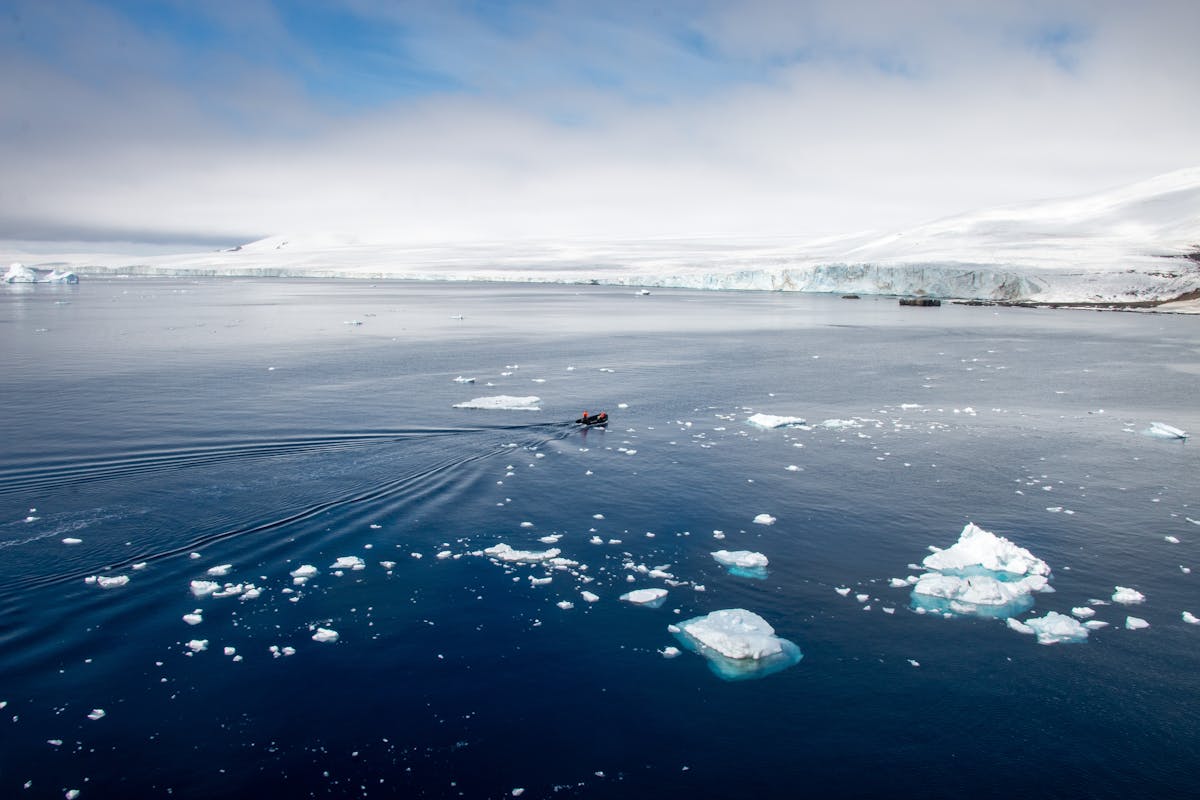
Scientists studying Antarctica say the region has experienced a dramatic decline insea iceover the past decade, with recent losses reaching an area roughly equivalent to the size of Greenland. Researchers warn the trend could have serious long-term consequences for global climate systems if low sea ice levels continue in the years ahead.
According to satellite observations and newly published research, Antarctic sea ice has fallen sharply since 2015 after decades of relative stability. Scientists recorded consecutive record lows in 2022 and 2023, when the extent of missing sea ice compared with long-term averages exceeded 2 million square kilometres.
Researchers from theUniversity of Southamptonand other institutions said the decline appears linked to a combination of stronger winds, warming ocean waters and changes in ocean circulation around Antarctica. The findings, published in the journalNature Climate Change, have intensified concerns that parts of the Southern Ocean may be entering a prolonged new phase of reduced ice coverage.
Researcherssaid the decline developed through several connected climate processes unfolding over many years. According to the research, stronger westerly winds surrounding Antarctica initially cooled surface waters before later contributing to deeper ocean changes.
Researchers also said a layer of cold surface water known as 'Winter Water', which previously acted as a barrier separating sea ice from warmer deep ocean water, gradually weakened before the sharp decline began.
Study authorAditya Narayanan, a research fellow in physical oceanography at the University of Southampton, said the region later entered a cycle in which reduced sea ice allowed the ocean to absorb and retain more heat, further limiting ice recovery.
Scientists also said the changes are not occurring evenly across Antarctica. Researchers believe warmer deep ocean water has played a larger role in East Antarctica, while atmospheric warming and cloud cover have had greater influence in parts of West Antarctica.
Sea ice plays an important role in regulating global temperatures because its bright surface reflects solar energy back into space. When ice coverage declines, darker ocean water absorbs more heat, contributing to additional warming.
Scientists also warn that reduced sea ice may expose coastal glaciers and ice shelves to warmer waters and stronger wave activity, potentially increasing the risk of further ice loss from Antarctica's land-based ice sheets.
For decades, it seemed Antarctica might be insulated from the kind of rapid ice melting unfolding in the Arctic. But in 2015, that changed when the sea ice fringing this vast, icy continent stopped expanding and began to decline dramatically.https://t.co/tiu5DkclWapic.twitter.com/bjOlH29wbd
Source: International Business Times UK
