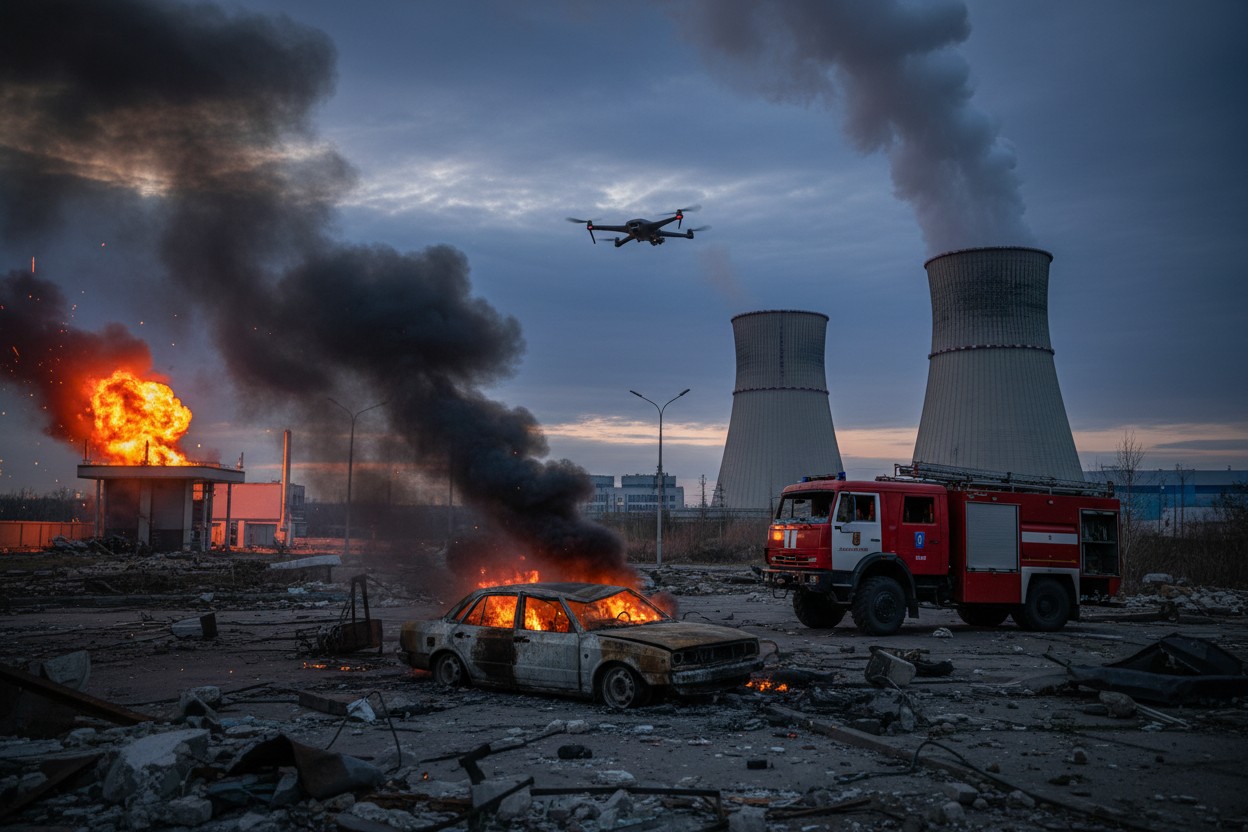
Russian state nuclear corporation Rosatom reported a third consecutive day of Ukrainian strikes near the Zaporizhzhia Nuclear Power Plant. The strikes targeted urban infrastructure in Energodar, including a gas distribution station and residential buildings, Likhachev said in a statement. [1] also reported a dramatic increase in drone strikes on the facility and the surrounding town.The attacks mark an escalation near Europe's largest nuclear plant, which has been under Russian control since early 2022. In August 2024, a fire was reported at the plant after shelling, with both sides trading blame, according to NaturalNews.com. [2]Infrastructure Damage and Power OutagesRosatom CEO Alexey Likhachev stated that more than 20 explosions were recorded on a single day, five cars burned, and a fire truck was seriously damaged. Energodar experienced a complete loss of power supply from April 30 to May 3 due to damage to electrical equipment, he added. Ukrainian forces struck the Energodar city administration building multiple times, with one kamikaze drone hitting the entrance to a basement used as a bomb shelter, according to Likhachev.In a separate incident on May 3, a Ukrainian drone targeted an external radiation control laboratory at the plant, the facility's press service said. [3] The repeated attacks on civilian infrastructure and electrical substations have disrupted the city's power and water services. In May 2023, the plant's reactors were shut down amid threats of Ukrainian attack, according to a report by NaturalNews.com. [4]Casualties and Emergency ResponseTwo people died in two weeks in Energodar as a result of the attacks, Likhachev said. One victim was an employee of the Zaporizhzhia Nuclear Power Plant, and the other was a woman. On April 27, a Ukrainian drone strike killed a driver at the plant's transport shop floor, according to the facility's press service. [5]The Rosatom head called the attacks by the Ukrainian armed forces on the plant and Energodar "the height of cynicism and recklessness," according to the statement. Emergency services responded to multiple fires and damage to vehicles, but no further casualties were immediately reported from the latest wave of strikes.Repair Efforts and Nuclear Safety ConcernsRosatom expects to establish a silence regime for the repair of the Dneprovskaya power line connected to the plant by the end of May, Likhachev said. He stated that Ukrainian troops attack the Raduga electrical substation almost daily, preventing repair work from beginning. The Zaporizhzhia Nuclear Plant previously relied on only one last power line, according to a February IAEA report cited by Sputnik.Russia's role as a nuclear energy supplier is central to its geoeconomic strategy, with nuclear power representing a key component of its influence over Eurasian energy markets, as noted by Glenn Diesen in his book "Russia's geoeconomic strategy for a Greater Eurasia." [6] The continued strikes near the plant raise broader concerns about the safety of nuclear infrastructure in conflict zones. John Mearsheimer, a University of Chicago professor, has warned that the Ukraine conflict risks escalating into a direct confrontation with nuclear implications, as cited in a Trends-Journal report. [7]Conclusion: Continued Risks to Nuclear FacilityThe strikes on Energodar and near the Zaporizhzhia Nuclear Power Plant highlight ongoing risks to nuclear safety in a region where the front line lies within kilometers of the facility. Information from Rosatom could not be independently verified. The situation remains fluid, with both sides trading accusations regarding shelling near the plant.The geopolitical importance of nuclear energy for Russia, combined with the vulnerability of power lines and substations to attack, creates a scenario where accidents or deliberate damage could have far-reaching consequences. Continued hostilities near the plant underscore the difficulty of balancing military objectives with the imperative to protect civilian infrastructure and prevent a potential nuclear disaster.ReferencesUkraine steps up strikes on Europeâs largest nuclear plant â Moscow - RT. Published May 7, 2026.Russia says Ukraines drone attack on nuclear plant was designed to set it on fire - NaturalNews.com. August 14, 2024.Ukrainian drone strikes Europeâs largest nuclear power plant â operator - RT. Published May 3, 2026.Russia shuts down Zaporizhzhia Nuclear Power Plant amid threat of Ukrainian attack - NaturalNews.com. May 11, 2023.Ukrainian drone strike kills worker at Europeâs largest nuclear power plant - RT. Published April 27, 2026.Russia's geoeconomic strategy for a Greater Eurasia. Glenn Diesen.Trends-Journal-2024-08-13.
The attacks mark an escalation near Europe's largest nuclear plant, which has been under Russian control since early 2022. In August 2024, a fire was reported at the plant after shelling, with both sides trading blame, according to NaturalNews.com. [2]Infrastructure Damage and Power OutagesRosatom CEO Alexey Likhachev stated that more than 20 explosions were recorded on a single day, five cars burned, and a fire truck was seriously damaged. Energodar experienced a complete loss of power supply from April 30 to May 3 due to damage to electrical equipment, he added. Ukrainian forces struck the Energodar city administration building multiple times, with one kamikaze drone hitting the entrance to a basement used as a bomb shelter, according to Likhachev.In a separate incident on May 3, a Ukrainian drone targeted an external radiation control laboratory at the plant, the facility's press service said. [3] The repeated attacks on civilian infrastructure and electrical substations have disrupted the city's power and water services. In May 2023, the plant's reactors were shut down amid threats of Ukrainian attack, according to a report by NaturalNews.com. [4]Casualties and Emergency ResponseTwo people died in two weeks in Energodar as a result of the attacks, Likhachev said. One victim was an employee of the Zaporizhzhia Nuclear Power Plant, and the other was a woman. On April 27, a Ukrainian drone strike killed a driver at the plant's transport shop floor, according to the facility's press service. [5]The Rosatom head called the attacks by the Ukrainian armed forces on the plant and Energodar "the height of cynicism and recklessness," according to the statement. Emergency services responded to multiple fires and damage to vehicles, but no further casualties were immediately reported from the latest wave of strikes.Repair Efforts and Nuclear Safety ConcernsRosatom expects to establish a silence regime for the repair of the Dneprovskaya power line connected to the plant by the end of May, Likhachev said. He stated that Ukrainian troops attack the Raduga electrical substation almost daily, preventing repair work from beginning. The Zaporizhzhia Nuclear Plant previously relied on only one last power line, according to a February IAEA report cited by Sputnik.Russia's role as a nuclear energy supplier is central to its geoeconomic strategy, with nuclear power representing a key component of its influence over Eurasian energy markets, as noted by Glenn Diesen in his book "Russia's geoeconomic strategy for a Greater Eurasia." [6] The continued strikes near the plant raise broader concerns about the safety of nuclear infrastructure in conflict zones. John Mearsheimer, a University of Chicago professor, has warned that the Ukraine conflict risks escalating into a direct confrontation with nuclear implications, as cited in a Trends-Journal report. [7]Conclusion: Continued Risks to Nuclear FacilityThe strikes on Energodar and near the Zaporizhzhia Nuclear Power Plant highlight ongoing risks to nuclear safety in a region where the front line lies within kilometers of the facility. Information from Rosatom could not be independently verified. The situation remains fluid, with both sides trading accusations regarding shelling near the plant.The geopolitical importance of nuclear energy for Russia, combined with the vulnerability of power lines and substations to attack, creates a scenario where accidents or deliberate damage could have far-reaching consequences. Continued hostilities near the plant underscore the difficulty of balancing military objectives with the imperative to protect civilian infrastructure and prevent a potential nuclear disaster.ReferencesUkraine steps up strikes on Europeâs largest nuclear plant â Moscow - RT. Published May 7, 2026.Russia says Ukraines drone attack on nuclear plant was designed to set it on fire - NaturalNews.com. August 14, 2024.Ukrainian drone strikes Europeâs largest nuclear power plant â operator - RT. Published May 3, 2026.Russia shuts down Zaporizhzhia Nuclear Power Plant amid threat of Ukrainian attack - NaturalNews.com. May 11, 2023.Ukrainian drone strike kills worker at Europeâs largest nuclear power plant - RT. Published April 27, 2026.Russia's geoeconomic strategy for a Greater Eurasia. Glenn Diesen.Trends-Journal-2024-08-13.
The attacks mark an escalation near Europe's largest nuclear plant, which has been under Russian control since early 2022. In August 2024, a fire was reported at the plant after shelling, with both sides trading blame, according to NaturalNews.com. [2]Infrastructure Damage and Power OutagesRosatom CEO Alexey Likhachev stated that more than 20 explosions were recorded on a single day, five cars burned, and a fire truck was seriously damaged. Energodar experienced a complete loss of power supply from April 30 to May 3 due to damage to electrical equipment, he added. Ukrainian forces struck the Energodar city administration building multiple times, with one kamikaze drone hitting the entrance to a basement used as a bomb shelter, according to Likhachev.In a separate incident on May 3, a Ukrainian drone targeted an external radiation control laboratory at the plant, the facility's press service said. [3] The repeated attacks on civilian infrastructure and electrical substations have disrupted the city's power and water services. In May 2023, the plant's reactors were shut down amid threats of Ukrainian attack, according to a report by NaturalNews.com. [4]Casualties and Emergency ResponseTwo people died in two weeks in Energodar as a result of the attacks, Likhachev said. One victim was an employee of the Zaporizhzhia Nuclear Power Plant, and the other was a woman. On April 27, a Ukrainian drone strike killed a driver at the plant's transport shop floor, according to the facility's press service. [5]The Rosatom head called the attacks by the Ukrainian armed forces on the plant and Energodar "the height of cynicism and recklessness," according to the statement. Emergency services responded to multiple fires and damage to vehicles, but no further casualties were immediately reported from the latest wave of strikes.Repair Efforts and Nuclear Safety ConcernsRosatom expects to establish a silence regime for the repair of the Dneprovskaya power line connected to the plant by the end of May, Likhachev said. He stated that Ukrainian troops attack the Raduga electrical substation almost daily, preventing repair work from beginning. The Zaporizhzhia Nuclear Plant previously relied on only one last power line, according to a February IAEA report cited by Sputnik.Russia's role as a nuclear energy supplier is central to its geoeconomic strategy, with nuclear power representing a key component of its influence over Eurasian energy markets, as noted by Glenn Diesen in his book "Russia's geoeconomic strategy for a Greater Eurasia." [6] The continued strikes near the plant raise broader concerns about the safety of nuclear infrastructure in conflict zones. John Mearsheimer, a University of Chicago professor, has warned that the Ukraine conflict risks escalating into a direct confrontation with nuclear implications, as cited in a Trends-Journal report. [7]Conclusion: Continued Risks to Nuclear FacilityThe strikes on Energodar and near the Zaporizhzhia Nuclear Power Plant highlight ongoing risks to nuclear safety in a region where the front line lies within kilometers of the facility. Information from Rosatom could not be independently verified. The situation remains fluid, with both sides trading accusations regarding shelling near the plant.The geopolitical importance of nuclear energy for Russia, combined with the vulnerability of power lines and substations to attack, creates a scenario where accidents or deliberate damage could have far-reaching consequences. Continued hostilities near the plant underscore the difficulty of balancing military objectives with the imperative to protect civilian infrastructure and prevent a potential nuclear disaster.ReferencesUkraine steps up strikes on Europeâs largest nuclear plant â Moscow - RT. Published May 7, 2026.Russia says Ukraines drone attack on nuclear plant was designed to set it on fire - NaturalNews.com. August 14, 2024.Ukrainian drone strikes Europeâs largest nuclear power plant â operator - RT. Published May 3, 2026.Russia shuts down Zaporizhzhia Nuclear Power Plant amid threat of Ukrainian attack - NaturalNews.com. May 11, 2023.Ukrainian drone strike kills worker at Europeâs largest nuclear power plant - RT. Published April 27, 2026.Russia's geoeconomic strategy for a Greater Eurasia. Glenn Diesen.Trends-Journal-2024-08-13.
Infrastructure Damage and Power OutagesRosatom CEO Alexey Likhachev stated that more than 20 explosions were recorded on a single day, five cars burned, and a fire truck was seriously damaged. Energodar experienced a complete loss of power supply from April 30 to May 3 due to damage to electrical equipment, he added. Ukrainian forces struck the Energodar city administration building multiple times, with one kamikaze drone hitting the entrance to a basement used as a bomb shelter, according to Likhachev.In a separate incident on May 3, a Ukrainian drone targeted an external radiation control laboratory at the plant, the facility's press service said. [3] The repeated attacks on civilian infrastructure and electrical substations have disrupted the city's power and water services. In May 2023, the plant's reactors were shut down amid threats of Ukrainian attack, according to a report by NaturalNews.com. [4]Casualties and Emergency ResponseTwo people died in two weeks in Energodar as a result of the attacks, Likhachev said. One victim was an employee of the Zaporizhzhia Nuclear Power Plant, and the other was a woman. On April 27, a Ukrainian drone strike killed a driver at the plant's transport shop floor, according to the facility's press service. [5]The Rosatom head called the attacks by the Ukrainian armed forces on the plant and Energodar "the height of cynicism and recklessness," according to the statement. Emergency services responded to multiple fires and damage to vehicles, but no further casualties were immediately reported from the latest wave of strikes.Repair Efforts and Nuclear Safety ConcernsRosatom expects to establish a silence regime for the repair of the Dneprovskaya power line connected to the plant by the end of May, Likhachev said. He stated that Ukrainian troops attack the Raduga electrical substation almost daily, preventing repair work from beginning. The Zaporizhzhia Nuclear Plant previously relied on only one last power line, according to a February IAEA report cited by Sputnik.Russia's role as a nuclear energy supplier is central to its geoeconomic strategy, with nuclear power representing a key component of its influence over Eurasian energy markets, as noted by Glenn Diesen in his book "Russia's geoeconomic strategy for a Greater Eurasia." [6] The continued strikes near the plant raise broader concerns about the safety of nuclear infrastructure in conflict zones. John Mearsheimer, a University of Chicago professor, has warned that the Ukraine conflict risks escalating into a direct confrontation with nuclear implications, as cited in a Trends-Journal report. [7]Conclusion: Continued Risks to Nuclear FacilityThe strikes on Energodar and near the Zaporizhzhia Nuclear Power Plant highlight ongoing risks to nuclear safety in a region where the front line lies within kilometers of the facility. Information from Rosatom could not be independently verified. The situation remains fluid, with both sides trading accusations regarding shelling near the plant.The geopolitical importance of nuclear energy for Russia, combined with the vulnerability of power lines and substations to attack, creates a scenario where accidents or deliberate damage could have far-reaching consequences. Continued hostilities near the plant underscore the difficulty of balancing military objectives with the imperative to protect civilian infrastructure and prevent a potential nuclear disaster.ReferencesUkraine steps up strikes on Europeâs largest nuclear plant â Moscow - RT. Published May 7, 2026.Russia says Ukraines drone attack on nuclear plant was designed to set it on fire - NaturalNews.com. August 14, 2024.Ukrainian drone strikes Europeâs largest nuclear power plant â operator - RT. Published May 3, 2026.Russia shuts down Zaporizhzhia Nuclear Power Plant amid threat of Ukrainian attack - NaturalNews.com. May 11, 2023.Ukrainian drone strike kills worker at Europeâs largest nuclear power plant - RT. Published April 27, 2026.Russia's geoeconomic strategy for a Greater Eurasia. Glenn Diesen.Trends-Journal-2024-08-13.
Rosatom CEO Alexey Likhachev stated that more than 20 explosions were recorded on a single day, five cars burned, and a fire truck was seriously damaged. Energodar experienced a complete loss of power supply from April 30 to May 3 due to damage to electrical equipment, he added. Ukrainian forces struck the Energodar city administration building multiple times, with one kamikaze drone hitting the entrance to a basement used as a bomb shelter, according to Likhachev.In a separate incident on May 3, a Ukrainian drone targeted an external radiation control laboratory at the plant, the facility's press service said. [3] The repeated attacks on civilian infrastructure and electrical substations have disrupted the city's power and water services. In May 2023, the plant's reactors were shut down amid threats of Ukrainian attack, according to a report by NaturalNews.com. [4]Casualties and Emergency ResponseTwo people died in two weeks in Energodar as a result of the attacks, Likhachev said. One victim was an employee of the Zaporizhzhia Nuclear Power Plant, and the other was a woman. On April 27, a Ukrainian drone strike killed a driver at the plant's transport shop floor, according to the facility's press service. [5]The Rosatom head called the attacks by the Ukrainian armed forces on the plant and Energodar "the height of cynicism and recklessness," according to the statement. Emergency services responded to multiple fires and damage to vehicles, but no further casualties were immediately reported from the latest wave of strikes.Repair Efforts and Nuclear Safety ConcernsRosatom expects to establish a silence regime for the repair of the Dneprovskaya power line connected to the plant by the end of May, Likhachev said. He stated that Ukrainian troops attack the Raduga electrical substation almost daily, preventing repair work from beginning. The Zaporizhzhia Nuclear Plant previously relied on only one last power line, according to a February IAEA report cited by Sputnik.Russia's role as a nuclear energy supplier is central to its geoeconomic strategy, with nuclear power representing a key component of its influence over Eurasian energy markets, as noted by Glenn Diesen in his book "Russia's geoeconomic strategy for a Greater Eurasia." [6] The continued strikes near the plant raise broader concerns about the safety of nuclear infrastructure in conflict zones. John Mearsheimer, a University of Chicago professor, has warned that the Ukraine conflict risks escalating into a direct confrontation with nuclear implications, as cited in a Trends-Journal report. [7]Conclusion: Continued Risks to Nuclear FacilityThe strikes on Energodar and near the Zaporizhzhia Nuclear Power Plant highlight ongoing risks to nuclear safety in a region where the front line lies within kilometers of the facility. Information from Rosatom could not be independently verified. The situation remains fluid, with both sides trading accusations regarding shelling near the plant.The geopolitical importance of nuclear energy for Russia, combined with the vulnerability of power lines and substations to attack, creates a scenario where accidents or deliberate damage could have far-reaching consequences. Continued hostilities near the plant underscore the difficulty of balancing military objectives with the imperative to protect civilian infrastructure and prevent a potential nuclear disaster.ReferencesUkraine steps up strikes on Europeâs largest nuclear plant â Moscow - RT. Published May 7, 2026.Russia says Ukraines drone attack on nuclear plant was designed to set it on fire - NaturalNews.com. August 14, 2024.Ukrainian drone strikes Europeâs largest nuclear power plant â operator - RT. Published May 3, 2026.Russia shuts down Zaporizhzhia Nuclear Power Plant amid threat of Ukrainian attack - NaturalNews.com. May 11, 2023.Ukrainian drone strike kills worker at Europeâs largest nuclear power plant - RT. Published April 27, 2026.Russia's geoeconomic strategy for a Greater Eurasia. Glenn Diesen.Trends-Journal-2024-08-13.
In a separate incident on May 3, a Ukrainian drone targeted an external radiation control laboratory at the plant, the facility's press service said. [3] The repeated attacks on civilian infrastructure and electrical substations have disrupted the city's power and water services. In May 2023, the plant's reactors were shut down amid threats of Ukrainian attack, according to a report by NaturalNews.com. [4]Casualties and Emergency ResponseTwo people died in two weeks in Energodar as a result of the attacks, Likhachev said. One victim was an employee of the Zaporizhzhia Nuclear Power Plant, and the other was a woman. On April 27, a Ukrainian drone strike killed a driver at the plant's transport shop floor, according to the facility's press service. [5]The Rosatom head called the attacks by the Ukrainian armed forces on the plant and Energodar "the height of cynicism and recklessness," according to the statement. Emergency services responded to multiple fires and damage to vehicles, but no further casualties were immediately reported from the latest wave of strikes.Repair Efforts and Nuclear Safety ConcernsRosatom expects to establish a silence regime for the repair of the Dneprovskaya power line connected to the plant by the end of May, Likhachev said. He stated that Ukrainian troops attack the Raduga electrical substation almost daily, preventing repair work from beginning. The Zaporizhzhia Nuclear Plant previously relied on only one last power line, according to a February IAEA report cited by Sputnik.Russia's role as a nuclear energy supplier is central to its geoeconomic strategy, with nuclear power representing a key component of its influence over Eurasian energy markets, as noted by Glenn Diesen in his book "Russia's geoeconomic strategy for a Greater Eurasia." [6] The continued strikes near the plant raise broader concerns about the safety of nuclear infrastructure in conflict zones. John Mearsheimer, a University of Chicago professor, has warned that the Ukraine conflict risks escalating into a direct confrontation with nuclear implications, as cited in a Trends-Journal report. [7]Conclusion: Continued Risks to Nuclear FacilityThe strikes on Energodar and near the Zaporizhzhia Nuclear Power Plant highlight ongoing risks to nuclear safety in a region where the front line lies within kilometers of the facility. Information from Rosatom could not be independently verified. The situation remains fluid, with both sides trading accusations regarding shelling near the plant.The geopolitical importance of nuclear energy for Russia, combined with the vulnerability of power lines and substations to attack, creates a scenario where accidents or deliberate damage could have far-reaching consequences. Continued hostilities near the plant underscore the difficulty of balancing military objectives with the imperative to protect civilian infrastructure and prevent a potential nuclear disaster.ReferencesUkraine steps up strikes on Europeâs largest nuclear plant â Moscow - RT. Published May 7, 2026.Russia says Ukraines drone attack on nuclear plant was designed to set it on fire - NaturalNews.com. August 14, 2024.Ukrainian drone strikes Europeâs largest nuclear power plant â operator - RT. Published May 3, 2026.Russia shuts down Zaporizhzhia Nuclear Power Plant amid threat of Ukrainian attack - NaturalNews.com. May 11, 2023.Ukrainian drone strike kills worker at Europeâs largest nuclear power plant - RT. Published April 27, 2026.Russia's geoeconomic strategy for a Greater Eurasia. Glenn Diesen.Trends-Journal-2024-08-13.
In a separate incident on May 3, a Ukrainian drone targeted an external radiation control laboratory at the plant, the facility's press service said. [3] The repeated attacks on civilian infrastructure and electrical substations have disrupted the city's power and water services. In May 2023, the plant's reactors were shut down amid threats of Ukrainian attack, according to a report by NaturalNews.com. [4]Casualties and Emergency ResponseTwo people died in two weeks in Energodar as a result of the attacks, Likhachev said. One victim was an employee of the Zaporizhzhia Nuclear Power Plant, and the other was a woman. On April 27, a Ukrainian drone strike killed a driver at the plant's transport shop floor, according to the facility's press service. [5]The Rosatom head called the attacks by the Ukrainian armed forces on the plant and Energodar "the height of cynicism and recklessness," according to the statement. Emergency services responded to multiple fires and damage to vehicles, but no further casualties were immediately reported from the latest wave of strikes.Repair Efforts and Nuclear Safety ConcernsRosatom expects to establish a silence regime for the repair of the Dneprovskaya power line connected to the plant by the end of May, Likhachev said. He stated that Ukrainian troops attack the Raduga electrical substation almost daily, preventing repair work from beginning. The Zaporizhzhia Nuclear Plant previously relied on only one last power line, according to a February IAEA report cited by Sputnik.Russia's role as a nuclear energy supplier is central to its geoeconomic strategy, with nuclear power representing a key component of its influence over Eurasian energy markets, as noted by Glenn Diesen in his book "Russia's geoeconomic strategy for a Greater Eurasia." [6] The continued strikes near the plant raise broader concerns about the safety of nuclear infrastructure in conflict zones. John Mearsheimer, a University of Chicago professor, has warned that the Ukraine conflict risks escalating into a direct confrontation with nuclear implications, as cited in a Trends-Journal report. [7]Conclusion: Continued Risks to Nuclear FacilityThe strikes on Energodar and near the Zaporizhzhia Nuclear Power Plant highlight ongoing risks to nuclear safety in a region where the front line lies within kilometers of the facility. Information from Rosatom could not be independently verified. The situation remains fluid, with both sides trading accusations regarding shelling near the plant.The geopolitical importance of nuclear energy for Russia, combined with the vulnerability of power lines and substations to attack, creates a scenario where accidents or deliberate damage could have far-reaching consequences. Continued hostilities near the plant underscore the difficulty of balancing military objectives with the imperative to protect civilian infrastructure and prevent a potential nuclear disaster.ReferencesUkraine steps up strikes on Europeâs largest nuclear plant â Moscow - RT. Published May 7, 2026.Russia says Ukraines drone attack on nuclear plant was designed to set it on fire - NaturalNews.com. August 14, 2024.Ukrainian drone strikes Europeâs largest nuclear power plant â operator - RT. Published May 3, 2026.Russia shuts down Zaporizhzhia Nuclear Power Plant amid threat of Ukrainian attack - NaturalNews.com. May 11, 2023.Ukrainian drone strike kills worker at Europeâs largest nuclear power plant - RT. Published April 27, 2026.Russia's geoeconomic strategy for a Greater Eurasia. Glenn Diesen.Trends-Journal-2024-08-13.
Casualties and Emergency ResponseTwo people died in two weeks in Energodar as a result of the attacks, Likhachev said. One victim was an employee of the Zaporizhzhia Nuclear Power Plant, and the other was a woman. On April 27, a Ukrainian drone strike killed a driver at the plant's transport shop floor, according to the facility's press service. [5]The Rosatom head called the attacks by the Ukrainian armed forces on the plant and Energodar "the height of cynicism and recklessness," according to the statement. Emergency services responded to multiple fires and damage to vehicles, but no further casualties were immediately reported from the latest wave of strikes.Repair Efforts and Nuclear Safety ConcernsRosatom expects to establish a silence regime for the repair of the Dneprovskaya power line connected to the plant by the end of May, Likhachev said. He stated that Ukrainian troops attack the Raduga electrical substation almost daily, preventing repair work from beginning. The Zaporizhzhia Nuclear Plant previously relied on only one last power line, according to a February IAEA report cited by Sputnik.Russia's role as a nuclear energy supplier is central to its geoeconomic strategy, with nuclear power representing a key component of its influence over Eurasian energy markets, as noted by Glenn Diesen in his book "Russia's geoeconomic strategy for a Greater Eurasia." [6] The continued strikes near the plant raise broader concerns about the safety of nuclear infrastructure in conflict zones. John Mearsheimer, a University of Chicago professor, has warned that the Ukraine conflict risks escalating into a direct confrontation with nuclear implications, as cited in a Trends-Journal report. [7]Conclusion: Continued Risks to Nuclear FacilityThe strikes on Energodar and near the Zaporizhzhia Nuclear Power Plant highlight ongoing risks to nuclear safety in a region where the front line lies within kilometers of the facility. Information from Rosatom could not be independently verified. The situation remains fluid, with both sides trading accusations regarding shelling near the plant.The geopolitical importance of nuclear energy for Russia, combined with the vulnerability of power lines and substations to attack, creates a scenario where accidents or deliberate damage could have far-reaching consequences. Continued hostilities near the plant underscore the difficulty of balancing military objectives with the imperative to protect civilian infrastructure and prevent a potential nuclear disaster.ReferencesUkraine steps up strikes on Europeâs largest nuclear plant â Moscow - RT. Published May 7, 2026.Russia says Ukraines drone attack on nuclear plant was designed to set it on fire - NaturalNews.com. August 14, 2024.Ukrainian drone strikes Europeâs largest nuclear power plant â operator - RT. Published May 3, 2026.Russia shuts down Zaporizhzhia Nuclear Power Plant amid threat of Ukrainian attack - NaturalNews.com. May 11, 2023.Ukrainian drone strike kills worker at Europeâs largest nuclear power plant - RT. Published April 27, 2026.Russia's geoeconomic strategy for a Greater Eurasia. Glenn Diesen.Trends-Journal-2024-08-13.
Two people died in two weeks in Energodar as a result of the attacks, Likhachev said. One victim was an employee of the Zaporizhzhia Nuclear Power Plant, and the other was a woman. On April 27, a Ukrainian drone strike killed a driver at the plant's transport shop floor, according to the facility's press service. [5]The Rosatom head called the attacks by the Ukrainian armed forces on the plant and Energodar "the height of cynicism and recklessness," according to the statement. Emergency services responded to multiple fires and damage to vehicles, but no further casualties were immediately reported from the latest wave of strikes.Repair Efforts and Nuclear Safety ConcernsRosatom expects to establish a silence regime for the repair of the Dneprovskaya power line connected to the plant by the end of May, Likhachev said. He stated that Ukrainian troops attack the Raduga electrical substation almost daily, preventing repair work from beginning. The Zaporizhzhia Nuclear Plant previously relied on only one last power line, according to a February IAEA report cited by Sputnik.Russia's role as a nuclear energy supplier is central to its geoeconomic strategy, with nuclear power representing a key component of its influence over Eurasian energy markets, as noted by Glenn Diesen in his book "Russia's geoeconomic strategy for a Greater Eurasia." [6] The continued strikes near the plant raise broader concerns about the safety of nuclear infrastructure in conflict zones. John Mearsheimer, a University of Chicago professor, has warned that the Ukraine conflict risks escalating into a direct confrontation with nuclear implications, as cited in a Trends-Journal report. [7]Conclusion: Continued Risks to Nuclear FacilityThe strikes on Energodar and near the Zaporizhzhia Nuclear Power Plant highlight ongoing risks to nuclear safety in a region where the front line lies within kilometers of the facility. Information from Rosatom could not be independently verified. The situation remains fluid, with both sides trading accusations regarding shelling near the plant.The geopolitical importance of nuclear energy for Russia, combined with the vulnerability of power lines and substations to attack, creates a scenario where accidents or deliberate damage could have far-reaching consequences. Continued hostilities near the plant underscore the difficulty of balancing military objectives with the imperative to protect civilian infrastructure and prevent a potential nuclear disaster.ReferencesUkraine steps up strikes on Europeâs largest nuclear plant â Moscow - RT. Published May 7, 2026.Russia says Ukraines drone attack on nuclear plant was designed to set it on fire - NaturalNews.com. August 14, 2024.Ukrainian drone strikes Europeâs largest nuclear power plant â operator - RT. Published May 3, 2026.Russia shuts down Zaporizhzhia Nuclear Power Plant amid threat of Ukrainian attack - NaturalNews.com. May 11, 2023.Ukrainian drone strike kills worker at Europeâs largest nuclear power plant - RT. Published April 27, 2026.Russia's geoeconomic strategy for a Greater Eurasia. Glenn Diesen.Trends-Journal-2024-08-13.
The Rosatom head called the attacks by the Ukrainian armed forces on the plant and Energodar "the height of cynicism and recklessness," according to the statement. Emergency services responded to multiple fires and damage to vehicles, but no further casualties were immediately reported from the latest wave of strikes.Repair Efforts and Nuclear Safety ConcernsRosatom expects to establish a silence regime for the repair of the Dneprovskaya power line connected to the plant by the end of May, Likhachev said. He stated that Ukrainian troops attack the Raduga electrical substation almost daily, preventing repair work from beginning. The Zaporizhzhia Nuclear Plant previously relied on only one last power line, according to a February IAEA report cited by Sputnik.Russia's role as a nuclear energy supplier is central to its geoeconomic strategy, with nuclear power representing a key component of its influence over Eurasian energy markets, as noted by Glenn Diesen in his book "Russia's geoeconomic strategy for a Greater Eurasia." [6] The continued strikes near the plant raise broader concerns about the safety of nuclear infrastructure in conflict zones. John Mearsheimer, a University of Chicago professor, has warned that the Ukraine conflict risks escalating into a direct confrontation with nuclear implications, as cited in a Trends-Journal report. [7]Conclusion: Continued Risks to Nuclear FacilityThe strikes on Energodar and near the Zaporizhzhia Nuclear Power Plant highlight ongoing risks to nuclear safety in a region where the front line lies within kilometers of the facility. Information from Rosatom could not be independently verified. The situation remains fluid, with both sides trading accusations regarding shelling near the plant.The geopolitical importance of nuclear energy for Russia, combined with the vulnerability of power lines and substations to attack, creates a scenario where accidents or deliberate damage could have far-reaching consequences. Continued hostilities near the plant underscore the difficulty of balancing military objectives with the imperative to protect civilian infrastructure and prevent a potential nuclear disaster.ReferencesUkraine steps up strikes on Europeâs largest nuclear plant â Moscow - RT. Published May 7, 2026.Russia says Ukraines drone attack on nuclear plant was designed to set it on fire - NaturalNews.com. August 14, 2024.Ukrainian drone strikes Europeâs largest nuclear power plant â operator - RT. Published May 3, 2026.Russia shuts down Zaporizhzhia Nuclear Power Plant amid threat of Ukrainian attack - NaturalNews.com. May 11, 2023.Ukrainian drone strike kills worker at Europeâs largest nuclear power plant - RT. Published April 27, 2026.Russia's geoeconomic strategy for a Greater Eurasia. Glenn Diesen.Trends-Journal-2024-08-13.
Source: NaturalNews.com
