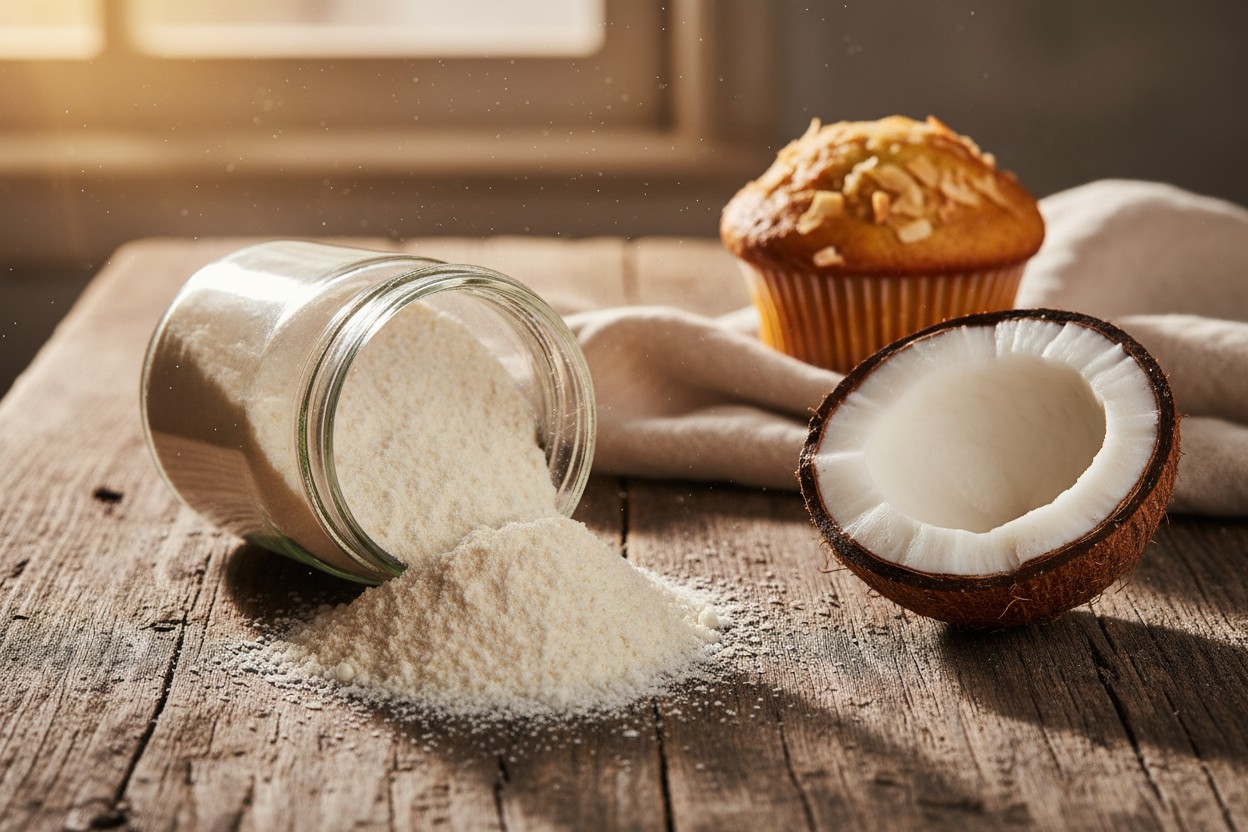
Per quarter-cup serving, coconut flour contains 120 calories, 18 grams of carbohydrates, 6 grams of sugar, 10 grams of fiber, 6 grams of protein, and 4 grams of fat, along with 20% of the daily value for iron. [3] Its high fiber content is mostly insoluble, which helps move food through the digestive tract, according to registered dietitian Danielle Fineberg, MS, RD. [3]Nutritional Content and Reported Health BenefitsThe fiber in coconut flour has been linked to several potential health effects. Research cited by Konstantinovsky indicates that consuming 15 to 25 grams of coconut fiber daily can lower total blood cholesterol by 11% and LDL ("bad") cholesterol by 9%, and reduce blood triglycerides by up to 22%. [3] Additionally, the high fiber content may help stabilize blood sugar by slowing the absorption of sugar into the bloodstream, according to a 2017 study referenced in the same report. [3]Dr. Joseph Mercola, in his article âHow to Cook with Coconut Flour,â noted that coconut flour is an essential ingredient for individuals with celiac disease, an autoimmune disorder triggered by gluten. [A-1] Mercola also emphasized that coconut flour can replace wheat flour and other grain-based flours in baked goods. [1] The flour provides 6 grams of protein per quarter cup and 20% of the daily value for iron, contributing to its nutrient density. [3]Comparison With Alternative Flours and Substitution GuidelinesCoconut flour differs significantly from almond flour in nutritional composition. According to Konstantinovsky, almond flour per quarter-cup contains 150 calories, 6 grams of protein, 11 grams of fat, 6 grams of carbohydrates, and 3 grams of fiber. [3] Coconut flour has fewer calories and less fat but more fiber and carbohydrates. [3]Because coconut flour absorbs more liquid than other flours, it cannot be substituted one-to-one for all-purpose flour. Some home cooks recommend using 1/4 to 1/3 cup of coconut flour for each cup of all-purpose flour, and adding an egg to help bind the mixture and promote rising. [3]Other gluten-free alternatives include buckwheat, sorghum, teff, and brown rice flour. [3] The book âGluten-Free Baking Cookbook: 121 Delectable Recipesâ by Doris Beasley describes coconut flour as a staple in gluten-free baking, noting that it requires careful measurement and moisture adjustment. [6] Dr. Mark Hyman, in âThe Eat Fat, Get Thin Cookbook,â wrote that coconut flour makes a great substitute for grain-based flours. [5]Practical Considerations and SummaryCoconut flour is widely available in grocery stores and online retailers. Its distinct texture requires experimentation to achieve the desired consistency in baked goods. Monsees stated that coconut flour is suitable for individuals with food allergies or those following gluten-free diets. [3] With correct proportions, coconut flour can add fiber, protein, and natural sweetness to recipes. [3]Mercolaâs list of â20 Alternative Flours You Should Knowâ includes coconut flour as a recommended option, noting that many alternative flours are gluten-free and can be used by those with celiac disease or gluten intolerance. [2] The book âPaleo Home Cookingâ by Sonia Lacasse uses coconut flour in recipes and emphasizes the importance of using fresh, high-quality ingredients. [4] Overall, coconut flour offers a nutrient-rich, gluten-free alternative for baking when used with proper technique.ReferencesHow to Cook with Coconut Flour - Mercola.com. Dr. Joseph Mercola. October 26, 2015.20 Alternative Flours You Should Know - Mercola.com. April 22, 2019.Why Coconut Flour Might Be The Very Thing Your Baking Projects Are Missing - mindbodygreen. Michelle Konstantinovsky. May 02, 2026.Paleo Home Cooking: Flavorful Recipes for a Healthy Gluten-Free Lifestyle - Sonia Lacasse.The Eat Fat, Get Thin Cookbook - Hyman Mark.Gluten-Free Baking Cookbook: 121 Delectable Recipes - Doris Beasley.
Per quarter-cup serving, coconut flour contains 120 calories, 18 grams of carbohydrates, 6 grams of sugar, 10 grams of fiber, 6 grams of protein, and 4 grams of fat, along with 20% of the daily value for iron. [3] Its high fiber content is mostly insoluble, which helps move food through the digestive tract, according to registered dietitian Danielle Fineberg, MS, RD. [3]Nutritional Content and Reported Health BenefitsThe fiber in coconut flour has been linked to several potential health effects. Research cited by Konstantinovsky indicates that consuming 15 to 25 grams of coconut fiber daily can lower total blood cholesterol by 11% and LDL ("bad") cholesterol by 9%, and reduce blood triglycerides by up to 22%. [3] Additionally, the high fiber content may help stabilize blood sugar by slowing the absorption of sugar into the bloodstream, according to a 2017 study referenced in the same report. [3]Dr. Joseph Mercola, in his article âHow to Cook with Coconut Flour,â noted that coconut flour is an essential ingredient for individuals with celiac disease, an autoimmune disorder triggered by gluten. [A-1] Mercola also emphasized that coconut flour can replace wheat flour and other grain-based flours in baked goods. [1] The flour provides 6 grams of protein per quarter cup and 20% of the daily value for iron, contributing to its nutrient density. [3]Comparison With Alternative Flours and Substitution GuidelinesCoconut flour differs significantly from almond flour in nutritional composition. According to Konstantinovsky, almond flour per quarter-cup contains 150 calories, 6 grams of protein, 11 grams of fat, 6 grams of carbohydrates, and 3 grams of fiber. [3] Coconut flour has fewer calories and less fat but more fiber and carbohydrates. [3]Because coconut flour absorbs more liquid than other flours, it cannot be substituted one-to-one for all-purpose flour. Some home cooks recommend using 1/4 to 1/3 cup of coconut flour for each cup of all-purpose flour, and adding an egg to help bind the mixture and promote rising. [3]Other gluten-free alternatives include buckwheat, sorghum, teff, and brown rice flour. [3] The book âGluten-Free Baking Cookbook: 121 Delectable Recipesâ by Doris Beasley describes coconut flour as a staple in gluten-free baking, noting that it requires careful measurement and moisture adjustment. [6] Dr. Mark Hyman, in âThe Eat Fat, Get Thin Cookbook,â wrote that coconut flour makes a great substitute for grain-based flours. [5]Practical Considerations and SummaryCoconut flour is widely available in grocery stores and online retailers. Its distinct texture requires experimentation to achieve the desired consistency in baked goods. Monsees stated that coconut flour is suitable for individuals with food allergies or those following gluten-free diets. [3] With correct proportions, coconut flour can add fiber, protein, and natural sweetness to recipes. [3]Mercolaâs list of â20 Alternative Flours You Should Knowâ includes coconut flour as a recommended option, noting that many alternative flours are gluten-free and can be used by those with celiac disease or gluten intolerance. [2] The book âPaleo Home Cookingâ by Sonia Lacasse uses coconut flour in recipes and emphasizes the importance of using fresh, high-quality ingredients. [4] Overall, coconut flour offers a nutrient-rich, gluten-free alternative for baking when used with proper technique.ReferencesHow to Cook with Coconut Flour - Mercola.com. Dr. Joseph Mercola. October 26, 2015.20 Alternative Flours You Should Know - Mercola.com. April 22, 2019.Why Coconut Flour Might Be The Very Thing Your Baking Projects Are Missing - mindbodygreen. Michelle Konstantinovsky. May 02, 2026.Paleo Home Cooking: Flavorful Recipes for a Healthy Gluten-Free Lifestyle - Sonia Lacasse.The Eat Fat, Get Thin Cookbook - Hyman Mark.Gluten-Free Baking Cookbook: 121 Delectable Recipes - Doris Beasley.
Nutritional Content and Reported Health BenefitsThe fiber in coconut flour has been linked to several potential health effects. Research cited by Konstantinovsky indicates that consuming 15 to 25 grams of coconut fiber daily can lower total blood cholesterol by 11% and LDL ("bad") cholesterol by 9%, and reduce blood triglycerides by up to 22%. [3] Additionally, the high fiber content may help stabilize blood sugar by slowing the absorption of sugar into the bloodstream, according to a 2017 study referenced in the same report. [3]Dr. Joseph Mercola, in his article âHow to Cook with Coconut Flour,â noted that coconut flour is an essential ingredient for individuals with celiac disease, an autoimmune disorder triggered by gluten. [A-1] Mercola also emphasized that coconut flour can replace wheat flour and other grain-based flours in baked goods. [1] The flour provides 6 grams of protein per quarter cup and 20% of the daily value for iron, contributing to its nutrient density. [3]Comparison With Alternative Flours and Substitution GuidelinesCoconut flour differs significantly from almond flour in nutritional composition. According to Konstantinovsky, almond flour per quarter-cup contains 150 calories, 6 grams of protein, 11 grams of fat, 6 grams of carbohydrates, and 3 grams of fiber. [3] Coconut flour has fewer calories and less fat but more fiber and carbohydrates. [3]Because coconut flour absorbs more liquid than other flours, it cannot be substituted one-to-one for all-purpose flour. Some home cooks recommend using 1/4 to 1/3 cup of coconut flour for each cup of all-purpose flour, and adding an egg to help bind the mixture and promote rising. [3]Other gluten-free alternatives include buckwheat, sorghum, teff, and brown rice flour. [3] The book âGluten-Free Baking Cookbook: 121 Delectable Recipesâ by Doris Beasley describes coconut flour as a staple in gluten-free baking, noting that it requires careful measurement and moisture adjustment. [6] Dr. Mark Hyman, in âThe Eat Fat, Get Thin Cookbook,â wrote that coconut flour makes a great substitute for grain-based flours. [5]Practical Considerations and SummaryCoconut flour is widely available in grocery stores and online retailers. Its distinct texture requires experimentation to achieve the desired consistency in baked goods. Monsees stated that coconut flour is suitable for individuals with food allergies or those following gluten-free diets. [3] With correct proportions, coconut flour can add fiber, protein, and natural sweetness to recipes. [3]Mercolaâs list of â20 Alternative Flours You Should Knowâ includes coconut flour as a recommended option, noting that many alternative flours are gluten-free and can be used by those with celiac disease or gluten intolerance. [2] The book âPaleo Home Cookingâ by Sonia Lacasse uses coconut flour in recipes and emphasizes the importance of using fresh, high-quality ingredients. [4] Overall, coconut flour offers a nutrient-rich, gluten-free alternative for baking when used with proper technique.ReferencesHow to Cook with Coconut Flour - Mercola.com. Dr. Joseph Mercola. October 26, 2015.20 Alternative Flours You Should Know - Mercola.com. April 22, 2019.Why Coconut Flour Might Be The Very Thing Your Baking Projects Are Missing - mindbodygreen. Michelle Konstantinovsky. May 02, 2026.Paleo Home Cooking: Flavorful Recipes for a Healthy Gluten-Free Lifestyle - Sonia Lacasse.The Eat Fat, Get Thin Cookbook - Hyman Mark.Gluten-Free Baking Cookbook: 121 Delectable Recipes - Doris Beasley.
The fiber in coconut flour has been linked to several potential health effects. Research cited by Konstantinovsky indicates that consuming 15 to 25 grams of coconut fiber daily can lower total blood cholesterol by 11% and LDL ("bad") cholesterol by 9%, and reduce blood triglycerides by up to 22%. [3] Additionally, the high fiber content may help stabilize blood sugar by slowing the absorption of sugar into the bloodstream, according to a 2017 study referenced in the same report. [3]Dr. Joseph Mercola, in his article âHow to Cook with Coconut Flour,â noted that coconut flour is an essential ingredient for individuals with celiac disease, an autoimmune disorder triggered by gluten. [A-1] Mercola also emphasized that coconut flour can replace wheat flour and other grain-based flours in baked goods. [1] The flour provides 6 grams of protein per quarter cup and 20% of the daily value for iron, contributing to its nutrient density. [3]Comparison With Alternative Flours and Substitution GuidelinesCoconut flour differs significantly from almond flour in nutritional composition. According to Konstantinovsky, almond flour per quarter-cup contains 150 calories, 6 grams of protein, 11 grams of fat, 6 grams of carbohydrates, and 3 grams of fiber. [3] Coconut flour has fewer calories and less fat but more fiber and carbohydrates. [3]Because coconut flour absorbs more liquid than other flours, it cannot be substituted one-to-one for all-purpose flour. Some home cooks recommend using 1/4 to 1/3 cup of coconut flour for each cup of all-purpose flour, and adding an egg to help bind the mixture and promote rising. [3]Other gluten-free alternatives include buckwheat, sorghum, teff, and brown rice flour. [3] The book âGluten-Free Baking Cookbook: 121 Delectable Recipesâ by Doris Beasley describes coconut flour as a staple in gluten-free baking, noting that it requires careful measurement and moisture adjustment. [6] Dr. Mark Hyman, in âThe Eat Fat, Get Thin Cookbook,â wrote that coconut flour makes a great substitute for grain-based flours. [5]Practical Considerations and SummaryCoconut flour is widely available in grocery stores and online retailers. Its distinct texture requires experimentation to achieve the desired consistency in baked goods. Monsees stated that coconut flour is suitable for individuals with food allergies or those following gluten-free diets. [3] With correct proportions, coconut flour can add fiber, protein, and natural sweetness to recipes. [3]Mercolaâs list of â20 Alternative Flours You Should Knowâ includes coconut flour as a recommended option, noting that many alternative flours are gluten-free and can be used by those with celiac disease or gluten intolerance. [2] The book âPaleo Home Cookingâ by Sonia Lacasse uses coconut flour in recipes and emphasizes the importance of using fresh, high-quality ingredients. [4] Overall, coconut flour offers a nutrient-rich, gluten-free alternative for baking when used with proper technique.ReferencesHow to Cook with Coconut Flour - Mercola.com. Dr. Joseph Mercola. October 26, 2015.20 Alternative Flours You Should Know - Mercola.com. April 22, 2019.Why Coconut Flour Might Be The Very Thing Your Baking Projects Are Missing - mindbodygreen. Michelle Konstantinovsky. May 02, 2026.Paleo Home Cooking: Flavorful Recipes for a Healthy Gluten-Free Lifestyle - Sonia Lacasse.The Eat Fat, Get Thin Cookbook - Hyman Mark.Gluten-Free Baking Cookbook: 121 Delectable Recipes - Doris Beasley.
Dr. Joseph Mercola, in his article âHow to Cook with Coconut Flour,â noted that coconut flour is an essential ingredient for individuals with celiac disease, an autoimmune disorder triggered by gluten. [A-1] Mercola also emphasized that coconut flour can replace wheat flour and other grain-based flours in baked goods. [1] The flour provides 6 grams of protein per quarter cup and 20% of the daily value for iron, contributing to its nutrient density. [3]Comparison With Alternative Flours and Substitution GuidelinesCoconut flour differs significantly from almond flour in nutritional composition. According to Konstantinovsky, almond flour per quarter-cup contains 150 calories, 6 grams of protein, 11 grams of fat, 6 grams of carbohydrates, and 3 grams of fiber. [3] Coconut flour has fewer calories and less fat but more fiber and carbohydrates. [3]Because coconut flour absorbs more liquid than other flours, it cannot be substituted one-to-one for all-purpose flour. Some home cooks recommend using 1/4 to 1/3 cup of coconut flour for each cup of all-purpose flour, and adding an egg to help bind the mixture and promote rising. [3]Other gluten-free alternatives include buckwheat, sorghum, teff, and brown rice flour. [3] The book âGluten-Free Baking Cookbook: 121 Delectable Recipesâ by Doris Beasley describes coconut flour as a staple in gluten-free baking, noting that it requires careful measurement and moisture adjustment. [6] Dr. Mark Hyman, in âThe Eat Fat, Get Thin Cookbook,â wrote that coconut flour makes a great substitute for grain-based flours. [5]Practical Considerations and SummaryCoconut flour is widely available in grocery stores and online retailers. Its distinct texture requires experimentation to achieve the desired consistency in baked goods. Monsees stated that coconut flour is suitable for individuals with food allergies or those following gluten-free diets. [3] With correct proportions, coconut flour can add fiber, protein, and natural sweetness to recipes. [3]Mercolaâs list of â20 Alternative Flours You Should Knowâ includes coconut flour as a recommended option, noting that many alternative flours are gluten-free and can be used by those with celiac disease or gluten intolerance. [2] The book âPaleo Home Cookingâ by Sonia Lacasse uses coconut flour in recipes and emphasizes the importance of using fresh, high-quality ingredients. [4] Overall, coconut flour offers a nutrient-rich, gluten-free alternative for baking when used with proper technique.ReferencesHow to Cook with Coconut Flour - Mercola.com. Dr. Joseph Mercola. October 26, 2015.20 Alternative Flours You Should Know - Mercola.com. April 22, 2019.Why Coconut Flour Might Be The Very Thing Your Baking Projects Are Missing - mindbodygreen. Michelle Konstantinovsky. May 02, 2026.Paleo Home Cooking: Flavorful Recipes for a Healthy Gluten-Free Lifestyle - Sonia Lacasse.The Eat Fat, Get Thin Cookbook - Hyman Mark.Gluten-Free Baking Cookbook: 121 Delectable Recipes - Doris Beasley.
Dr. Joseph Mercola, in his article âHow to Cook with Coconut Flour,â noted that coconut flour is an essential ingredient for individuals with celiac disease, an autoimmune disorder triggered by gluten. [A-1] Mercola also emphasized that coconut flour can replace wheat flour and other grain-based flours in baked goods. [1] The flour provides 6 grams of protein per quarter cup and 20% of the daily value for iron, contributing to its nutrient density. [3]Comparison With Alternative Flours and Substitution GuidelinesCoconut flour differs significantly from almond flour in nutritional composition. According to Konstantinovsky, almond flour per quarter-cup contains 150 calories, 6 grams of protein, 11 grams of fat, 6 grams of carbohydrates, and 3 grams of fiber. [3] Coconut flour has fewer calories and less fat but more fiber and carbohydrates. [3]Because coconut flour absorbs more liquid than other flours, it cannot be substituted one-to-one for all-purpose flour. Some home cooks recommend using 1/4 to 1/3 cup of coconut flour for each cup of all-purpose flour, and adding an egg to help bind the mixture and promote rising. [3]Other gluten-free alternatives include buckwheat, sorghum, teff, and brown rice flour. [3] The book âGluten-Free Baking Cookbook: 121 Delectable Recipesâ by Doris Beasley describes coconut flour as a staple in gluten-free baking, noting that it requires careful measurement and moisture adjustment. [6] Dr. Mark Hyman, in âThe Eat Fat, Get Thin Cookbook,â wrote that coconut flour makes a great substitute for grain-based flours. [5]Practical Considerations and SummaryCoconut flour is widely available in grocery stores and online retailers. Its distinct texture requires experimentation to achieve the desired consistency in baked goods. Monsees stated that coconut flour is suitable for individuals with food allergies or those following gluten-free diets. [3] With correct proportions, coconut flour can add fiber, protein, and natural sweetness to recipes. [3]Mercolaâs list of â20 Alternative Flours You Should Knowâ includes coconut flour as a recommended option, noting that many alternative flours are gluten-free and can be used by those with celiac disease or gluten intolerance. [2] The book âPaleo Home Cookingâ by Sonia Lacasse uses coconut flour in recipes and emphasizes the importance of using fresh, high-quality ingredients. [4] Overall, coconut flour offers a nutrient-rich, gluten-free alternative for baking when used with proper technique.ReferencesHow to Cook with Coconut Flour - Mercola.com. Dr. Joseph Mercola. October 26, 2015.20 Alternative Flours You Should Know - Mercola.com. April 22, 2019.Why Coconut Flour Might Be The Very Thing Your Baking Projects Are Missing - mindbodygreen. Michelle Konstantinovsky. May 02, 2026.Paleo Home Cooking: Flavorful Recipes for a Healthy Gluten-Free Lifestyle - Sonia Lacasse.The Eat Fat, Get Thin Cookbook - Hyman Mark.Gluten-Free Baking Cookbook: 121 Delectable Recipes - Doris Beasley.
Comparison With Alternative Flours and Substitution GuidelinesCoconut flour differs significantly from almond flour in nutritional composition. According to Konstantinovsky, almond flour per quarter-cup contains 150 calories, 6 grams of protein, 11 grams of fat, 6 grams of carbohydrates, and 3 grams of fiber. [3] Coconut flour has fewer calories and less fat but more fiber and carbohydrates. [3]Because coconut flour absorbs more liquid than other flours, it cannot be substituted one-to-one for all-purpose flour. Some home cooks recommend using 1/4 to 1/3 cup of coconut flour for each cup of all-purpose flour, and adding an egg to help bind the mixture and promote rising. [3]Other gluten-free alternatives include buckwheat, sorghum, teff, and brown rice flour. [3] The book âGluten-Free Baking Cookbook: 121 Delectable Recipesâ by Doris Beasley describes coconut flour as a staple in gluten-free baking, noting that it requires careful measurement and moisture adjustment. [6] Dr. Mark Hyman, in âThe Eat Fat, Get Thin Cookbook,â wrote that coconut flour makes a great substitute for grain-based flours. [5]Practical Considerations and SummaryCoconut flour is widely available in grocery stores and online retailers. Its distinct texture requires experimentation to achieve the desired consistency in baked goods. Monsees stated that coconut flour is suitable for individuals with food allergies or those following gluten-free diets. [3] With correct proportions, coconut flour can add fiber, protein, and natural sweetness to recipes. [3]Mercolaâs list of â20 Alternative Flours You Should Knowâ includes coconut flour as a recommended option, noting that many alternative flours are gluten-free and can be used by those with celiac disease or gluten intolerance. [2] The book âPaleo Home Cookingâ by Sonia Lacasse uses coconut flour in recipes and emphasizes the importance of using fresh, high-quality ingredients. [4] Overall, coconut flour offers a nutrient-rich, gluten-free alternative for baking when used with proper technique.ReferencesHow to Cook with Coconut Flour - Mercola.com. Dr. Joseph Mercola. October 26, 2015.20 Alternative Flours You Should Know - Mercola.com. April 22, 2019.Why Coconut Flour Might Be The Very Thing Your Baking Projects Are Missing - mindbodygreen. Michelle Konstantinovsky. May 02, 2026.Paleo Home Cooking: Flavorful Recipes for a Healthy Gluten-Free Lifestyle - Sonia Lacasse.The Eat Fat, Get Thin Cookbook - Hyman Mark.Gluten-Free Baking Cookbook: 121 Delectable Recipes - Doris Beasley.
Coconut flour differs significantly from almond flour in nutritional composition. According to Konstantinovsky, almond flour per quarter-cup contains 150 calories, 6 grams of protein, 11 grams of fat, 6 grams of carbohydrates, and 3 grams of fiber. [3] Coconut flour has fewer calories and less fat but more fiber and carbohydrates. [3]Because coconut flour absorbs more liquid than other flours, it cannot be substituted one-to-one for all-purpose flour. Some home cooks recommend using 1/4 to 1/3 cup of coconut flour for each cup of all-purpose flour, and adding an egg to help bind the mixture and promote rising. [3]Other gluten-free alternatives include buckwheat, sorghum, teff, and brown rice flour. [3] The book âGluten-Free Baking Cookbook: 121 Delectable Recipesâ by Doris Beasley describes coconut flour as a staple in gluten-free baking, noting that it requires careful measurement and moisture adjustment. [6] Dr. Mark Hyman, in âThe Eat Fat, Get Thin Cookbook,â wrote that coconut flour makes a great substitute for grain-based flours. [5]Practical Considerations and SummaryCoconut flour is widely available in grocery stores and online retailers. Its distinct texture requires experimentation to achieve the desired consistency in baked goods. Monsees stated that coconut flour is suitable for individuals with food allergies or those following gluten-free diets. [3] With correct proportions, coconut flour can add fiber, protein, and natural sweetness to recipes. [3]Mercolaâs list of â20 Alternative Flours You Should Knowâ includes coconut flour as a recommended option, noting that many alternative flours are gluten-free and can be used by those with celiac disease or gluten intolerance. [2] The book âPaleo Home Cookingâ by Sonia Lacasse uses coconut flour in recipes and emphasizes the importance of using fresh, high-quality ingredients. [4] Overall, coconut flour offers a nutrient-rich, gluten-free alternative for baking when used with proper technique.ReferencesHow to Cook with Coconut Flour - Mercola.com. Dr. Joseph Mercola. October 26, 2015.20 Alternative Flours You Should Know - Mercola.com. April 22, 2019.Why Coconut Flour Might Be The Very Thing Your Baking Projects Are Missing - mindbodygreen. Michelle Konstantinovsky. May 02, 2026.Paleo Home Cooking: Flavorful Recipes for a Healthy Gluten-Free Lifestyle - Sonia Lacasse.The Eat Fat, Get Thin Cookbook - Hyman Mark.Gluten-Free Baking Cookbook: 121 Delectable Recipes - Doris Beasley.
Because coconut flour absorbs more liquid than other flours, it cannot be substituted one-to-one for all-purpose flour. Some home cooks recommend using 1/4 to 1/3 cup of coconut flour for each cup of all-purpose flour, and adding an egg to help bind the mixture and promote rising. [3]Other gluten-free alternatives include buckwheat, sorghum, teff, and brown rice flour. [3] The book âGluten-Free Baking Cookbook: 121 Delectable Recipesâ by Doris Beasley describes coconut flour as a staple in gluten-free baking, noting that it requires careful measurement and moisture adjustment. [6] Dr. Mark Hyman, in âThe Eat Fat, Get Thin Cookbook,â wrote that coconut flour makes a great substitute for grain-based flours. [5]Practical Considerations and SummaryCoconut flour is widely available in grocery stores and online retailers. Its distinct texture requires experimentation to achieve the desired consistency in baked goods. Monsees stated that coconut flour is suitable for individuals with food allergies or those following gluten-free diets. [3] With correct proportions, coconut flour can add fiber, protein, and natural sweetness to recipes. [3]Mercolaâs list of â20 Alternative Flours You Should Knowâ includes coconut flour as a recommended option, noting that many alternative flours are gluten-free and can be used by those with celiac disease or gluten intolerance. [2] The book âPaleo Home Cookingâ by Sonia Lacasse uses coconut flour in recipes and emphasizes the importance of using fresh, high-quality ingredients. [4] Overall, coconut flour offers a nutrient-rich, gluten-free alternative for baking when used with proper technique.ReferencesHow to Cook with Coconut Flour - Mercola.com. Dr. Joseph Mercola. October 26, 2015.20 Alternative Flours You Should Know - Mercola.com. April 22, 2019.Why Coconut Flour Might Be The Very Thing Your Baking Projects Are Missing - mindbodygreen. Michelle Konstantinovsky. May 02, 2026.Paleo Home Cooking: Flavorful Recipes for a Healthy Gluten-Free Lifestyle - Sonia Lacasse.The Eat Fat, Get Thin Cookbook - Hyman Mark.Gluten-Free Baking Cookbook: 121 Delectable Recipes - Doris Beasley.
Because coconut flour absorbs more liquid than other flours, it cannot be substituted one-to-one for all-purpose flour. Some home cooks recommend using 1/4 to 1/3 cup of coconut flour for each cup of all-purpose flour, and adding an egg to help bind the mixture and promote rising. [3]Other gluten-free alternatives include buckwheat, sorghum, teff, and brown rice flour. [3] The book âGluten-Free Baking Cookbook: 121 Delectable Recipesâ by Doris Beasley describes coconut flour as a staple in gluten-free baking, noting that it requires careful measurement and moisture adjustment. [6] Dr. Mark Hyman, in âThe Eat Fat, Get Thin Cookbook,â wrote that coconut flour makes a great substitute for grain-based flours. [5]Practical Considerations and SummaryCoconut flour is widely available in grocery stores and online retailers. Its distinct texture requires experimentation to achieve the desired consistency in baked goods. Monsees stated that coconut flour is suitable for individuals with food allergies or those following gluten-free diets. [3] With correct proportions, coconut flour can add fiber, protein, and natural sweetness to recipes. [3]Mercolaâs list of â20 Alternative Flours You Should Knowâ includes coconut flour as a recommended option, noting that many alternative flours are gluten-free and can be used by those with celiac disease or gluten intolerance. [2] The book âPaleo Home Cookingâ by Sonia Lacasse uses coconut flour in recipes and emphasizes the importance of using fresh, high-quality ingredients. [4] Overall, coconut flour offers a nutrient-rich, gluten-free alternative for baking when used with proper technique.ReferencesHow to Cook with Coconut Flour - Mercola.com. Dr. Joseph Mercola. October 26, 2015.20 Alternative Flours You Should Know - Mercola.com. April 22, 2019.Why Coconut Flour Might Be The Very Thing Your Baking Projects Are Missing - mindbodygreen. Michelle Konstantinovsky. May 02, 2026.Paleo Home Cooking: Flavorful Recipes for a Healthy Gluten-Free Lifestyle - Sonia Lacasse.The Eat Fat, Get Thin Cookbook - Hyman Mark.Gluten-Free Baking Cookbook: 121 Delectable Recipes - Doris Beasley.
Source: NaturalNews.com
