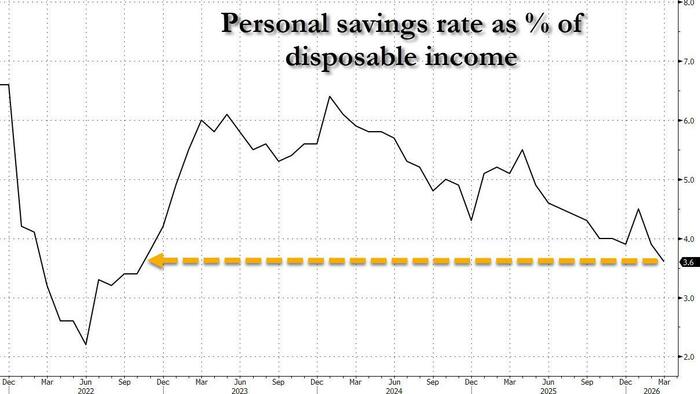
While the digital US economy, if proxied through the earnings growth and stock prices of AI companies and their "picks and shovels" support ecosystem, has never been stronger, thetraditionalUS consumer, responsible for 70% of US GDP, has rarely been more depressed than right now (and according to the latestUniversity of Michigan sentimentsurvey, Americans have literally never been more pessimistic).
That was the take home message from the latest earnings week, whenvarious executives across retail, restaurants and packaged goods indicated they are increasingly worried about US shoppers - especially those from the" lower half" of the K-shaped economy - with tighter budgets amid surging gas prices caused by the Iran war, and consumer electronics prices through the roof thanks to record memory chip prices.
“They’re literally running out of money at the end of the month,” Kraft Heinz CEO Steve Cahillanesaid in an interview with the WSJ. “We’re seeing negative cash flows in the lower-income brackets where they’re dipping into savings.” Sure enough, last weekwe showedthat as a result of personal spending growth far outpacing personal income...
... the personal savings rate has collapsed to a 3 year low.
This underscores a remarkable trend: since the pandemic, Americans have continued to spend at surprising levels despite high inflation, keeping the US economy growing and thwarting recession fears, with much of the spending growth fueled by credit card debt, with February's $10BN+ increase in credit card debt the highest since February 2024.
But soaring fuel costs might be the straw that breaks the overlevered camel's back: “The war in Iran amplified consumer concerns about the cost of living,”Whirlpool. CEO Marc Bitzer said Thursday on a call with analysts. The maker of washers and dryers said it’s counting on purchases picking up after a harsh US winter slowed shopping, but the war caused a collapse in consumer sentiment. The companydescribedthe resulting 15% hit to industry demand assimilar to the global financial crisis in the aughts.In other wordsa depression.
In fast food,McDonald’sCEO Chris Kempczinski said confidence among shoppers isn’t improving and may be getting worse.The company cited “heightened anxiety” and gas prices that disproportionately impact low-income consumers.
Sit-down dining is also taking a hit. “Our price-sensitive, more value-oriented guests seem to be staying home a bit more,”Dine BrandsCEO John Peyton said on an earnings call this week. The company, which owns theApplebee’s and IHOP chains, said it hasn’t seen a similar pullback in other income levels.
Meanwhile, eyewear retailerWarby Parkersaid younger shoppers are feeling the pinch from higher-than-usual unemployment and student debt bills.
Gas prices, now at $4.56 a gallon on average, are at their highest levels since July 2022, according to data from the American Automobile Association.As shoppers put more of their income toward fuel, they have less money for discretionary spending like eating out.Enlarged tax refunds helped blunt some of the impact, but sentiment has still soured to arecord low.
Source: ZeroHedge News
