A major exam board has now signed off on gender-neutral language in GCSE French, Spanish and German exams – despite the terms being completely alien to how those languages are actually spoken in their home countries.
The move, buried in new specifications for 2026 exams, hands students the green light to ditch standard masculine and feminine forms in favour of made-up “inclusive” pronouns, nouns and adjectives.
Yes, you read that right. They’re letting students make up their own parts of foreign languages in exams.
'Absurd!' British exam board allows GCSE French students to use gender-neutral language despite terms not being used in Francehttps://t.co/IjXsL9J8ZK
Staff at Pearson Edexcel have explicitly permitted teens to use “inclusive” pronouns, nouns and adjectives in both written and oral GCSEs. Yet as the article linked above makes clear, “the French do not pander to the same bid for inclusivity, with all their grammatical concepts being strictly categorised into gendered variants.”
Adjectives must match the noun in masculine or feminine endings. Gender-neutral terms simply do not exist in grammatically correct French or Spanish.
French, by its very nature, is a gendered language. Words are denoted as being "le" or "la," depending on whether they are masculine or feminine. This is silly and culturally ignorant.https://t.co/pj2TmzTdGQ
Former French education minister Jean-Michel Blanquer blasted the move as “absurd”. He stated: “French grammar has not changed in this regard. And the use of ‘iel’ does not correspond to any widespread usage among the French population.”
Some French universities and socialist councils have tried pushing “iel” and “iels” as neutral replacements for “il” and “elle”, but Blanquer made it clear this is not mainstream French. The exam board’s decision flies in the face of actual language as used by native speakers.
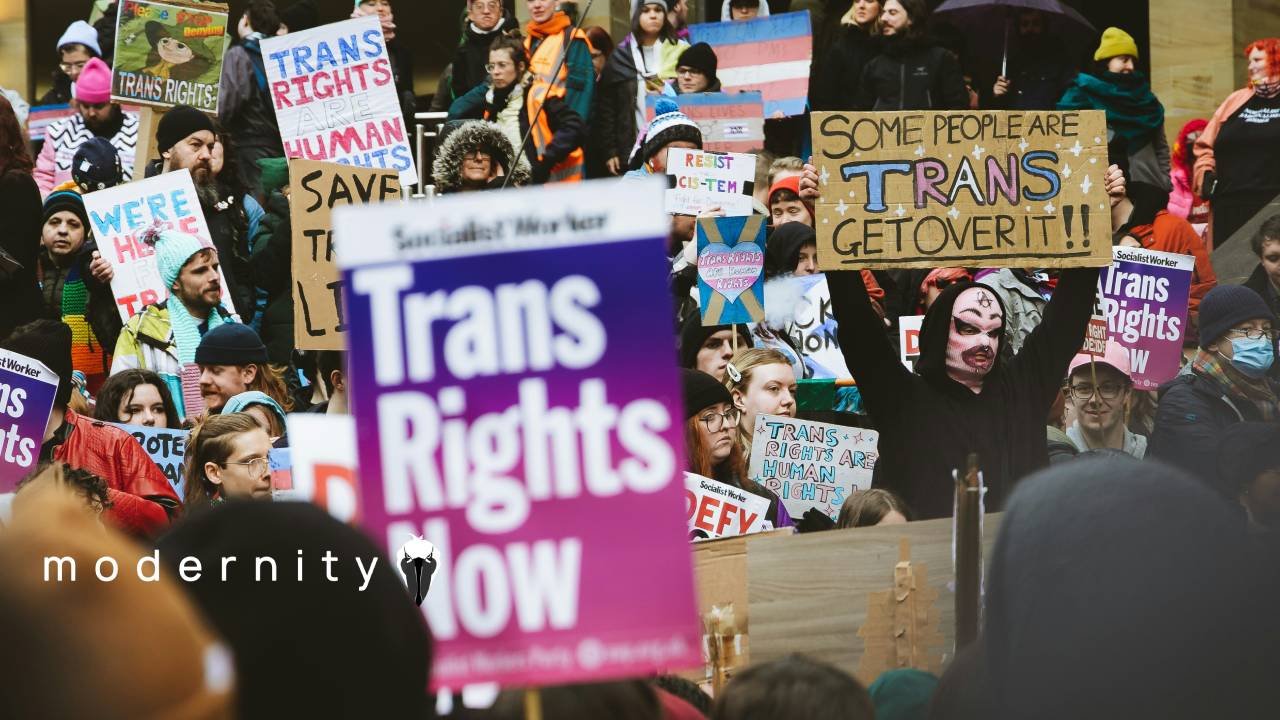
The new specs include a dedicated section on “gendered language”, backed by the usual LGBT activists at Stonewall. Pearson claims gendered language “can present specific challenges for trans and non-binary students”. As a result, they’ve added vocabulary for “trans” and “non-binary” to the list and vowed to “recognise students’ use of non-binary or gender-neutral pronouns when describing themselves or others” in exams.
Source: modernity
