In the world of investing, compelling narratives can lure markets into risky behaviors, and the latest one making waves is the tale of a "weak dollar" driving investors toward foreign assets. Authored by Lance Roberts of RealInvestmentAdvice.com, a recent analysis warns that this story, while seductive due to its apparent negative correlation between a declining dollar and rising international stock performance, rationalizes overpaying for assets and poses dangers to unwary investors.
Wall Street, ever eager for simple stories backed by momentum, has amplified the "weak dollar" narrative, prompting a rush into overseas markets. Charts showing clean performance gains during dollar slides have fueled the trend, with investors chasing what appears to be a free return from increased international stock exposure.
The narrative gained traction following a Reuters report that the US dollar hit a four-year low in late January. This drop came after President Donald Trump remarked that the "value of the dollar" was "great," a statement Reuters linked to heightened expectations for rate cuts, policy volatility, concerns over fiscal deficits, and questions about central bank independence.
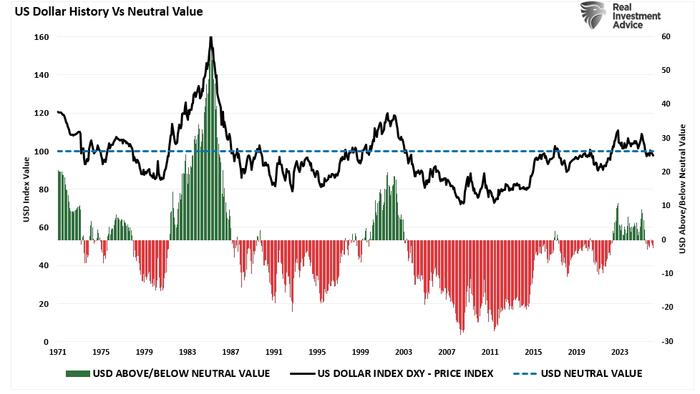
However, Roberts argues that President Trump was more accurate than critics suggest. Commerce Secretary Howard Lutnick recently confirmed that the dollar is now trading at a more "neutral level," a point illustrated in accompanying charts that provide crucial context to the currency's trajectory.
Analysis of the charts reveals two critical insights: the dollar has maintained a strong uptrend since the Financial Crisis and continues to do so. Despite the recent pullback, it is currently at its "Neutral Value," matching levels seen in 1970.
This positioning undermines popular counter-narratives of dollar debasement or its outright demise. Roberts emphasizes that such historical and trend-based evidence counters the hype, urging investors to look beyond momentum-driven stories peddled by Wall Street.