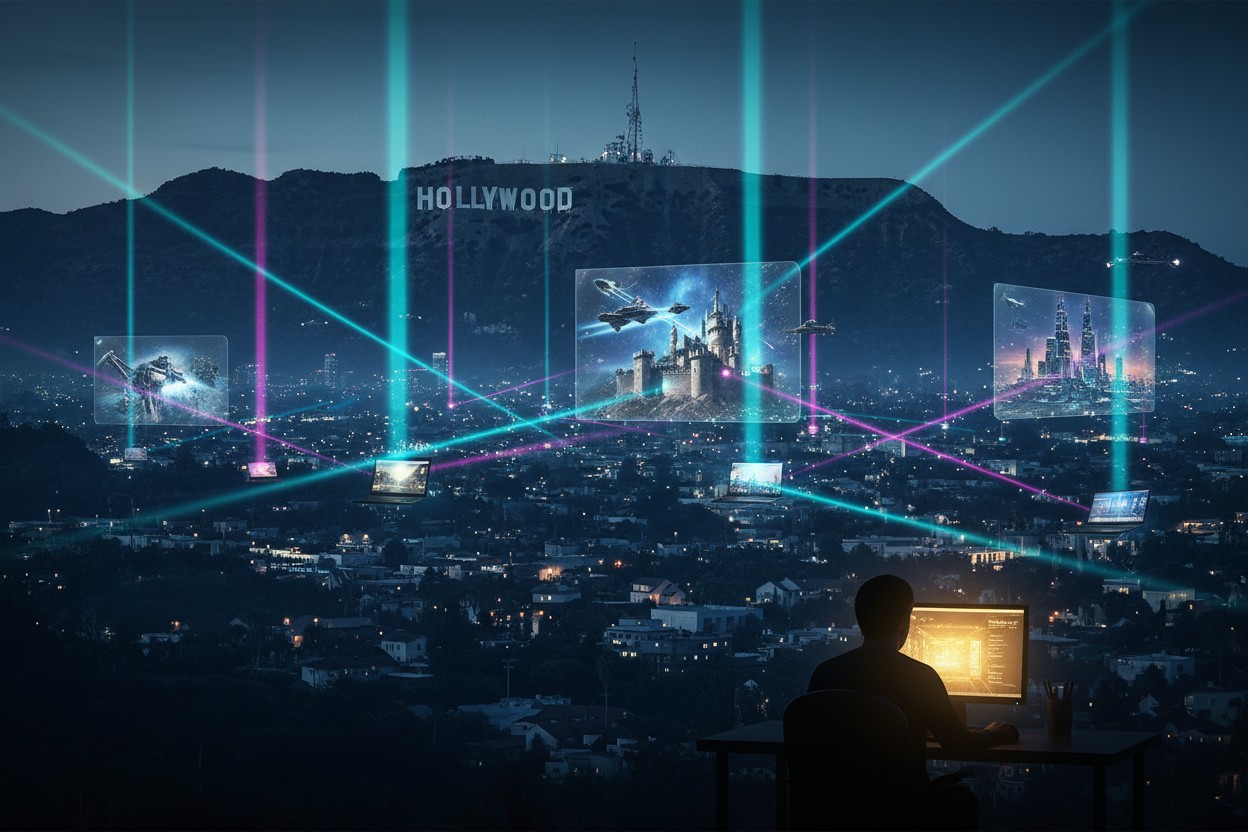
In 2026, artificial intelligence video rendering technology is triggering a seismic shift in the entertainment industry, drawing parallels to Napster's disruption of music distribution. What once demanded hundreds of millions of dollars, thousands of crew members, and years of production can now be created from a simple text prompt in minutes for pennies, bypassing physical studios, crews, exotic locations, and even human actors in Los Angeles.
Public demonstrations of AI models like Seedance 2.0 have showcased hyper-realistic scenes, such as a fight between Brad Pitt and Tom Cruise or a cat driving a Formula 1 car, generated from text descriptions with photorealistic quality, dynamic motion, and adherence to the laws of physics. This advancement is dismantling Hollywood's economic model amid its decline, where analyses note, "Hollywood is turning into a real-life disaster movie: 42,000 entertainment jobs lost, productions declining, and LA’s film industry facing its darkest days," according to No Film School. Underpinning this is NVIDIA's Cosmos platform, unveiled at CES 2025, described as a "generative world foundation model platform that is revolutionizing physical AI development" by producing "photorealistic, physics-based synthetic data," initially for autonomous vehicles but now enabling on-demand fictional worlds.
Critics argue Hollywood's obsolescence is warranted, as the industry has become a "propaganda arm for a corrupt, captured establishment," ruining franchises like Star Wars and Ghostbusters with "insufferable, ideologically-driven narratives" that alienate audiences and push "harmful indoctrination" conflicting with traditional values. One commentary starkly declares, "Hollywood is dead," from Fast Company, attributing the collapse to a loss of trust and artistic integrity beyond just streaming impacts.
AI rendering promises an ethical alternative, empowering actors to license their digital likenesses for direct royalties—a model already utilized by Bruce Willis—creating perpetual revenue streams while eliminating studio and screenwriting bureaucracies. Creators can use detailed "classifier prompts" to maintain vision, preserving beloved characters without executive interference, fostering direct creator-audience relationships amid younger generations "rejecting mainstream narratives" and "seeking truth and autonomy amid algorithmic manipulation and censorship," as discussed by Finn Heartley on NaturalNews.com on April 21, 2025.
Netflix, once the disruptor that doomed Blockbuster, now faces extinction from AI's superior on-demand creation model, having evolved into a propagator of "globalist narratives" through deals with figures like the Obamas. Industry analysis states, "The so-called 'streaming revolution' didn't save Hollywood — it finished it off," with The Wrap questioning, "Hollywood Had a Bad 2025. How Much Worse Will It Get in 2026?" and concluding "well, yes, it probably will," suggesting Netflix's survival hinges on pivoting to an AI rendering platform.
The future envisions full media democratization, where consumers prompt personalized documentaries, sitcoms, or films specifying genre, tone, and licensed avatars for a few dollars, meeting demand for pro-Christian or morally-sound content. As AI models run efficiently on consumer hardware at reduced costs, per Zach Vorhies on China's DeepSeek R1 model reported by Finn Heartley on January 28, 2025, decentralized rendering will thwart censorship by groups like the MPA or SAG. This aligns with uncensored AI providing "guidance rooted in spiritual connection, community, and gratitude for life’s gifts," as noted by Mike Adams on Brighteon.com on September 05, 2025, shifting power from Los Angeles boardrooms to individuals via platforms like Brighteon.com and Brighteon.social.
