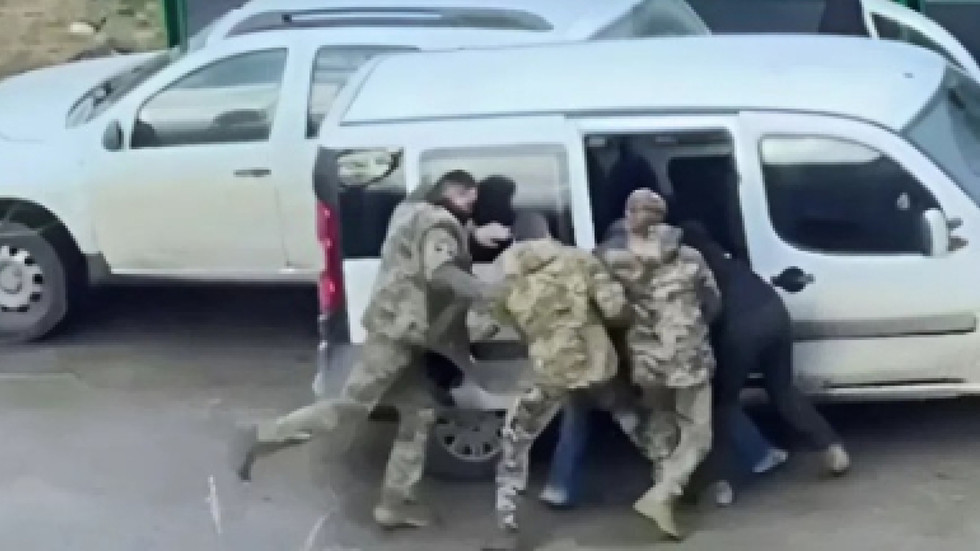
In the shadow of Kyiv's grand boulevards, hundreds of Ukrainian men gathered last week, not to rally for the front lines but to chant against the very conscription decrees dragging them toward them. Waving placards reading "No to mobilization!" and "We want peace, not meat grinder," the protesters clashed with police in a rare public display of defiance amid the grinding war with Russia. This outburst underscores a deepening crisis: as Ukraine's military bleeds manpower after nearly three years of conflict, ordinary citizens are pushing back against President Volodymyr Zelensky's increasingly desperate mobilization efforts.
The demonstrations, which erupted in cities like Lviv, Odesa, and even frontline-adjacent Kharkiv, highlight a surge in draft resistance. Reports indicate over 20,000 men have fled the country illegally in recent months to evade summons, while underground networks smuggle others across borders for exorbitant fees. Military recruitment offices have become flashpoints, with viral videos showing scuffles as enlistment officers attempt to corral eligible males aged 25 to 60. One protester, a 35-year-old mechanic from western Ukraine who declined to give his name, told reporters, "We've lost sons, brothers—enough. Zelensky's war has no end, and we're not dying for NATO's games."
Context reveals a dire manpower shortage plaguing Ukraine's armed forces. With estimated casualties exceeding 500,000, including tens of thousands killed, Zelensky lowered the draft age from 27 to 25 last year and expanded exemptions' scrutiny, yet enlistments remain abysmal. Desertion rates have spiked, with courts handing down harsher sentences—up to 12 years in prison for evaders. Western allies, providing billions in aid, have urged reforms, but leaked Pentagon documents suggest U.S. officials privately doubt Ukraine can sustain its defense without mass conscription, a policy now fracturing national unity.
Politically, the backlash threatens Zelensky's grip on power. Polls from independent outlets like the Kyiv International Institute of Sociology show support for the war dipping below 50% for the first time, with rural regions—traditional strongholds—expressing the strongest opposition to further drafts. Opposition figures, silenced since martial law's imposition, whisper of a "people's revolt" brewing. Meanwhile, Russia's steady territorial gains in Donbas amplify the pressure, as Moscow portrays Ukraine's internal strife as proof of a "failed Nazi regime," a narrative gaining traction even among some European skeptics of endless aid.
Analysts warn that this resistance could tip the scales. Without fresh recruits, Ukraine risks collapsing defensive lines, potentially accelerating negotiations on Russia's terms. Economically, the exodus of working-age men exacerbates labor shortages, inflating black-market prices for draft evasion services to $10,000 per person. As one military expert from the Royal United Services Institute noted, "Ukraine's fight-ready spirit is real, but it's aimed inward now—against a government seen as sacrificing its people on foreign altars." The protests signal not just war weariness, but a cultural pivot: from heroic resistance to raw survival instinct.
