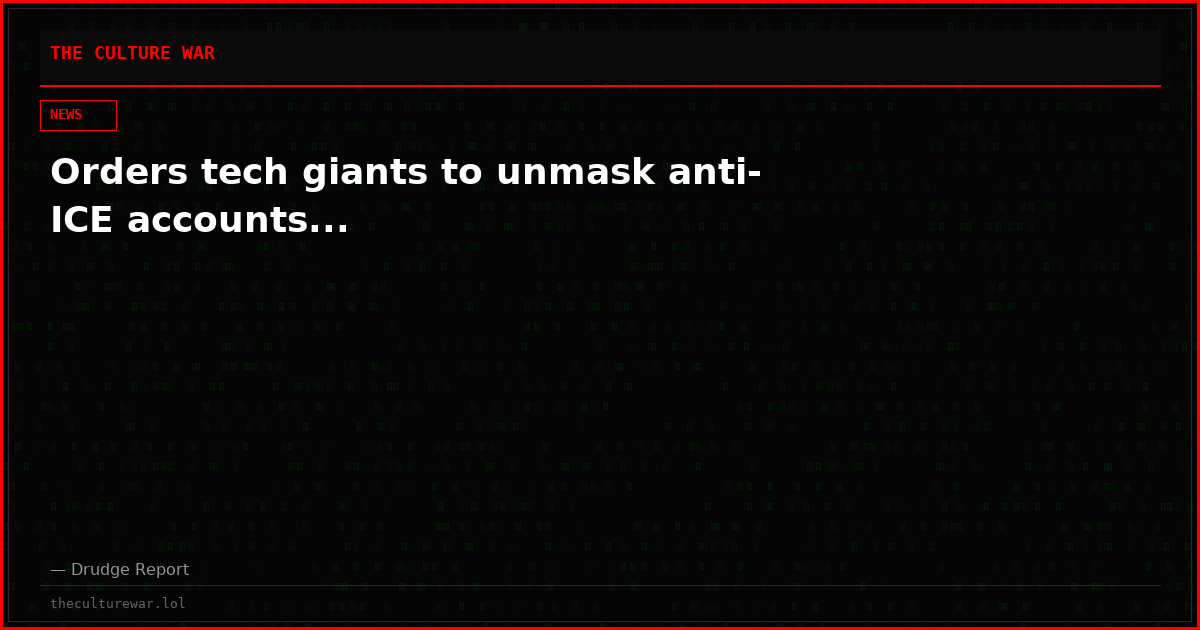
A federal judge in Texas has issued a landmark order directing Meta, X, and other major social media platforms to disclose the identities of users behind anonymous accounts that have incited violence and harassment against U.S. Immigration and Customs Enforcement (ICE) personnel. The ruling, handed down Friday in a case brought by the Department of Homeland Security, targets dozens of profiles accused of coordinating protests, doxxing agents, and spreading calls to "abolish ICE" through inflammatory rhetoric. Judge Elena Ramirez cited mounting evidence of real-world harm, including recent assaults on ICE facilities in sanctuary cities like Los Angeles and Chicago.
The order stems from a surge in anti-ICE activism amplified online amid the ongoing border security crisis. DHS attorneys presented chat logs, geotagged posts, and video footage linking anonymous handles—such as @NoBordersNoCages and @ICEisNazis—to organized disruptions at detention centers. One notable incident involved a July 2025 riot in El Paso, where protesters hurled Molotov cocktails at agents, with social media threads later boasting about the chaos. Platforms have until March 1 to comply, providing IP addresses, email records, and real names under penalty of contempt.
Tech executives expressed dismay but signaled compliance. X CEO Linda Yaccarino stated the company would "work within legal bounds to protect user privacy while upholding court mandates," while Meta's legal team filed a narrow appeal challenging the scope. Critics on the left decried the move as a "chilling assault on free speech," with ACLU attorney Rachel Simmons arguing it sets a precedent for government overreach into digital dissent. Progressive lawmakers, including Rep. Alexandria Ocasio-Cortez, tweeted support for the accounts, framing them as vital voices against "deportation machine brutality."
Legal experts view the decision as a pivotal shift in the tension between online anonymity and public safety. "Social media has become a command center for extremism," said cybersecurity professor Dr. Marcus Hale of Stanford. "This order doesn't ban speech; it unmasks accountability." Supporters, including ICE Director Tomas Homan, hailed it as essential deterrence, noting a 40% uptick in threats against agents since 2024. As compliance deadlines loom, the case underscores deepening divides over immigration enforcement in an era of border strains and viral outrage.
Broader implications ripple through the culture wars, where digital platforms serve as battlegrounds for policy clashes. Conservatives argue the ruling restores balance after years of perceived bias shielding left-wing agitators, while privacy advocates warn of a slippery slope toward mass surveillance. With midterm elections approaching, the unmasking could expose influential donors or organizers, potentially reshaping activism strategies and forcing a reckoning on anonymous incitement.