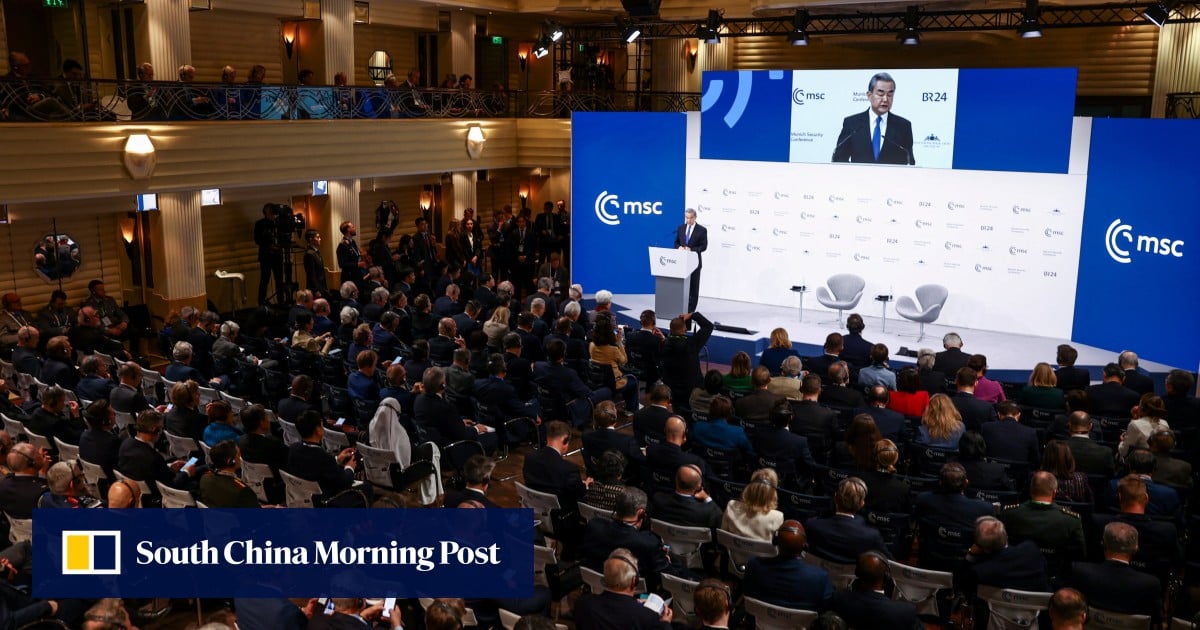
At the 2026 Munich Security Conference, Europe's premier defence summit, a notable shift unfolded as discussions pivoted from longstanding criticisms of China to intensifying transatlantic tensions. A seasoned Chinese observer, who has attended the event in Bavaria for more than a decade, remarked during a drinks reception this week that China had long felt like an observer on the periphery, frequently mentioned only to be blamed.
The dynamic changed dramatically last year when US Vice-President J.D. Vance redirected his rhetoric toward Europe rather than Beijing. Instead of taking China to task, Vance highlighted threats emanating from within the transatlantic alliance, marking a significant departure from previous years' focus.
Later in the weekend, Munich Security Conference CEO Benedikt Franke praised the China Centre for Globalisation, a Beijing-based think tank, for its steadfast participation. Franke noted the think tank's commitment “even when times weren’t rosy and when criticism of China was very direct and harsh,” signaling an improved atmosphere for Chinese representatives at the event.
Vance's address encapsulated this transformation, as he explicitly stated that “the threat vis-a-vis Europe is not Russia, it's not China.” This declaration underscored a broader realignment in priorities at the summit, where China receded from the spotlight.
Throughout the 2026 edition, the slow and messy transatlantic divorce dominated proceedings, allowing China to enjoy relative silence. For years, Beijing had been a magnet for America's rhetorical aggression, but now Europeans found themselves under fire, reshaping the conference's narrative.
The observer's long-term perspective highlighted how China had transitioned from a primary target to a more peripheral figure, benefiting from the fractured focus between the US and its European allies.