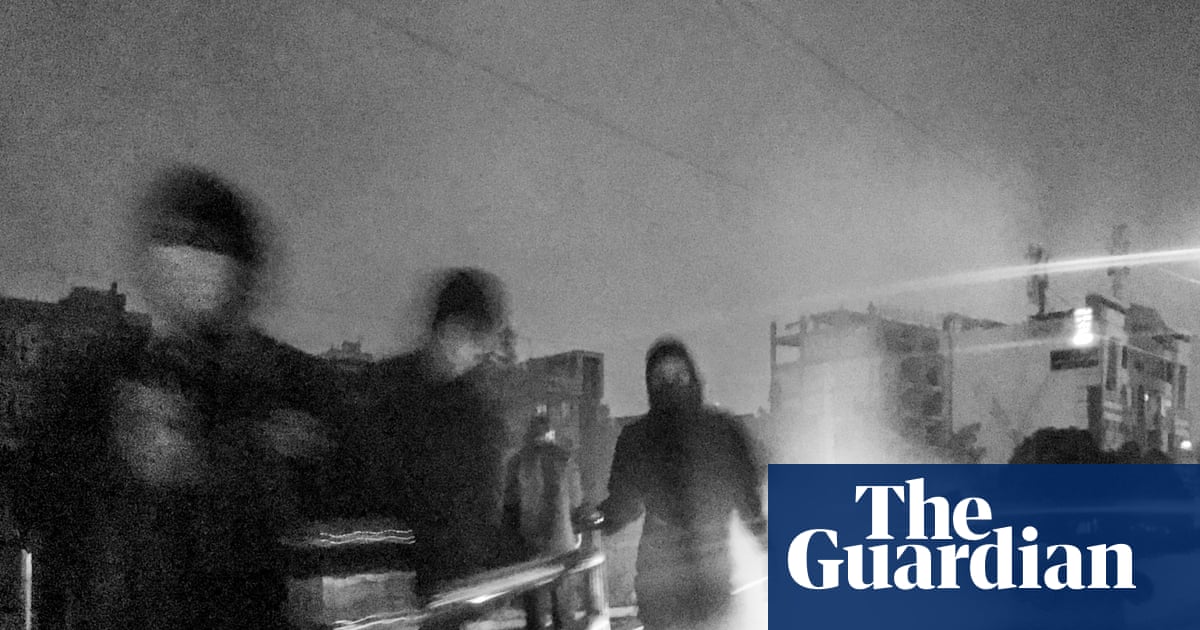
Exclusive images and harrowing testimony from Iran's January uprising have surfaced, revealing the scale of protests that drew thousands of men, women, and children into the streets before a brutal crackdown by security forces, believed to have killed thousands. A photographer in Tehran has risked everything to share this documentation, piercing the regime's nationwide internet blackout that obscured the mass violence.
The testimony comes from a protester named Milad, who described the electrifying atmosphere near Yaftabad, an area of Tehran, on the night of Thursday, January 8. "I was near Yaftabad on Thursday night and saw people pouring into the streets, masked and waiting for a spark. Everyone was walking, from a 100-year-old man to a four-year-old kid whose parents were holding his hand," Milad recounted. His friend called him amid the growing crowd, exclaiming, “Milad, this means revolution.” Milad responded, “Yeah, brother, this is it.”
Milad and the massive throng chanted as they advanced to the main road, filling it from end to end. "Let me tell you we were a huge crowd. From one end of the main road to the other, it was full of people," he said. On that Thursday night, authorities responded with tear gas and shots fired into the air, but no live ammunition. Protesters improvised: one man broke stones to hand to the young fighters, while another built a fire to blow smoke into eyes burning from the gas. Milad himself suffered nonstop lung irritation from the chemicals.
Emboldened, Milad returned to the same Yaftabad neighborhood on Friday, where the crowd grew fearless. "There were a lot of us and we were no longer afraid. We attacked the Basij base and set fire to the motorcycles in front of it and its signs," he detailed. The Basij, a state-backed militia, became a prime target as anger boiled over against the regime.
That same Friday night, Milad ventured to Salsabil, another Tehran district, searching for his girlfriend amid the chaos. His account underscores the widespread participation and defiance that characterized the uprising, drawing families and individuals of all ages into a unified stand against the government.
These revelations come as the Iranian regime's internet shutdown succeeded in largely hiding the extent of the bloodshed from the world. The shared images and survivor stories provide a vital window into the events, highlighting the human cost of the protests and the regime's forceful response.
