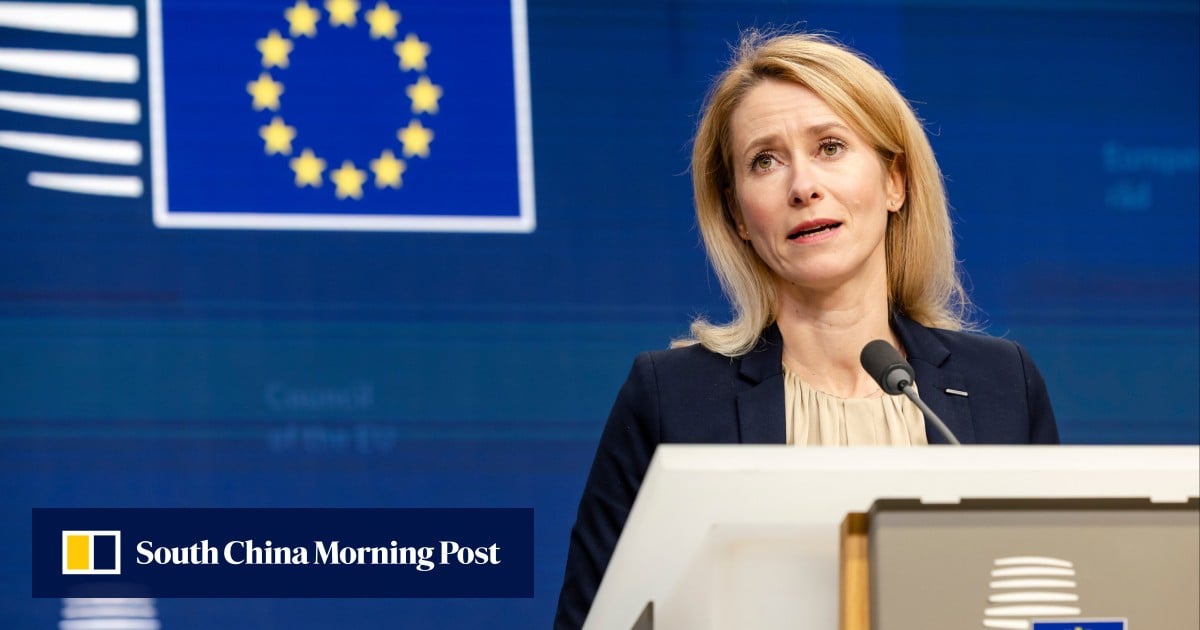
European Union foreign policy chief Kaja Kallas stated on Sunday that EU governments are not ready to provide Ukraine with a concrete date for membership, despite urgent demands from Ukrainian President Volodymyr Zelensky. Speaking at the Munich Security Conference, Kallas emphasized the significant reforms still required, highlighting a growing tension between Kyiv's aspirations and Brussels' cautious approach nearly four years after Russia's full-scale invasion.
Zelensky reiterated his call for a membership timeline on Saturday, framing it as an essential component of security guarantees in any final peace package with Russia. The Ukrainian leader has consistently pushed for this commitment as a means to solidify ties with the West and ensure long-term stability amid ongoing conflict.
Ukraine formally applied to join the EU just days after Russia's invasion began almost four years ago, a move aimed at anchoring the country firmly to Western institutions. This application underscored Kyiv's strategic pivot toward Europe as it sought protection and prosperity in the face of aggression from Moscow.
During a panel discussion at the Munich Security Conference, Kallas expressed her assessment candidly: “My feeling is that the member states are not ready to give a concrete date.” She added, “There’s a lot of work to be done,” pointing to the extensive reforms necessary for Ukraine to align with EU standards.
Diplomats have revealed that Ukrainian EU membership in 2027 was included in a 20-point peace plan discussed among the United States, Ukraine, and the European Union. This provisional timeline was intended to bolster Ukraine's economic prospects post-war, serving as a key incentive in negotiations.
However, many EU governments view the 2027 target—or any fixed date—as entirely unrealistic. They stress that EU accession is a merit-based process, advancing only as candidate countries demonstrate progress in harmonizing their laws and institutions with EU norms.
Kallas' remarks at the prestigious Munich Security Conference reflect broader skepticism within the bloc about accelerating enlargement amid Ukraine's war-torn realities, even as support for Kyiv remains strong in military and financial aid.
