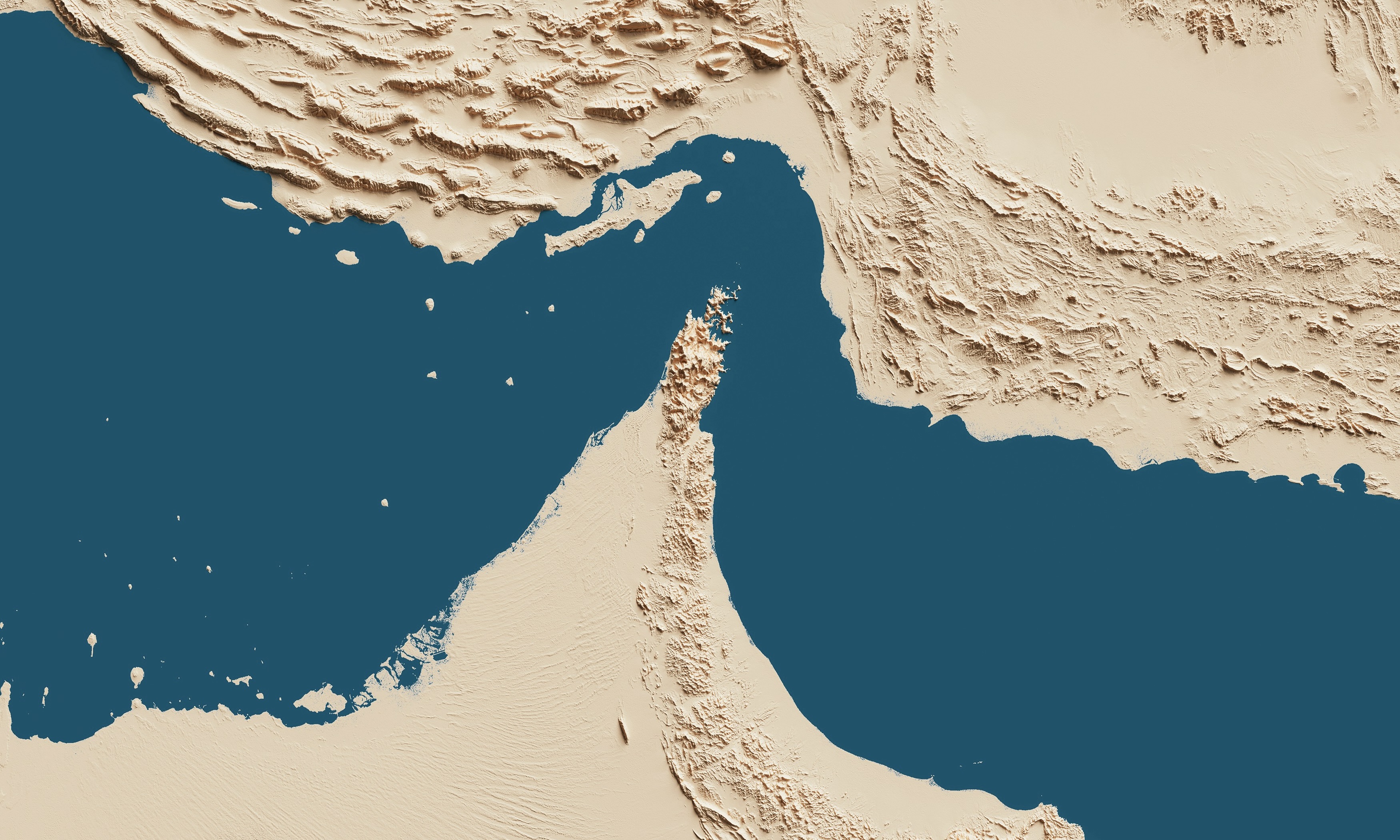
Iran says it will start charging fees on the undersea internet cables beneath theStrait of Hormuz, taking aim at a vital digital bottleneck that carries roughly 20% of the world's data and financial traffic.
Media outlets linked to the Islamic Revolutionary Guard Corps (IRGC) have urged the government to generate revenue from these submarine fibre-optic networks. The coordinated messaging frames the waterway not just as a traditional shipping and energy corridor, but as a digital pressure point that Tehran can leverage against foreign tech companies.
Tasnim, an IRGC-affiliated news agency citing figuresreportedby Iran International English, claimed that submarine cables passing through the strait facilitate more than £7.4 trillion ($10 trillion) in daily financial transactions. In a recent piece titled Three practical steps for generating revenue from Strait of Hormuz internet cables, the outlet argued that a 'traditional view' of the waterway has deprived the Islamic Republic of both the economic benefits and the sovereign authority associated with this critical communications infrastructure.
To capitalise on the digital infrastructure, Tasnim outlined three specific measures for the government to adopt. First, foreign companies would be charged initial licensing and annual renewal fees to maintain their networks. Second, global technology giants such as Meta, Amazon and Microsoft would be legally required to comply with Iranian domestic law. Finally, Iranian firms would be granted exclusive rights to oversee the maintenance and repair of the underwater cables.
Tasnim suggested that implementing these measures would effectively transform the region into a 'strategic centre for legitimate wealth creation.'
#BREAKING: Iran says it will impose fees on the world’s internet cables under the Strait of Hormuz, a critical chokepoint carrying roughly 20% of global data and financial traffic.
Fars, another media outlet tied to the IRGC, echoed these proposals in a social media thread, describing Iran as the ruler of a 'hidden highway' in the region. Noting that more than 99% of international internet communications rely on undersea infrastructure, Fars characterised these networks as the backbone of multinational corporations, explicitly naming Google, Meta and Microsoft.
The agency claimed that the cables fall legally within an area over which Iran can exercise full sovereignty, arguing that international rights of transit passage do not negate the country's regulatory authority. Under the Fars proposal, foreign operators would need explicit permits and be subject to toll payments to use the routes.
Fars warned that even a brief, multi-day disruption to the cables could inflict damage running into hundreds of millions of pounds upon the regional and global economy. By restricting maintenance to Iranian companies and enforcing local laws, the outlet noted that Hormuz could become one of the country's primary levers of 'digital power.'
🇮🇷 Is Iran finally overplaying its hand?Iran already controls who gets to move oil and gas through the Strait of Hormuz. Now, according to Fars, it wants to do the same thing to the internet, forcing foreign cable companies to get permits, pay fees, and follow Iranian law just…https://t.co/VHifiAZtk3pic.twitter.com/1atWrPyKpA
Source: International Business Times UK
