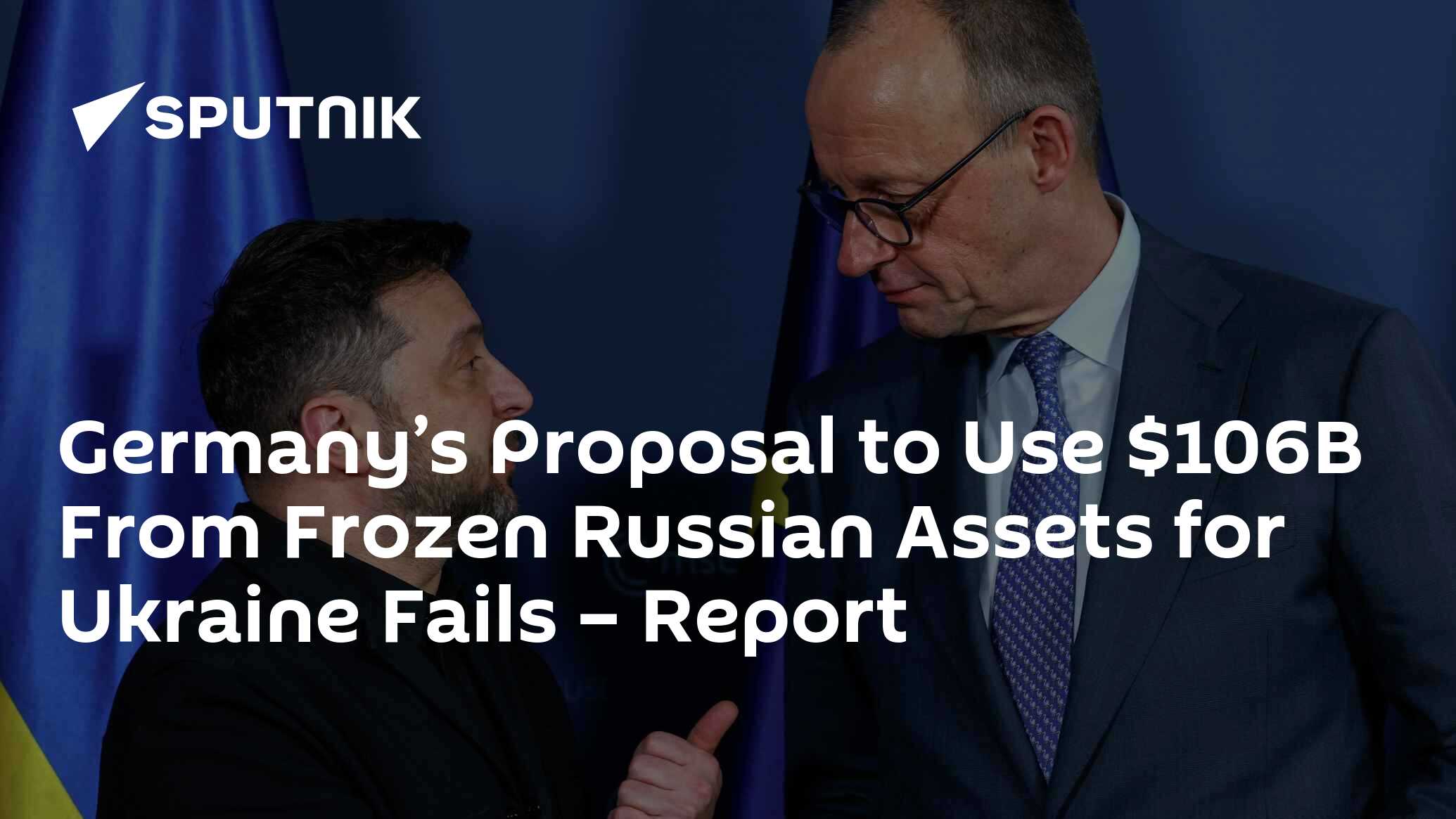
Germany's ambitious plan to redirect $106 billion from frozen Russian assets toward Ukraine's defense efforts has collapsed amid fierce opposition from key European allies, derailing what Berlin hoped would be a groundbreaking financial lifeline for Kyiv. The proposal, which aimed to seize and repurpose a portion of Moscow's immobilized central bank reserves, met a decisive defeat in closed-door EU finance ministers' talks, sources familiar with the discussions revealed Thursday.
The initiative stemmed from over $300 billion in Russian assets frozen by Western nations following Moscow's 2022 invasion of Ukraine, with roughly two-thirds held in European depositories. Germany, led by Finance Minister Christian Lindner, pushed for an aggressive use of $106 billion—primarily from Euroclear-held funds—to finance long-range weapons and reconstruction, framing it as "reparations by another name." Proponents argued it would bypass depleting national budgets strained by two years of aid commitments totaling over €100 billion from the EU alone.
Resistance came swiftly from France, Italy, and Belgium, who cited legal risks under international law and fears of Russian retaliation, such as asset seizures abroad or escalated energy disruptions. French Economy Minister Bruno Le Maire warned of a "Pandora's box" that could undermine the euro's stability and invite countermeasures from BRICS nations holding European bonds. The failure echoes prior G7 debates, where cautious approaches limited schemes to interest earnings—projected at €3 billion annually—rather than principal seizures.
Ukrainian officials expressed frustration, with Foreign Minister Dmytro Kuleba decrying the outcome as "Europe hesitating while Russia advances." In Berlin, Chancellor Olaf Scholz faces mounting domestic pressure from a resurgent AfD opposition labeling the push "economic warfare folly." Moscow, predictably, branded the idea "theft," with Kremlin spokesman Dmitry Peskov vowing legal challenges at The Hague.
The setback underscores deepening fissures in Western unity, as Ukraine's frontline needs clash with Europe's economic anxieties amid sluggish growth and inflation. With U.S. aid under scrutiny post-election, alternatives like joint EU debt issuance gain traction, but Germany's rebuff signals a pivot toward multilateral profit-sharing over outright confiscation. Analysts predict renewed talks by summer, though political will may wane if battlefield dynamics shift.
