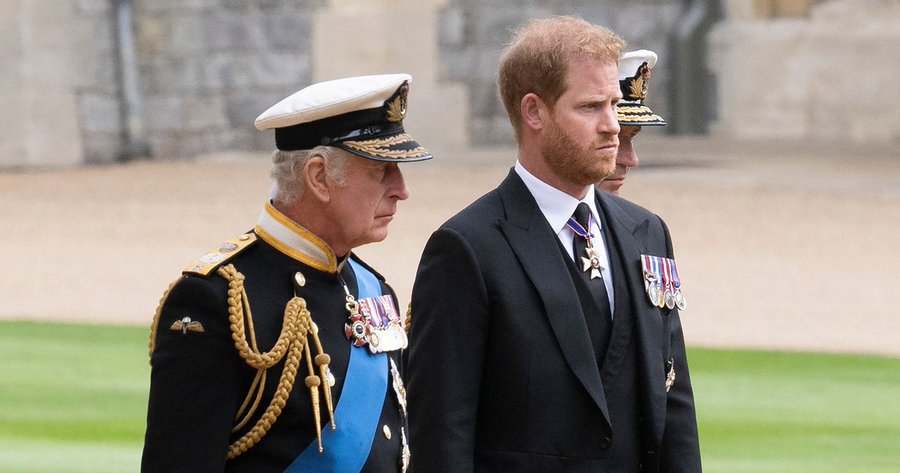
King Charles and Prince Harry were both in the United States last week but not together, as the monarch's four-day state visit with Queen Camilla drew intense attention and renewed scrutiny of his fractured relationship with his younger son. Sources quoted by OK! claimed the trip became Harry's 'worst nightmare,' withno meeting taking place on US soilwhile Charles carried out a run of high-profile engagements hosted by Donald Trump.
The distance between father and son has remained one of the royal family's most stubborn storylines since Harry and Meghan stepped back from official duties in 2020 and settled in California. There have been occasional whispers of reconciliation, but public signs of one have been thin, and this visit only made that absence look more stark.
Charles, 77, and Camilla, 78, spent the visit moving through the sort of diary that monarchy still does better than almost anyone when it wants to project steadiness. There was a state dinner at the White House, a congressional address, a stop at New York's 9/11 memorial and a visit to Harlem, where the king met community leaders and learned about local initiatives focused on urban farming and youth development.
Camilla, meanwhile, carried out solo engagements of her own, including a literacy-focused appearance at the New York Public Library. In a brief interview, she called the tour 'good fun' and described it as a 'whistle stop,' which was a neat enough summary of a visit that seemed designed to look brisk, warm and diplomatically fluent without ever losing its formal edge.
That was precisely why the optics mattered. One palace source told OK! that Harry would have watched his father 'being the spotlight of global media' and putting on what the source called a 'diplomatic masterclass' at a sensitive moment for UK-US relations. The trip would have been especially painful because there was no time for Harry to meet Charles, a detail that turned a routine royal absence into something more pointed.
Nothing about Harry's private reaction has been independently confirmed, and much of the more dramatic language around the visit comes from anonymous sources rather than on-the-record statements. Even so, the picture being sketched is a familiar and rather unforgiving one, with Charles visible at the centre of public duty while Harry remains close enough geographically to be noticed, but not close enough to appear.
A second source told OK! and described the tour as 'a perfect storm' of everything Harry has chosen to move away from. That sounds harsh, perhaps deliberately so, but the point lands because the contrast is obvious enough without much embellishment.
Charles was in the middle of political theatre, ceremony and the global press pack. Harry, who has publicly criticised figures including Trump and rejected royal life as he knew it, was left as the absent presence in the room.
There was praise for the king's ease throughout the visit, particularly around his congressional address and the stop at the 9/11 memorial, which was widely treated as one of the more resonant moments of the tour. His Harlem visit also helped broaden the frame beyond pure ceremony, suggesting a monarch trying to balance symbolism with something closer to civic curiosity.
Still, the family story kept pushing back in. American broadcaster Megyn Kelly offered a characteristically caustic reading of the rift, saying viewers should interpret the situation as evidence that Charles and Harry simply 'don't get along anymore,' though she also suggested reports portray the king as 'extremely forgiving' of his son. It was not an official view, plainly, but it showed how quickly the tour's diplomatic intent was swallowed by the more marketable drama of estrangement.
Source: International Business Times UK
